
FM Antenna for Stereo: 5 Options by Connection

For most stereo receivers, Bingfu 75-Ohm Dipole with Adapters is the most adaptable choice because it includes a 10-foot 75-ohm coaxial cable and three connector adapters. Choose another option if your receiver has a 300-ohm clip or twin-lead input, or if you specifically want magnetic mounting.
An FM antenna receives broadcast signals for a tuner; connector type and placement matter more than the receiver brand name alone.
We earn a commission if you buy through links on this page. As an Amazon Associate I earn from qualifying purchases. Products are compared on manufacturer specifications, not hands-on testing.
- Best overall: Bingfu 75-Ohm Dipole with Adapters – The 10-foot 75-ohm cable and three included adapters cover several common receiver connections.
- Best for magnetic mounting: FM Antenna with Magnetic Base – A magnetic base and 16-foot cable allow placement on a metal surface farther from the receiver.
- Best for 300-ohm terminals: Ancable 300-Ohm T Dipole – The 5.9-foot dipole uses spade terminals for receivers with a matching clip or terminal input.
| Product | Best for | Connection | Cable length | Impedance | Shop |
|---|---|---|---|---|---|
| Bingfu 75-Ohm Dipole with Adapters | Flexible connections | 75-ohm coax; 3 adapters | 10 ft | 75 ohms | Check Price on Amazon |
| FM Antenna with Magnetic Base | Metal-surface placement | 75-ohm coax | 16 ft | 75 ohms | Check Price on Amazon |
| Ancable 300-Ohm T Dipole | Spade-terminal inputs | Spade terminals | 5.9 ft | 300 ohms | Check Price on Amazon |
| AEDIKO 75-Ohm FM and AM Set | FM and AM listening | F-type FM; bare-wire AM | 4.9 ft | 75 ohms FM | Check Price on Amazon |
| Bingfu 300-Ohm Twin-Lead Dipole | Bare-wire terminals | 2-pin bare wire | 5.25 ft | 300 ohms | Check Price on Amazon |
FM Antennas for Stereo Receivers
Match the antenna’s connection and impedance to the receiver before comparing cable reach or mounting style.
Bingfu 75-Ohm Dipole with Adapters

Three included adapters distinguish this 75-ohm dipole from the other options, which use a magnetic base, bare-wire terminals, or fewer connection types. Its 10-foot coaxial extension ends in an F-type plug, and the package includes TV female, TV male, and 3.5 mm adapters. Adhesive mounting gives you a way to position the antenna indoors rather than leaving it beside the receiver.
Choose it when the receiver’s input matches one of the connectors and you want some flexibility in setup. The limitation is that adapters do not make every input compatible; check the socket shape before choosing this antenna.
Bottom line: Pick this if you want several connector options and an adhesive-mounted dipole.
FM Antenna with Magnetic Base

A magnetic base and 16-foot cable set this antenna apart for setups where the receiver sits away from a suitable metal mounting surface. The retractable antenna connects through a 75-ohm coaxial cable, and the cable length is 16 feet. Its base can be positioned separately from the stereo, giving you more placement reach than the shorter cable options here.
Choose it when you have a metal surface available and want the longest cable in this group. The tradeoff is that the connection is coaxial; it is not the 300-ohm spade-terminal or bare-wire style, so check the receiver input before selecting it.
Bottom line: Choose this for a long cable and a metal surface for the magnetic base.
Ancable 300-Ohm T Dipole
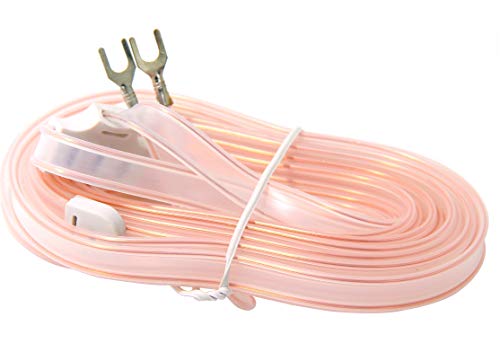
This 300-ohm T-shaped dipole uses spade terminals, making its connection the key difference from the coaxial antennas in this group. Its 5.9-foot cable is intended for receivers with a clip or terminal FM socket. The antenna can be stretched away from the receiver, which gives you a simple way to reposition it indoors.
Choose it if your receiver has matching clip or terminal contacts and you want a 300-ohm dipole. It will not directly match an F-type coaxial socket, so confirm the input style before buying. The cable is also shorter than the 75-ohm options with 10- and 16-foot leads.
Bottom line: Pick this for a receiver with a matching 300-ohm spade-terminal input.
AEDIKO 75-Ohm FM and AM Set

The included AM loop makes this the only combination set here, while its FM element is a 75-ohm coax antenna with an F-type male plug. The FM cable measures 4.9 feet, and the AM loop connects by two bare wires. The set suits a stereo receiver with matching FM and AM inputs when you want antennas for both broadcast bands.
Choose it for a compact FM-and-AM setup rather than for extra FM cable reach. Its FM lead is the shortest specified coax cable among these options, so placement farther from the receiver may be harder. Check that the receiver has an F-type FM input and compatible AM wire terminals.
Bottom line: Choose this if you also need an AM loop and have matching receiver inputs.
Bingfu 300-Ohm Twin-Lead Dipole
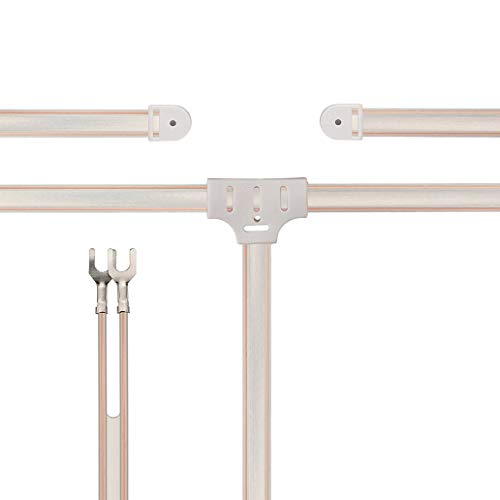
This 300-ohm dipole ends in two bare wires rather than spade terminals, distinguishing it from the other terminal-style choice. Its cable is 1.6 meters, or about 5.25 feet, and the T-shaped antenna has two approximately 29.5-inch arms. It is designed for indoor stereo receivers with a matching two-pin FM connection.
Choose it when the receiver accepts twin-lead bare wires and you want a straightforward dipole. The connector is the limiting factor: a receiver with an F-type coaxial socket needs a different connection style. Before choosing, compare the receiver’s antenna socket with the two-wire end.
Bottom line: Pick this for a receiver with a compatible two-pin, 300-ohm input.
How to choose an FM antenna for stereo
Start by matching the antenna connection to the receiver’s FM input: coaxial sockets typically take a coax plug, while 300-ohm terminals take twin-lead wires. FM broadcasts occupy 88 to 108 MHz, and a half-wave dipole near the middle of that band is about 5 feet long overall. That makes antenna length and orientation relevant, but a long cable alone does not guarantee stronger reception.
Use this decision rule: if the receiver has two screw or clip terminals, choose a 300-ohm twin-lead antenna; if it has an F-type coax socket, choose a 75-ohm coax model. An adapter helps only when its two ends match the antenna and receiver. Confirm the receiver input before ordering, especially when its socket is a 3.5 mm jack or proprietary connector.
75-ohm coax and 300-ohm dipole connections
75-ohm coaxial cable and 300-ohm twin lead are different transmission-line types, so their plugs are not interchangeable without a suitable matching transformer or adapter. Coax has a shield around its center conductor; twin lead has two parallel conductors and connects to two terminals. The receiver’s antenna labeling is the most useful clue: look for a coax socket or paired FM terminals rather than relying on the brand.
The table separates these connection styles by the input they are meant to meet. Choose the row that matches the stereo’s FM socket, not the one that simply offers more cable.
| Antenna connection | Receiver input to match | Typical setup consideration |
|---|---|---|
| 75-ohm coax | Coaxial FM socket | Use a compatible plug or adapter |
| 300-ohm twin lead | Two FM terminals or clips | Keep the two leads connected separately |
Where to place an indoor stereo antenna
Place an indoor FM antenna as high and as unobstructed as practical, then adjust its orientation while checking reception. FM is largely line-of-sight, so reinforced walls, metal surfaces, and nearby electronics can affect reception; moving an antenna a few feet can matter more than swapping between similarly sized indoor dipoles. Extend the arms of a T-shaped dipole horizontally when possible, then try a vertical or angled position if reception remains weak.
A cable with extra reach can make better placement possible, but do not coil excess coax tightly against the antenna. Keep the antenna and cable away from heat sources and sharp bends. Indoor antennas are not a substitute for an outdoor antenna installation where terrain or distance blocks local broadcasts.
Common FM antenna setup mistakes
The most common mismatch is connecting a 300-ohm wire antenna to a 75-ohm coax socket without the correct matching connection. Another mistake is assuming that every receiver from the same brand has the same antenna input; models can use different sockets. Inspect the rear panel and note whether the FM input is coaxial, a 3.5 mm jack, or two terminals before selecting a connector.
Do not judge placement from one station alone: signal strength and multipath reflections differ by location and frequency. Tune to a weak station, move or rotate the antenna, and compare reception at each position. Avoid running an outdoor antenna near power lines; installation close to electrical lines can create a serious shock hazard.
Frequently Asked Questions
What does 75 ohms mean on an FM antenna?
75 ohms is the characteristic impedance of the coaxial cable and input the antenna is designed to match. Choose a 75-ohm model when the receiver has a compatible coaxial FM socket.
How long should an indoor FM dipole be?
A half-wave dipole near the center of the 88-to-108 MHz FM band is about 5 feet long overall. A T-shaped antenna’s two arms together should be near that length, with the arms extended rather than folded against the receiver.
Should an FM dipole be horizontal or vertical?
Start with the dipole arms horizontal and spaced apart, then try vertical or angled placement if a station is weak. Local transmitter direction and reflections can change which orientation works best.
Can I connect a 300-ohm antenna to coax?
A 300-ohm twin-lead antenna does not directly match a 75-ohm coax input. Use a suitable 300-to-75-ohm matching transformer with compatible connections, or select an antenna whose plug already matches the receiver.
Why does FM reception change when I move the antenna?
FM signals can reflect from buildings and objects, creating stronger and weaker reception spots only a few feet apart. Move the antenna in small increments and retune the same weak station to compare positions.