
Forearm Protectors for Thin Skin: 4 Options Compared

For most people, Evridwear Arm Protectors, L/XL is a practical starting point because its cotton lining is intended for comfortable wear and it comes as two pairs; choose Schwer AIR-SKIN S910, 9 in instead when the maker’s ANSI A6 cut-resistance claim matters for sharper-task exposure.
Forearm protectors are sleeves that cover skin from friction and incidental contact, but they are not a substitute for task-specific protective equipment or careful handling.
We earn a commission if you buy through links on this page. As an Amazon Associate I earn from qualifying purchases. Products are compared on manufacturer specifications, not hands-on testing.
- Best overall: Evridwear Arm Protectors, L/XL – Cotton inner lining and two pairs suit repeated everyday wear.
- Best for cut-rated protection: Schwer AIR-SKIN S910, 9 in – The maker identifies this 9-inch sleeve as ANSI A6 cut resistant.
- Best for color choices: Four-Pair 9-Inch Arm Protectors – Four pairs come in black, white, gray, and beige.
| Product | Best for | Length | Pack size | Material | Shop |
|---|---|---|---|---|---|
| Evridwear Arm Protectors, L/XL | Lined daily wear | — | 2 pairs | HPPE, cotton lining | Check Price on Amazon |
| Schwer AIR-SKIN S910, 9 in | Cut-rated tasks | 9 in | 3 pairs | UHMWPE, HPPE | Check Price on Amazon |
| REDANHA Level 5 Sleeves | Stretchy black sleeves | 7.9 x 3.7 in | 2 pairs | HPPE, nylon, spandex | Check Price on Amazon |
| Four-Pair 9-Inch Arm Protectors | Color variety | 9 in | 4 pairs | — | Check Price on Amazon |
Forearm Protectors for Thin Skin
Compare sleeve coverage, pack contents, and material before choosing a pair for daily wear or task-related forearm protection.
Evridwear Arm Protectors, L/XL

Evridwear Arm Protectors, L/XL stands out for its cotton inner lining, which the maker says absorbs sweat and adds breathable comfort. The sleeves use HPPE and are intended for abrasion, scratch, and cut protection during activities such as gardening, pet handling, and light shop work. The package contains two pairs in gray, with no thumb hole, in L/XL. This may suit someone seeking a lined sleeve for routine forearm coverage. The maker’s cut-resistance claims do not establish protection against every blade, puncture, heat, or work hazard, so match the sleeve to the task.
Bottom line: Choose these for a lined, two-pair set for everyday forearm coverage.
Schwer AIR-SKIN S910, 9 in
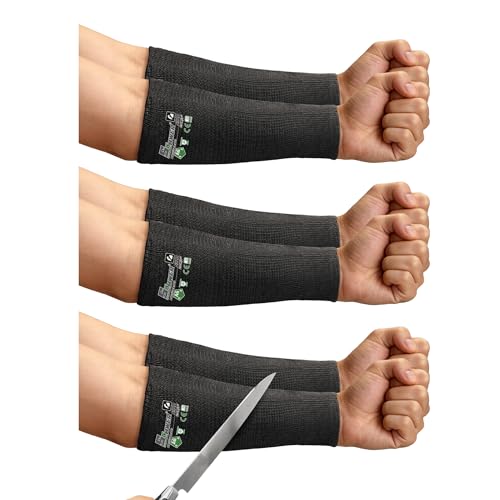
Schwer AIR-SKIN S910, 9 in is the only option here with an ANSI A6 claim and a cutting-load figure: the maker says it withstands over 3,000 grams. Its 9-inch length gives a concrete coverage measure, and the pack contains three black pairs. This sleeve may fit buyers prioritizing a cut-resistance rating for gardening or shop tasks. A cut rating is not a guarantee against punctures, heat, or all sharp-object injuries.
Bottom line: Pick these when the ANSI A6 claim and 9-inch coverage suit the task.
REDANHA Level 5 Sleeves

REDANHA Level 5 Sleeves differs with a 7.9 by 3.7-inch size and a blend of HPPE, nylon, and spandex. The maker calls the sleeves Level 5 and describes them as cut, abrasion, and tear resistant; the pack includes two black pairs. The elastic blend may appeal to buyers wanting stretch in a simple replacement set. The size is given as two dimensions rather than a clear fit range, so compare those measurements with the area you want covered and your arm before choosing. Do not treat the Level 5 wording as proof of protection from every hazard.
Bottom line: Choose these if the dimensions and stretch blend work for your fit.
Four-Pair 9-Inch Arm Protectors

Four-Pair 9-Inch Arm Protectors differs by offering four 9-inch pairs in black, white, gray, and beige, one pair per color. The maker describes the sleeves as breathable, lightweight, soft, and elastic, with cut-resistant and bruising-protection intent. That mix of colors and quantity may suit someone who wants separate pairs for rotation or different outfits. A sleeve can cover forearm skin, but it should not be relied on as the only protection for high-risk cutting work.
Bottom line: Choose these for four color options at a 9-inch length.
How to Choose Forearm Protectors for Thin Skin
Start with the hazard and coverage you need: a sleeve for incidental rubbing is not interchangeable with cut-rated work protection. Sleeve length, arm circumference, and whether the design includes a thumb opening affect how much skin stays covered and whether the sleeve shifts. Measure the forearm area you want covered while the arm is relaxed; select by the maker’s size guidance rather than assuming one “stretch fit” works for everyone. If a task involves blades, sharp metal, or glass, choose protection with a clear task-relevant cut rating, and remember that cut resistance does not establish puncture or heat resistance. For gloves-and-sleeve work, overlap the glove cuff and sleeve so a gap does not expose the wrist.
What Sleeve Length and Fit Should You Look For
A 9-inch sleeve gives a length, while the 7.9 by 3.7-inch size is a two-dimension measurement rather than a clearly described arm-fit range. Coverage depends on both sleeve length and how far the material stretches on the wearer; a sleeve that is too tight can be uncomfortable, while a loose one can slide and expose skin. Measure the forearm circumference at the widest point and check whether the maker provides a matching size range before ordering. For a task with a specific contact zone, choose a sleeve long enough to cover that zone and overlap the glove cuff. Thumb-hole design also changes positioning: a no-thumb-hole sleeve may be easier to pull on but needs checking for slippage during movement.
Cut Resistance Ratings and Their Limits
Cut-resistance labels apply to particular test methods and do not promise protection from every sharp hazard. Schwer AIR-SKIN S910, 9 in carries a maker-identified ANSI A6 claim and a cutting-load figure; REDANHA Level 5 Sleeves carries a maker-described Level 5 claim, but the product facts do not give the test standard behind that level. Do not compare the two labels as equivalent without confirming the underlying standard and test. Cut-resistant fabric also does not automatically protect against punctures, crushing, heat, chemicals, or moving machinery. Match sleeves to the hazard assessment for the task, and use required gloves or other protective equipment alongside them. If you handle powered blades or hot work, sleeves alone are not sufficient protection.
Common Forearm Sleeve Mistakes
The most common mistake is treating skin-covering sleeves as complete protective equipment. Thin fabric can reduce direct rubbing, but fit, material, and task risk determine whether a sleeve is suitable; no sleeve should be assumed to prevent bruising or skin tears in every circumstance. Another mistake is choosing by pair count instead of coverage: compare length, circumference fit, and whether the sleeve stays in place when the elbow bends. Inspect fabric for snags, holes, or stretched-out cuffs before each use, since damaged material may no longer cover consistently. Keep sleeves clean and dry according to the maker’s care directions; wet or soiled fabric can become uncomfortable and may shift during use.
Frequently Asked Questions
How do I measure my forearm for a sleeve?
Measure circumference at the widest part of the forearm and measure the coverage length from the wrist toward the elbow. Compare both dimensions with the maker’s sizing guidance, because a sleeve length alone does not confirm circumference fit.
Do cut-resistant sleeves protect against punctures?
A cut-resistance claim does not establish puncture protection. Choose protection rated for the specific hazard, and do not rely on a sleeve alone around sharp points or powered equipment.
Should forearm sleeves go over or under gloves?
Overlap the glove cuff with the sleeve so a gap does not expose the wrist. Arrange the overlap to stay in place through the task without restricting hand movement.
How often should I replace protective arm sleeves?
Replace a sleeve when it has holes, snags, damaged seams, or cuffs that no longer hold it in place. Check the fabric before each use, especially after work involving sharp edges.
Can I wear sleeves under work clothes?
A sleeve may fit under clothing if the garment does not compress it enough to restrict movement or cause sliding. Confirm the coverage remains in position when bending the elbow and reaching.