
Fork and Spoon Organizer: 4 Trays Compared by Fit

For a fork and spoon organizer that can span a wide drawer, choose ukeetap Extra Large Expandable Organizer: it expands from 12.4 to 21 inches and has 7–9 compartments. For a narrower drawer, compare the fixed five-compartment trays, and measure the drawer’s usable interior width and depth first.
A silverware organizer is a compartmented tray that separates flatware inside a drawer. Choose bamboo if you prefer that material; choose an adjustable plastic tray when drawer width is the deciding constraint.
We earn a commission if you buy through links on this page. As an Amazon Associate I earn from qualifying purchases. Products are compared on manufacturer specifications, not hands-on testing.
- Best overall: ukeetap Extra Large Expandable Organizer – The widest adjustable range here, from 12.4 to 21 inches, with 7–9 compartments.
- Best for narrow adjustable fit: Lifewit Expandable Organizer, Medium – Its 8–13.8-inch width range suits drawers too narrow for the larger expandable tray.
- Best for bamboo: Besilord Bamboo Organizer, 5 Slots – Natural bamboo and five deep compartments provide a fixed-layout alternative to plastic.
| Product | Best for | Width | Compartments | Material | Shop |
|---|---|---|---|---|---|
| ukeetap Extra Large Expandable Organizer | Wide drawers | 12.4–21 in | 7–9 | BPA-free plastic | Check Price on Amazon |
| Lifewit Expandable Organizer, Medium | Narrow drawers | 8–13.8 in | 7 | PP plastic | Check Price on Amazon |
| Besilord Bamboo Organizer, 5 Slots | Bamboo preference | 9.9 in | 5 | Bamboo | Check Price on Amazon |
| Lifewit Slim 5-Slot Organizer | Compact flatware | 9.1 in | 5 | PP plastic | Check Price on Amazon |
Fork and Spoon Organizers Compared
Compare each tray’s width, compartment count and material against your drawer dimensions and sorting needs.
ukeetap Extra Large Expandable Organizer

The wide expansion range sets this tray apart, extending from 12.4 to 21 inches to use more of a broad drawer. Two expandable panels and a buckle design allow adjustment, while 7–9 compartments provide separate spaces for flatware and other tableware. The BPA-free plastic is described as food-safe and waterproof. This option suits households with a wide drawer and a larger assortment to sort. Its 16.5-inch length and 1.77-inch height still need to clear the drawer’s interior; measure both dimensions before choosing.
Bottom line: Choose this for a wide drawer and a flexible compartment count.
Lifewit Expandable Organizer, Medium

The 8-inch minimum width makes this the more suitable adjustable option for a narrow drawer than the wider-reaching tray. The organizer expands to 13.8 inches and has seven compartments for everyday forks, spoons, knives and smaller accessories. Its polypropylene is BPA-free, and hand washing is recommended; high heat can warp the material. The shallow 1.4-inch profile may be useful when drawer clearance is limited, but oversized utensils are outside its intended use. Check the interior width and depth before buying so the tray can sit flat and expand without binding.
Bottom line: Pick this when a narrow drawer needs adjustable width and seven sections.
Besilord Bamboo Organizer, 5 Slots

Natural bamboo distinguishes this fixed tray from the plastic organizers, and its five deep compartments keep a simple flatware layout. At 9.9 inches wide and 13.8 inches long, it suits drawers that can accommodate those fixed dimensions rather than users who need an adjustable fit. The product also can sit on a desktop, so it is not limited to drawer placement. The main tradeoff is the fixed five-slot layout: buyers who want more sections or a changing width should consider an expandable design instead. Confirm the drawer’s interior dimensions before selecting this tray.
Bottom line: Choose it for a fixed five-slot layout in bamboo.
Lifewit Slim 5-Slot Organizer
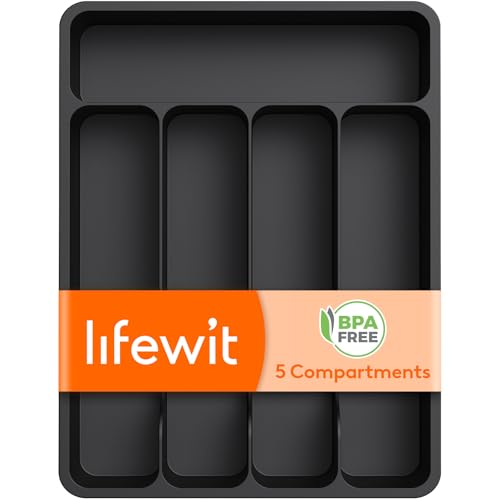
The 9.1-inch width and five compartments make this a compact fixed-layout choice, unlike adjustable organizers that need extra width to expand. It measures 12.6 inches long and 1.6 inches high, with separate spaces for spoons, forks and knives. The polypropylene construction is BPA-free. This tray is suited to small or narrow drawers where a straightforward five-section arrangement is enough. It will not adapt to a wider drawer or add dedicated sections for a large utensil collection, so choose an expandable organizer if that flexibility matters. Measure the clear drawer space, including any obstructions or hardware.
Bottom line: Pick this for a compact drawer and a simple five-section layout.
How to choose a fork and spoon organizer
Start with the drawer’s clear interior width and depth, then compare those measurements with the tray’s full footprint. Measure between the drawer sides at the narrowest point; slides, screws and a face frame can reduce usable space. A fixed tray needs clearance on all sides to lift out easily, while an expandable tray must fit at its minimum width and have room to open. For flatware, count the groups you want to separate—such as forks, teaspoons, tablespoons and knives—before choosing the compartment count. A five-slot design is simpler, while seven or more sections can separate more categories. If the tray will store sharp knives, arrange blades so they cannot catch a hand when reaching into the drawer.
Drawer dimensions and expansion range
An organizer’s advertised width is not the only fit check: measure the inside depth and vertical clearance as well. Drawer bottoms may have uneven seams, and handles or internal dividers can obstruct a long tray. Expandable models are useful only when their narrowest footprint fits; once placed, expand gradually and stop before the sides press against the drawer walls. A practical rule is to leave about 1/8 inch of side clearance so the tray does not scrape or jam. The ukeetap model is the broadest adjustable choice here, while the two Lifewit trays and Besilord model have defined footprints. Use the manufacturer’s dimensions for the tray rather than the outer drawer-front measurement.
Plastic and bamboo organizer differences
Plastic and bamboo both make common flatware trays, but they differ in care and handling. Polypropylene plastic is lightweight and tolerates routine kitchen use; high heat can deform some plastic trays, so avoid dishwasher cycles unless the maker approves them. The expandable Lifewit organizer recommends hand washing. Bamboo is rigid and has a natural finish, but wood-based organizers should be kept dry between cleanings to limit swelling and surface wear. Wipe spills promptly and let a damp tray air-dry completely before returning silverware. Match the material to your cleaning habits: choose a removable tray for easy access, and do not soak a bamboo organizer.
Organizing flatware safely
Keep forks, spoons and knives in separate compartments so sharp edges are not hidden beneath loose utensils. Place knives with handles toward the front or top of the drawer, depending on how the tray sits, so the grip is easy to locate without reaching across a blade. Food-contact claims do not replace cleaning: wash newly installed organizers before placing clean flatware inside, and dry the tray before use. Avoid overfilling compartments; piled utensils can snag and make sharp items harder to identify. If a tray shifts when the drawer opens, reduce the load or add a removable non-slip liner that does not block the drawer’s movement.
Frequently Asked Questions
How do I measure a drawer for a silverware tray?
Measure the usable interior width and depth at the narrowest points, excluding the drawer front. Also check vertical clearance and account for slides, screws or dividers that could prevent the tray from sitting flat.
How much room should an expandable tray have?
The tray must fit at its minimum width and have enough space to expand without pressing hard against the drawer sides. Leave roughly 1/8 inch of clearance on each side to help prevent scraping or binding.
Can a plastic silverware organizer go in the dishwasher?
Only if its maker permits it; high dishwasher heat can warp some plastic trays. For the Lifewit expandable model, hand washing is recommended.
How many compartments should a flatware organizer have?
Five compartments can handle a basic separation of forks, spoons and knives, while seven or more provide additional sorting spaces. Count your utensil categories before choosing, especially if you plan to store serving pieces.
How should I clean a bamboo silverware tray?
Wipe bamboo with a damp cloth rather than soaking it, then dry it fully before returning it to a drawer. Prolonged moisture can cause wood-based organizers to swell or wear.