
Formal Cover Ups and Wraps: 4 Styles Compared

For formal cover ups and wraps, choose PULI Pashmina Shawl Wrap if warmth matters most: its winter-weight blend and 79-by-26-inch size offer more coverage than the lightweight chiffon and satin options. Choose Chiffon High-Low Capelet for a short capelet shape or Sofier Satin Shawl Wrap for a silky, sheer-looking drape; those styles prioritize a lighter formal layer over added warmth.
We earn a commission if you buy through links on this page. As an Amazon Associate I earn from qualifying purchases. Products are compared on manufacturer specifications, not hands-on testing.
- Best overall: PULI Pashmina Shawl Wrap – The winter-weight blend and 79-by-26-inch shawl offer warmth and broad shoulder coverage.
- Best for capelet coverage: Chiffon High-Low Capelet – Its high-low shape measures about 11.5 inches in front and 27 inches in back.
- Best for satin drape: Sofier Satin Shawl Wrap – The 78.7-by-27.5-inch satin wrap is lightweight and sized for a long shoulder drape.
| Product | Best for | Material | Dimensions | Shape | Shop |
|---|---|---|---|---|---|
| PULI Pashmina Shawl Wrap | Cool evening events | Viscose, polyester, polyamide blend | 79 × 26 in | Long shawl | Check Price on Amazon |
| Chiffon High-Low Capelet | Short capelet shape | Chiffon | 28.5-in neck; 11.5-in front; 27-in back | High-low capelet | Check Price on Amazon |
| Sofier Satin Shawl Wrap | Silky formal drape | Satin | 78.7 × 27.5 in | Long shawl | Check Price on Amazon |
| Black Chiffon Shawl Wrap | Narrow black wrap | Chiffon | 79 × 19 in | Long shawl | Check Price on Amazon |
Formal Cover Ups and Wraps Compared
Compare fabric, measurements and shape to find a layer that suits your dress and the amount of coverage you want.
PULI Pashmina Shawl Wrap

Unlike the lighter chiffon and satin choices, this winter-weight shawl is built for extra warmth as well as formal coverage. It measures 79 by 26 inches and uses a blend of viscose, polyester and polyamide. Wear it over a wedding or evening outfit as a wrap, or drape it as a scarf for travel. The black, one-size option works for shoppers seeking a darker neutral layer. The trade-off is its thicker fabric: choose a lighter style if you want a sheer, airy accent rather than warmth.
Bottom line: Choose this if warmth and a generous shawl shape matter more than a lightweight feel.
Chiffon High-Low Capelet

This is the only capelet in the group, so it provides a distinct high-low silhouette instead of a long rectangular wrap. The chiffon is lightweight, soft and breathable, and the one-size design has an approximately 28.5-inch neck circumference, an 11.5-inch front and a 27-inch back. That shape suits dresses when you want shoulder coverage without a full-length shawl. The shorter front leaves more of the bodice visible, so shoppers wanting a broad panel to wrap around themselves should choose a long shawl instead.
Bottom line: Choose this for a shorter, shaped layer over a formal dress.
Sofier Satin Shawl Wrap
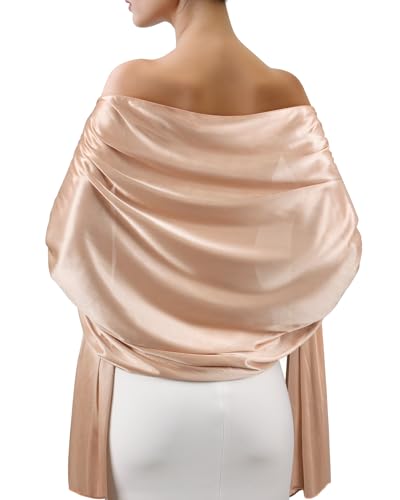
The satin finish distinguishes this long wrap from the chiffon styles and the thicker winter shawl. At 78.7 by 27.5 inches, it offers a generous panel for draping over an evening gown, bridesmaid dress or other formal outfit. The fabric is described as lightweight with a pearl-like luster, and the maker says it resists wrinkles compared with delicate silk. Its airy weight is suited to a polished accent, not a warm layer for cold weather; choose the thicker shawl if insulation is the priority.
Bottom line: Choose this for a lightweight, lustrous accent over an evening outfit.
Black Chiffon Shawl Wrap

This black chiffon shawl is narrower than the other long wraps, measuring 79 by 19 inches; the product also describes a 79-by-26-inch size in another option. The lightweight, smooth fabric suits a formal shoulder cover when you want a long scarf-like silhouette without the added thickness of a winter wrap. Its black color pairs naturally with dark or contrasting formal outfits. The 19-inch width gives less coverage than a 26-inch panel, so check the width choice before ordering if you want more fabric across the shoulders.
Bottom line: Choose this if you want a long black chiffon wrap in the narrower width.
How to choose a formal wrap by fabric
Fabric weight and finish decide whether a formal cover up adds warmth or acts mainly as an outfit accent. Chiffon and satin are lightweight choices in this group, while the winter-weight viscose, polyester and polyamide blend is intended to feel warmer. Satin has a smooth, lustrous appearance; chiffon has a lighter, softer look. Match the fabric to the event: indoor receptions and warm-weather ceremonies often call for a light layer, while outdoor evening events may need more warmth. A wrap does not replace a coat in cold or windy conditions. If you want sheer coverage, favor a lightweight fabric; if the temperature is the deciding factor, favor the thicker shawl.
How much coverage do formal shawls provide
Long shawls in this selection measure about 79 inches long and range from 19 to 27.5 inches wide, so width changes how much fabric crosses the shoulders. A 19-inch-wide wrap creates a narrower scarf-like band; a panel around 26 inches wide gives more material to drape around the upper arms. The capelet uses a different shape, with an 11.5-inch front and 27-inch back, rather than a full rectangular panel. Lay a tape measure over your shoulders and upper arms to judge coverage before choosing. For sleeveless dresses where upper-arm coverage is important, prefer a wider long wrap over the narrow option.
Shawl or capelet for a formal dress
A shawl is a long rectangular layer that can be draped over both shoulders or wrapped around the arms; a capelet is shaped around the neck and hangs over the shoulders. The capelet here has a high-low cut, with a shorter front and longer back, while the shawls offer lengths near 79 inches for more flexible draping. Use a shawl when you want to adjust how much of the front or arms it covers. Choose a capelet when its shorter front better suits the dress silhouette. This comparison helps match the garment shape to the outfit.
Use this quick guide to match the wrap type to the coverage need.
| Need | Useful choice |
|---|---|
| More warmth | Thicker winter-weight shawl |
| Light formal layer | Chiffon or satin shawl |
| Shaped high-low coverage | Capelet |
| More shoulder fabric | Wider shawl panel |
How to keep a wrap in place
A shawl stays more securely when its center sits across the upper back and both ends are balanced over the shoulders. For movement during a ceremony or reception, use a small clothing pin or brooch at the shoulder seam area, taking care not to snag delicate fabric. Chiffon and satin can catch on rough jewelry, so smooth sharp edges before draping them. Avoid tying a delicate wrap tightly, which can pull the fabric out of shape. When sitting, gather the loose ends beside you rather than beneath your body to reduce creasing and strain.
Frequently Asked Questions
What width is best for shoulder coverage?
A wider panel provides more fabric across the shoulders and upper arms than a narrow scarf-width wrap. In this selection, widths range from 19 to 27.5 inches; for fuller coverage, look near the 26-inch end.
Can a chiffon wrap keep you warm outdoors?
Chiffon is a lightweight fabric and is better suited to a light layer than cold or windy weather. For outdoor events in cool conditions, use a thicker layer such as a winter-weight shawl or coat.
How do you wear a shawl over a formal dress?
Center the shawl across your upper back and let both ends fall evenly over your shoulders. A brooch or small clothing pin can help secure it during movement, but avoid pulling delicate fabric tightly.
Is a capelet different from a shawl?
Yes. A shawl is a long panel that can be rearranged around the shoulders, while a capelet is shaped to sit at the neck and shoulder area. A high-low capelet has a shorter front and longer back.
How should satin and chiffon wraps be stored?
Store lightweight wraps folded loosely in a clean, dry place, away from rough items that could snag them. Check the garment’s care label before washing or ironing, since fabric blends and finishes can require different care.