
Furnace Vent Rain Cap and Storm Collar Options Compared

For a furnace vent rain cap and storm collar combination, Z-Vent 4-Inch Rain Cap with Storm Collar is the closest match because it includes both parts and is rated for specified venting categories. Choose a different option if your system uses Type B vent, a separate 6-inch collar, or a 5-inch general-purpose roof cap; verify the vent manufacturer’s approved components and pipe diameter before purchase.
We earn a commission if you buy through links on this page. As an Amazon Associate I earn from qualifying purchases. Products are compared on manufacturer specifications, not hands-on testing.
- Best overall: Z-Vent 4-Inch Rain Cap with Storm Collar – Includes a rain cap and storm collar for 4-inch stainless venting.
- Best for Type B vent: Water-Tite 81695 Multi-Cap – Its adjustable clamps fit standard pipe sizes from 5 to 7 inches.
- Best for a separate collar: Selkirk Metalbestos 6T-SC Storm Collar – A 6-inch stainless steel storm collar for placement above roof flashing.
| Product | Best for | Pipe size | Material | Part type | Shop |
|---|---|---|---|---|---|
| Z-Vent 4-Inch Rain Cap with Storm Collar | 4-inch Z-Vent | 4 in | Stainless steel | Rain cap and collar | Check Price on Amazon |
| Water-Tite 81695 Multi-Cap | Type B vent | 5–7 in | Aluminum | Vent cap | Check Price on Amazon |
| Selkirk Metalbestos 6T-SC Storm Collar | 6-inch collar | 6 in | Stainless steel | Storm collar | Check Price on Amazon |
| Vent Systems 5-Inch Galvanized Roof Cap | 5-inch duct | 5 in | Galvanized steel | Roof vent cap | Check Price on Amazon |
Furnace Vent Rain Caps and Storm Collars
Match the component to the vent system and pipe diameter before choosing by material or weather protection.
Z-Vent 4-Inch Rain Cap with Storm Collar
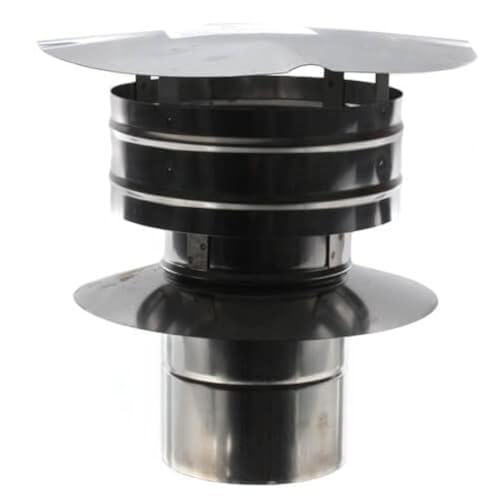
Unlike the single-purpose parts here, this option combines a rain cap and storm collar for 4-inch stainless steel venting. The maker says it is designed for cool flue gases vented under pressure and rated AL29-4C, with approval for Category I vertical-only and Categories II, III, and IV applications. It suits buyers whose vent system calls for this size and configuration. The key limitation is system compatibility: a similar diameter does not establish that a different vent brand or category can use it, so verify the approved component series before ordering.
Bottom line: Choose this when your vent system specifies a 4-inch Z-Vent cap-and-collar assembly.
Water-Tite 81695 Multi-Cap

For a larger adjustable fit, this Type B vent cap covers standard pipe sizes from 5 to 7 inches, unlike the fixed-size parts. Its aluminum construction is intended to resist rust and corrosion, and the maker describes a positive-draft design intended to resist clogging and keep weather, debris, and birds out of the flue. It suits buyers with a compatible Type B vent in that diameter range. It is a cap rather than a cap-and-collar combination, so it is not the right pick when the installation requires both components together.
Bottom line: Choose this for compatible 5- to 7-inch Type B vent pipe.
Selkirk Metalbestos 6T-SC Storm Collar

Unlike the cap options, this is a separate stainless steel storm collar for 6-inch round chimney pipe. It fits above roof flashing; the maker says to position it and tighten it with screws or tabs, then waterproof the upper edge with plastic sealer to limit water leakage at the pipe. It suits a setup that already has a compatible rain cap and needs a separate collar. Its 6-inch fit is the limiting factor, and the collar alone does not provide a rain cap.
Bottom line: Choose this when you need a separate 6-inch collar for compatible round chimney pipe.
Vent Systems 5-Inch Galvanized Roof Cap
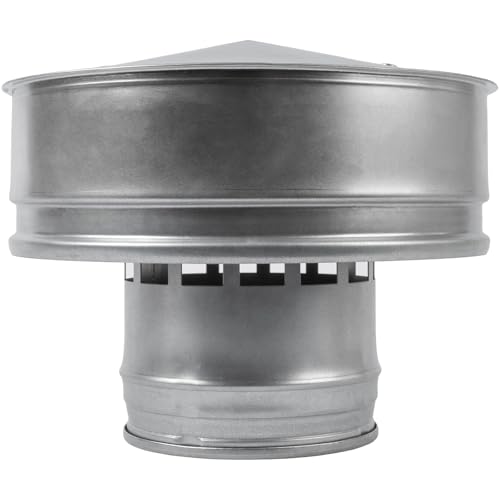
This option is a 5-inch galvanized steel roof cap for round ducts, rather than a dedicated furnace vent cap-and-collar assembly. The maker says its cover is 9.44 inches across and 7.68 inches tall, and describes a cone-shaped top intended to deflect rain and debris. It suits a compatible 5-inch duct where this style of direct-mounted cap is appropriate. The limitation is vent-system approval: general duct fit alone does not establish compatibility with a furnace flue, so confirm the appliance and vent manufacturer allow this component before use.
Bottom line: Choose this only for a compatible 5-inch duct where a general roof cap is permitted.
How to match a furnace vent cap to its system
Match the cap to the vent system type before comparing its diameter or material. Type B gas vent, stainless steel positive-pressure venting, and general exhaust ducting are distinct systems; parts that fit the same nominal diameter are not automatically interchangeable. Category I appliances generally use non-condensing venting, while Categories II, III, and IV involve condensing or pressure-vent applications, so the approved vent family matters. Check the appliance and vent manufacturer’s component specifications and confirm the cap is approved for the appliance category. A practical decision rule is to reject any cap whose system family or nominal diameter differs from the existing vent, even if its clamp or opening appears to fit.
What a storm collar does at the roof
A storm collar sheds water at the point where a vent pipe passes through roof flashing; it does not replace the flashing or the rain cap. The collar sits above the flashing and is sealed around the pipe at its upper edge, while flashing integrates with the roof surface to direct water away from the penetration. For a dependable fit, match the collar to the pipe’s outside diameter and use the vent system’s specified sealant. Some vent manufacturers restrict sealants on particular collar or flashing surfaces, so do not assume a generic roofing compound is suitable. A collar cannot correct a mismatched roof flashing, damaged pipe, or missing cap.
Rain cap styles and their limits
Rain caps vary by vent family: a Type B cap, a stainless cap for pressure venting, and a general duct roof cap serve different installation needs. Cap openings, attachment methods, and allowed vent categories are system-specific; a weather shield that fits a 5-inch duct should not be treated as a substitute for a flue termination. The cap needs to keep precipitation and debris out without obstructing the vent’s intended exhaust path. For any fuel-burning appliance, a blocked, damaged, or incorrect termination can interfere with safe venting. Use only a cap approved for the particular vent and appliance, and keep its outlet clear of snow, leaves, and other obstructions.
Installation checks before fitting a cap or collar
Before installation, identify the vent brand or system, nominal pipe size, roof flashing size, and appliance vent category. A collar should sit above the flashing and be secured as its system specifies; its upper edge needs a compatible seal to reduce water entry. Keep clearances from combustible materials and termination spacing consistent with the appliance and vent instructions, since required distances vary by system and location. Never cut, drill, or modify a vent part to force a fit. If the existing vent cannot be positively identified, have a qualified heating professional verify the components before the furnace is operated.
Frequently Asked Questions
Can I use a rain cap from another vent brand?
Only if the appliance and vent manufacturers approve that specific component for the system. Matching nominal diameter alone does not establish compatibility, especially across Type B, stainless pressure venting, and general duct caps.
Does a storm collar replace roof flashing?
No. Roof flashing seals the roof opening, while a storm collar sheds water around the pipe above the flashing. Both need to suit the roof and vent dimensions.
Where does a storm collar sit on a roof vent?
A storm collar fits around the pipe just above the roof flashing. Its upper edge is sealed to the pipe with a compatible product to limit water entry.
Can a rain cap restrict furnace exhaust?
A cap that is wrong for the vent system or obstructed by debris can interfere with venting. Use the approved termination and keep its outlet clear; never modify a cap to increase its opening.
How do I choose between a 4-inch and 5-inch vent cap?
Use the nominal diameter of the compatible vent system, not the roof opening or cap cover width. A 4-inch cap is not interchangeable with a 5-inch vent, and the vent family must also match.