
Games for 9 Year Olds: 5 Picks by Play Style

For a nine-year-old who enjoys quick group play, Taco Cat Goat Cheese Pizza stands out for its 10–15-minute rounds and support for 2–8 players. Choose Hasbro Crossfire for a head-to-head indoor game, or Stickflip Electronic Flip Challenge if the child prefers a movement-based solo or group challenge.
We earn a commission if you buy through links on this page. As an Amazon Associate I earn from qualifying purchases. Products are compared on manufacturer specifications, not hands-on testing.
- Best overall: Taco Cat Goat Cheese Pizza – Quick rounds and a broad 2–8 player range suit family and group play.
- Best for two players: Hasbro Crossfire – The blaster-and-marble arena is built for head-to-head play.
- Best for active play: Stickflip Electronic Flip Challenge – The electronic flip challenge offers 10 games and tracks flips automatically.
| Product | Best for | Players | Play style | Shop |
|---|---|---|---|---|
| Taco Cat Goat Cheese Pizza | Group card play | 2–8 | Slap-and-match card game | Check Price on Amazon |
| Hasbro Crossfire | Head-to-head action | 2 | Blasters and marbles | Check Price on Amazon |
| Stickflip Electronic Flip Challenge | Movement challenges | Solo or with friends | Flip skill challenges | Check Price on Amazon |
| Hasbro Trouble | Classic board play | 2–4 | Pop-o-Matic race game | Check Price on Amazon |
| Stack Attack Tower Game | Balance and stacking | — | Stacking and balance | Check Price on Amazon |
Games for 9 Year Olds by Play Style
Match the format to the group size and the kind of activity the child enjoys.
Taco Cat Goat Cheese Pizza
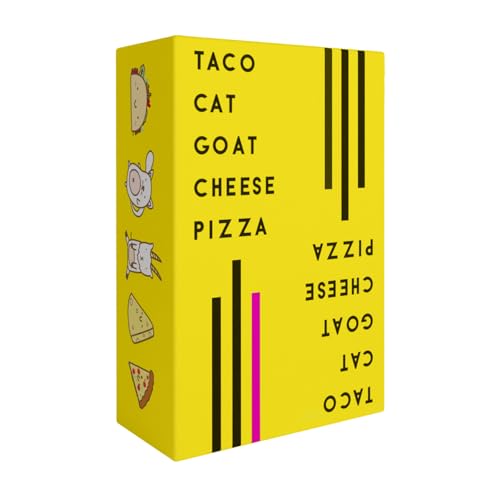
For a quick group card game, Taco Cat Goat Cheese Pizza combines a spoken-word sequence with a race to slap the pile when a played card matches the word. The game supports 2–8 players, and rounds last about 10–15 minutes, making it suitable for short sessions with family or friends. Action cards add variations to the rhythm. The rapid slapping mechanic rewards attention and quick reactions, so it is a better fit for children who enjoy lively competition than for groups seeking a quiet, strategic game.
Bottom line: Choose this for a nine-year-old who likes fast rounds and can play with a group.
Hasbro Crossfire

For exactly two players who want a more active contest, Hasbro Crossfire uses blasters to shoot marbles toward targets and the opponent’s end zone. Players race to score points, with the first to five winning; the game is designed for about 10 minutes. The arena setup makes this a distinct alternative to card or tabletop stacking games, and the age range begins at seven. The two-player limit is the key tradeoff: it will not suit a group looking for a game everyone can join at once.
Bottom line: Pick this when the child has one opponent and prefers aiming and action.
Stickflip Electronic Flip Challenge

For a child who wants to move while playing, Stickflip Electronic Flip Challenge centers on flipping a handheld game piece and uses electronic counting to register full spins. Its 10 game modes include high scores to beat, with solo and group play both supported. The 8+ age rating makes it age-aligned for a nine-year-old, and the compact form is different from a board or card set. This choice emphasizes repeated physical flips rather than shared turns, so it may be less appealing to children seeking a conventional table game.
Bottom line: Choose this for a nine-year-old who enjoys physical skill challenges and score chasing.
Hasbro Trouble
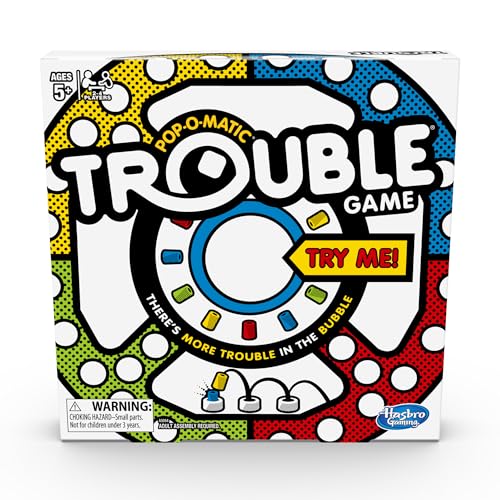
For a familiar race-around-the-board format, Hasbro Trouble uses a Pop-o-Matic bubble to roll the die and offers classic rules plus an option with Power Up Spaces. It supports 2–4 players and is rated for ages five and up, so a nine-year-old can play with younger siblings as well as peers. The simple goal is to move all pieces around the board first. Its turn-based board format is less physically active than the blaster or flipping games, which matters for children who want constant movement.
Bottom line: Pick this for family play with up to four people and a straightforward board-game format.
Stack Attack Tower Game

For careful hands and a tabletop challenge, Stack Attack Tower Game combines a balance-stacking format with 48 pieces and 36 challenge cards. Its card-based modes add variety to solo, team, or competitive play, making it distinct from games built around a board, blasters, or rapid reactions. The set is aimed at children and adults and works for family or group sessions. The maker does not give an age rating or player count, so confirm that the suggested play format suits your group before choosing it.
Bottom line: Choose this for a nine-year-old who enjoys balancing pieces and trying varied challenges.
How to choose games for 9 year olds
Start with the group size and activity level: a game for 2–8 players serves a different occasion than a two-player contest or a solo skill challenge. For a short session, look for a 10-minute round; longer turn-taking games can work better when the group has time to stay seated. Card slapping and marble shooting call for quick reactions, while balance stacking rewards slower, careful placement. A practical rule: for a group larger than four, choose a format whose player range reaches the full group rather than expecting players to rotate. Age labels are minimum guidance, not a measure of every child’s reading, coordination, or patience, so consider the play mechanic as well as the number.
Game formats and group size
Player count is often the most useful way to narrow choices for a nine-year-old. Two-player games create direct competition, while card games can accommodate a larger group without teams or a board taking up much space. A handheld flip challenge can be played solo or with friends, and stacking games can support solo, team, or competitive modes. The table matches common occasions to formats instead of treating different play styles as interchangeable.
| Occasion | Useful format | What to prioritize |
|---|---|---|
| Two players | Head-to-head action | Clear scoring and short play time |
| Family group | Card or board game | Player range that includes everyone |
| Solo practice | Skill challenge or stacking | Repeatable goals or challenge modes |
For a child who dislikes waiting between turns, choose a format with simultaneous reactions or continuous activity; for a group that prefers predictable turns, a board game may be an easier fit.
Safety and setup for active games
Indoor active games need open space and a clear play surface. Keep marbles away from toddlers and pets because small game pieces can pose a choking hazard, and collect every marble after play. A blaster game should be aimed only at its targets, not at faces; keep players’ eyes clear of the firing path. For a flip challenge, use an uncluttered area so the game piece cannot strike fragile objects or another player. Tabletop stacking also benefits from a stable surface with enough room for cards and pieces. Before play, count pieces and agree on a boundary for active movement, especially when children are playing near furniture or other household activities.
Keeping game rounds enjoyable
Short rounds can make it easier to include children with different attention spans: a 10–15-minute card session is simple to fit between other activities. For a longer family gathering, rotate who picks the next format rather than making every child play the same style. A common mismatch is choosing solely by age label while ignoring player count or the game’s main action; a nine-year-old who dislikes rapid hand movement may not enjoy a slap game even when the minimum age is lower. Likewise, a two-player game cannot include a whole party at once. Match the mechanics to the child’s preferences and the number of people present for that session.
Frequently Asked Questions
Are age 7+ games suitable for a 9-year-old?
An age 7+ rating includes a nine-year-old by its minimum age. The game’s main action still matters: fast slapping, aiming, or turn-taking may suit different children.
What games work for a group of six children?
A game with a range of 2–8 players can include six children at once. A two-player game is a poor fit for that group unless children rotate.
Are marbles safe for younger siblings nearby?
Marbles are small parts and can pose a choking hazard to children under three. Keep them out of reach and count them back into the set after play.
How much space do indoor action games need?
Leave a clear surface and keep the firing or movement path away from faces and fragile objects. A tabletop arena needs room for its targets and marbles, while a flipping activity benefits from open space around the player.
Can stacking games be played alone?
Some stacking formats include solo challenges as well as team or competitive modes. Challenge cards can provide a goal for solo play, while group modes suit a shared session.