
Generator Conversion to LP Gas: 3 Kits Compared

Grenergy EU2200i Tri-Fuel Kit is the closest match for converting a compatible generator to LP gas because it supports propane, natural gas and gasoline and arrives preset for propane. Choose a different kit if you need a named generator-model match or a replacement carburetor rather than a bolt-on conversion.
Generator fuel conversion kits route gaseous fuel into the engine; compatibility and inlet pressure must match the generator and fuel supply.
We earn a commission if you buy through links on this page. As an Amazon Associate I earn from qualifying purchases. Products are compared on manufacturer specifications, not hands-on testing.
- Best overall: Grenergy EU2200i Tri-Fuel Kit – Supports propane, natural gas and gasoline, and is preset to run on propane.
- Best for carburetor replacement: YAMAKATO 163–224 cc Tri-Fuel Carburetor – A tri-fuel carburetor kit covers listed 163–224 cc generator applications.
- Best for broad generator fit: GP7500E Generic Tri-Fuel Conversion Kit – Its venturi design is intended for installation on most generators without modification.
| Product | Best for | Fuel options | Compatibility | Shop |
|---|---|---|---|---|
| Grenergy EU2200i Tri-Fuel Kit | Propane-ready setup | Propane, natural gas, gasoline | Honda EU2200i | Check Price on Amazon |
| YAMAKATO 163–224 cc Tri-Fuel Carburetor | Carburetor replacement | Natural gas, gasoline, propane | 163–224 cc generators; listed models | Check Price on Amazon |
| GP7500E Generic Tri-Fuel Conversion Kit | Low-pressure fuel | Natural gas, propane, gasoline | Generic GP7500E/GP7500 | Check Price on Amazon |
Generator Conversion Kits for LP Gas
Compare fuel capability, generator fit and pressure needs before selecting a conversion kit.
Grenergy EU2200i Tri-Fuel Kit
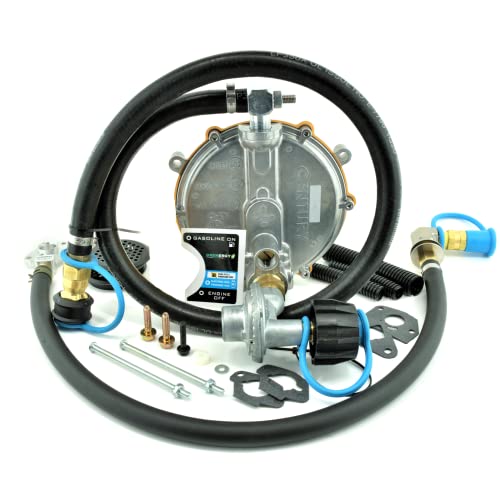
Unlike the natural-gas-focused options, this kit supports propane, natural gas and gasoline, and Grenergy says it arrives preset for propane. It is identified for the Honda EU2200i and is designed to bolt on without modifying the factory carburetor. That makes it a fit for owners of that generator who want to switch among the three fuels. Its compatibility is specific: the model information does not establish fit for other Honda generators, so owners of a different model should confirm compatibility before ordering.
Bottom line: Choose this if you have an EU2200i and want propane preset with two other fuel options.
YAMAKATO 163–224 cc Tri-Fuel Carburetor

This option replaces the carburetor rather than adding a bolt-on fuel conversion, and its range covers 163–224 cc engines. It supports natural gas, gasoline and propane, with compatibility named for several Honda/clone, Generac, Ai Power, Ironton and Champion generator models. The kit includes non-asbestos mounting gaskets. It suits someone whose generator falls within the engine range and model fit. The long set of compatible models does not establish fit for every generator with a similar displacement, so verify the exact model before choosing it.
Bottom line: Pick this when your generator matches a model and needs a tri-fuel carburetor.
GP7500E Generic Tri-Fuel Conversion Kit

This kit explicitly supports low-pressure propane alongside natural gas and gasoline, with an inlet requirement of 9–13.8 inches of water column. Its venturi design is intended to install without modifying most generators, and it can use an Impco or aftermarket regulator. The generic application names GP7500E and GP7500, so it may suit those setups when the fuel pressure matches. “Most generators” is not a model-specific fit guarantee; check your generator’s compatibility and regulator arrangement before selecting it.
Bottom line: Choose this when your setup matches the named application and supplies the required low pressure.
How to choose a generator LP gas conversion kit
Start with generator model compatibility, then match fuel type and pressure. A kit that supports propane may require a different regulator or fitting from one intended for natural gas; the two fuel sources should not be treated as interchangeable without the specified setup. Check whether the kit replaces the carburetor, attaches through a venturi, or uses an existing carburetor port, because those designs involve different installation work. A conversion can also change available generator output, so consult the generator and kit specifications rather than assuming gasoline output carries over unchanged. If your generator is not among the named applications, confirm fit and regulator requirements before ordering. Never operate a generator indoors or in an enclosed space: carbon monoxide can accumulate to deadly levels.
What inlet pressure does an LP conversion need
Inches of water column (in. wc) measure low gas pressure, not the high pressure inside a propane cylinder. A regulator reduces cylinder pressure to the level an appliance or conversion kit can use. Do not connect a cylinder directly to a low-pressure inlet, and do not assume a natural-gas line meets a propane kit’s requirement. Confirm the pressure at the kit inlet and use the regulator arrangement the kit calls for. A mismatch can prevent proper operation and create a safety hazard.
Generator conversion kit types compared
Conversion kits differ by how they feed gas and whether they replace engine parts. Use this comparison to identify the kind of setup each design represents, then verify compatibility with your generator model.
| Kit approach | What changes | Best fit |
|---|---|---|
| Carburetor-port kit | Uses an existing carburetor port | Named generator application; no permanent modification |
| Tri-fuel carburetor | Replaces the carburetor | Compatible engine and listed model |
| Venturi kit | Adds a venturi fuel path | Generator confirmed compatible with the design |
A “universal” or broad-fit claim is not a substitute for a model match. Engine displacement, carburetor layout and regulator connection all affect whether a kit is appropriate.
Safe setup and generator operation
Run portable generators outdoors, with the exhaust directed away from doors, windows and vents; never use one in a home, garage or other enclosed area. Carbon monoxide is odorless and can build up quickly. Keep the generator dry and away from rain, and connect loads only as the manufacturer permits. Shut the engine off and let it cool before refueling or changing fuel connections, and keep propane cylinders upright and secured away from heat. Use hoses and regulators rated for the intended fuel and pressure, inspect connections for damage, and use an approved leak-check method after assembly. Stop if you smell gas or suspect a leak; close the fuel supply and move away before troubleshooting.
Frequently Asked Questions
Can any generator be converted to run on propane?
No; compatibility depends on the engine, carburetor and conversion design. Start with the exact generator model, since a kit listing a 163–224 cc range or a specific model does not guarantee fit for every similar engine.
What does 9–13.8 inches of water column mean?
It is a low-pressure gas inlet range, measured in inches of water column. A regulator must reduce cylinder pressure to the kit’s required level; never connect a propane cylinder directly to a low-pressure inlet.
Does propane reduce generator power output?
Fuel conversion can change available output, and the amount depends on the generator and conversion setup. Check the generator and kit specifications for fuel-specific output rather than assuming the gasoline rating applies on propane.
Can a propane generator run indoors or in a garage?
No; portable generators must operate outdoors because their exhaust contains carbon monoxide. Keep the unit away from doors, windows and vents, and never run it in a garage, even with the door open.