
Glue Boards for Roaches: 4 Sizes Compared

Catchmaster Max-Catch 36-Pack is the best fit for most people because its 36-board pack is intended for insects including roaches and does not require bait. Choose Catchmaster Compact 75-Pack instead for narrow spaces, or Trapper Max 12-Pack if you want boards that can fold and have a peanut butter scent.
Glue boards are adhesive traps that catch pests crossing the surface; they can help monitor roach activity, but they are not a stand-alone fix for an established infestation.
We earn a commission if you buy through links on this page. As an Amazon Associate I earn from qualifying purchases. Products are compared on manufacturer specifications, not hands-on testing.
- Best overall: Catchmaster Max-Catch 36-Pack – The maker names roaches among its target pests, and the boards are intended for use without bait.
- Best for tight spaces: Catchmaster Compact 75-Pack – Its 3.5-by-7-inch size is narrower than the other boards.
- Best for folding placement: Trapper Max 12-Pack – The boards can be used flat or folded, and they have a peanut butter scent.
| Product | Best for | Board size | Pack count | Notable feature | Shop |
|---|---|---|---|---|---|
| Catchmaster Max-Catch 36-Pack | General monitoring | 8.5 × 5.25 in. | 36 | No bait required | Check Price on Amazon |
| Catchmaster Compact 75-Pack | Narrow spaces | 7 × 3.5 in. | 75 | Compact board | Check Price on Amazon |
| Trapper Max 12-Pack | Folded placement | 5.25 × 7.75 in. overall | 12 | Foldable; scented | Check Price on Amazon |
| Catchmaster Extra Sticky XL 60-Pack | Larger coverage | 8 × 5 in. | 60 | Perforated boards | Check Price on Amazon |
Glue Boards for Roaches Compared
Compare board dimensions, pack size, and placement options to match a trap to the space you want to monitor.
Catchmaster Max-Catch 36-Pack

Catchmaster Max-Catch 36-Pack is the only option here whose features explicitly name roaches among its target pests. The pack contains 36 sticky boards, and the maker says they are intended for use without bait; it also says they can last up to one year indoors under normal conditions. Place boards where roach activity is suspected, such as along a wall or near a hiding spot, rather than in the middle of an open floor. The limitation is that a glue board catches pests that cross it, so it will not reach roaches that stay inside a harborage.
Bottom line: Pick this if you want a larger pack explicitly intended for roaches and other insects.
Catchmaster Compact 75-Pack

Catchmaster Compact 75-Pack has the narrowest board in this group, making its 3.5-inch width useful when a wider trap will not fit beside an appliance or in a corner. The 75-board pack is intended for insects and rodents without added bait, according to the maker. Its format suits monitoring along a narrow travel path, but a smaller board covers less floor area than the 5-inch-wide options. Avoid placing any glue board where a pet or child can reach the adhesive.
Bottom line: Choose this for narrow gaps where a wider board is awkward to place.
Trapper Max 12-Pack
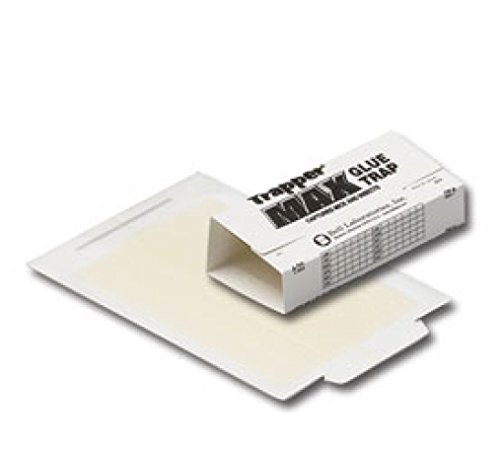
Trapper Max 12-Pack stands out because its boards can be positioned flat or folded, and the maker says they are peanut butter scented. Each board has a 4.5-by-6.5-inch glue surface within a 5.25-by-7.75-inch overall footprint. That gives a clear measure for deciding whether it will fit a suspected roach route or corner. The pack contains 12 boards, fewer than the bulk packs here, so it may suit targeted monitoring rather than placing traps in many rooms. Scent does not replace good placement near actual pest activity.
Bottom line: Pick this when a foldable board or scented adhesive is useful for the placement.
Catchmaster Extra Sticky XL 60-Pack
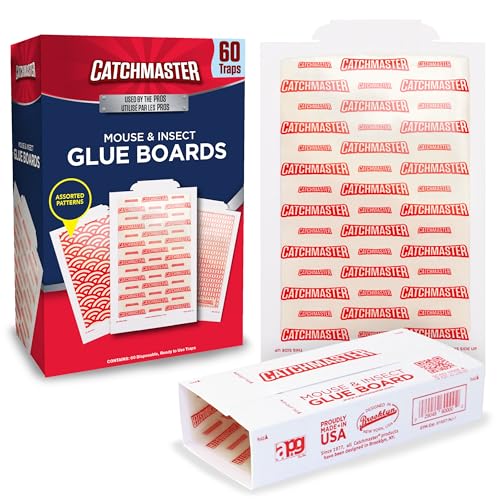
Catchmaster Extra Sticky XL 60-Pack offers 60 boards measuring 8 by 5 inches, with perforations that the maker says let users tear off sections and place glue directly against baseboards. The larger footprint can cover more of a suspected travel path than the compact 3.5-inch-wide option. Its features mention roaches as well as mice and other insects, but much of the guidance focuses on rodents; use the board as a monitor where roaches are actually active. The wider board may be harder to fit in tight gaps, so measure a narrow space before choosing it.
Bottom line: Choose this for broad baseboard placement when the 5-inch width fits.
How to Choose Glue Boards for Roaches
Choose a board by matching its footprint to the route you want to monitor, then use enough boards to compare activity across locations. Roaches tend to travel along edges and hide in dark, tight spaces, so a board placed flush to a wall or inside a cabinet can be more informative than one left in an open room. A practical decision rule is to measure the gap first: if it is under 3.5 inches wide, none of these boards is certain to fit flat. Glue boards indicate where pests are moving; they do not reveal every hiding place or replace sanitation and exclusion.
Read catches as clues
A board with catches can help narrow down a route or harborage, while an empty board does not prove a room is roach-free. Check the same monitoring points regularly and move a trap if it is untouched while activity appears elsewhere.
Where to Place Roach Glue Boards
Place glue boards beside walls, behind appliances, under sinks, and near cabinet corners where roaches can travel close to cover. Keep boards out of wet areas and away from loose dust, grease, or debris, which can interfere with the adhesive. Several monitoring points around a kitchen or bathroom can help distinguish a localized route from activity in multiple areas; label or map locations so catches are comparable. Do not put sticky boards where children or pets can contact the exposed adhesive. If traps repeatedly catch roaches in multiple rooms, broaden the response instead of relying on boards alone.
Glue Board Sizes and Placement Options
Board footprint affects where a trap fits and how much of a route it covers; overall dimensions can differ from the actual sticky area. Use the measured gap and the desired placement to choose a format, and remember that a board only works when roaches cross its adhesive.
| Need | Board option | Why it may fit |
|---|---|---|
| Narrow path | 3.5-inch-wide board | Less width than the other formats |
| Folded placement | Foldable board | Can be set flat or folded |
| Baseboard coverage | Perforated 8-by-5-inch board | Can be torn into sections per the maker |
| Multiple monitoring spots | 36- or 75-board pack | More boards for distributing across locations |
Confirm the exact space available before setting a board, especially behind an appliance where clearance is limited.
What Glue Boards Can and Cannot Do
Glue boards are useful for monitoring and catching individual roaches that cross the sticky surface, but they do not treat a hidden nest or block new pests from entering. Roach control usually also involves removing food and water sources, sealing entry gaps, and addressing hiding places; crumbs, standing water, and clutter can sustain activity even when traps are present. A board with multiple catches can point toward a route that needs attention, while ongoing activity across several locations may warrant a broader pest-control plan. Keep the adhesive inaccessible to children and pets, and replace or relocate boards when dust or debris covers the glue.
Frequently Asked Questions
How many glue boards should I place for roaches?
Use multiple boards at separate suspected routes so you can compare activity between locations. Start with wall edges, under sinks, and behind appliances, then adjust placement based on catches rather than concentrating every board in one open area.
Do roach glue boards attract cockroaches?
Glue boards mainly catch roaches that cross the adhesive; they are not a substitute for reducing food, water, and shelter. One option here is scented, but scent alone does not ensure roaches will find a board.
How often should I check roach glue boards?
Check monitoring boards at least weekly so you can record catches and see whether activity is changing. Replace or move a board sooner if moisture, dust, grease, or debris compromises its adhesive.
Can glue boards eliminate a roach infestation?
Glue boards can catch individual roaches and show where activity occurs, but they do not reach pests that remain hidden. Persistent catches or activity in multiple rooms call for sanitation, exclusion, and a broader control approach.
Are glue boards safe around pets and children?
Keep exposed adhesive out of reach because a child or pet can become stuck to it. Place boards behind appliances or inside inaccessible cabinets, and use only locations that prevent contact.