
Glue for Window Glass: 3 Adhesives Compared by Use

For vehicle window glass, 3M Window-Weld Urethane 08609 is the named-product match, with a maker-claimed one-hour safe drive-away time at 73°F; choose a clear CA adhesive instead for small household glass pieces, not a windshield.
Urethane windshield adhesive bonds automotive glass to a vehicle frame, while cyanoacrylate (CA) glue is a fast-setting adhesive for smaller repairs. Do not substitute craft glue for a structural windshield bond.
We earn a commission if you buy through links on this page. As an Amazon Associate I earn from qualifying purchases. Products are compared on manufacturer specifications, not hands-on testing.
- Best overall: 3M Window-Weld Urethane 08609 – Its maker claims safe drive-away strength in one hour at 73°F, and it comes in a 10.5 fl oz cartridge.
- Best for RV glass: Berkland Polyurethane Windshield Adhesive – The maker says it bonds windshields, rear windows, and side glass on vehicles and RVs.
| Product | Best for | Adhesive type | Package size | Shop |
|---|---|---|---|---|
| 3M Window-Weld Urethane 08609 | Vehicle windshields | Urethane | 10.5 fl oz | Check Price on Amazon |
| Berkland Polyurethane Windshield Adhesive | RV window bonds | Polyurethane | 1 unit | Check Price on Amazon |
| Quick-Curing Urethane Windshield Adhesive | Overhead application | Polyurethane | 310 ml | Check Price on Amazon |
Glue for Window Glass Compared
Match the adhesive chemistry to the glass job: vehicle glazing needs urethane, while small household repairs can use CA glue.
3M Window-Weld Urethane 08609

For a vehicle windshield bond, this cartridge is the clearest fit: it uses urethane and is sized for a standard 10.5 oz caulking gun. The maker claims a 10–15 minute work time and safe drive-away strength in as little as one hour at 73°F. Its medium-viscosity, non-sag formula is intended for vertical or overhead placement. The limitation is that the one-hour figure is conditional; temperature and installation conditions matter, so do not treat it as a universal drive-away time. Structural windshield work also requires correct preparation and installation.
Bottom line: Choose this for a vehicle windshield when a cartridge application and the cure conditions suit the job.
Berkland Polyurethane Windshield Adhesive

For shoppers working on RV or side glass, this polyurethane adhesive has the broadest vehicle-glass scope described here: the maker says it bonds windshields, rear windows, and side glass on cars and RVs. It is supplied as a single black unit, and the maker claims a flexible bond that resists shrinking and cracking through vibration and weather exposure. Unlike the 10.5 fl oz 3M cartridge, the package size is given as a unit rather than a volume, so it is harder to compare application quantity. Confirm the vehicle-glass installation requirements before use.
Bottom line: Choose this when the job is an RV or vehicle rear/side window and the installation requirements match.
Quick-Curing Urethane Windshield Adhesive
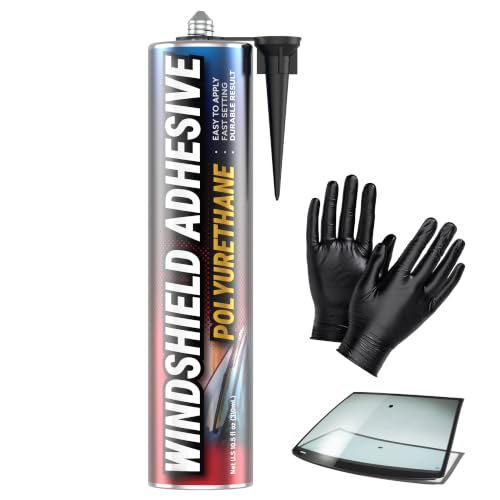
This 310 ml urethane cartridge stands out for non-sag application: the maker says its formula is suitable for vertical and overhead work and includes gloves and an applicator tip. The maker also claims weather resistance, use without primer, and a quick cure, making it an option for auto-glass repairs where adhesive position matters. That gap matters when a vehicle needs to return to the road on a defined schedule; confirm the required cure time with the installer.
Bottom line: Choose this for vertical or overhead automotive glass work when cure timing can be verified.
How to choose glue for window glass
Choose by what the glass must bond to: automotive windshields use urethane to bond glass to the vehicle frame, while small decorative or household repairs may use clear CA glue. A windshield is part of the vehicle’s occupant-protection system, so a craft adhesive is not a safe substitute for a glazing urethane. For a vehicle installation, use a qualified auto-glass installer and confirm the required drive-away time for the exact adhesive and conditions. An one-hour drive-away claim applies at 73°F, not automatically in colder weather or every installation. For a small glassware chip or decor join, select a clear adhesive labeled for those materials and avoid using it where a structural bond is needed.
Urethane versus clear glass glue
Urethane and CA glue solve different jobs: urethane is used for a flexible vehicle-glass bond, while CA formulations suit small, fast-setting joins. The table separates their intended use and application scale so the choice is not made on cure speed alone.
| Type | Typical job | Decision rule |
|---|---|---|
| Automotive urethane | Windshield to vehicle frame | Use for vehicle glazing, with installation and cure time confirmed |
| Clear CA glue | Small glassware, mirror, or craft repair | Use only for a nonstructural small join |
A fast surface set does not mean a windshield is safe to drive. Bonded vehicle glass needs the correct adhesive bead, surface preparation, and curing conditions; the application must also follow the vehicle and adhesive requirements.
What cure time means for a windshield
A safe drive-away time is not the same as a glue’s initial set: one product here claims safe drive-away strength in as little as one hour at 73°F, while another gives only a general quick-curing claim. Temperature, humidity, bead size, vehicle structure, and installation method can change cure behavior, so a single figure should not be applied to every job. If the car must be driven at a fixed time, select only an adhesive with a clearly applicable drive-away requirement and have the installer confirm it. Do not rely on tack-free feel or a short work time as evidence that the bond can carry loads.
Common window-glass adhesive mistakes
The biggest mistake is using a household clear glue for a windshield: vehicle glazing urethane provides a flexible, structural bond, whereas small-repair CA glue is intended for much smaller joins. Another error is treating a product’s weather-resistant or waterproof claim as proof that any window installation is appropriate; adhesive chemistry and substrate preparation still matter. Keep surfaces prepared for the chosen adhesive, apply only as directed, and avoid contaminating the bonding area with oils or dust. For automotive glass, do not drive until the installer confirms the safe drive-away time under the actual conditions; a cure claim tied to 73°F is not a universal guarantee.
Frequently Asked Questions
Can super glue hold a car windshield in place?
No, clear household super glue is not a substitute for automotive windshield urethane. Windshields need a bond to the vehicle frame, and the required safe drive-away time depends on the adhesive and installation conditions.
How long does windshield urethane take to cure?
A product here claims safe drive-away strength in as little as one hour at 73°F, but that is a conditional claim rather than a universal cure time. Lower temperatures, humidity, and installation conditions can change the required wait.
Is clear glass glue suitable for a window pane?
Clear CA glue can suit small, nonstructural decorative or household repairs, but it should not replace glazing materials used to retain a window or windshield. For a pane that must stay secured in a frame, use an adhesive specified for that glazing application.
Can windshield adhesive be applied overhead?
Some non-sag urethane formulas are designed for vertical and overhead application; one product here claims that use. Confirm the adhesive is suitable for the precise glass and frame surfaces before installation.
Does waterproof glue make a windshield repair safe?
No, a waterproof claim alone does not establish structural suitability or safe drive-away timing. Automotive glass needs the correct urethane bond and installation process, with drive-away time confirmed for the conditions.