
Glycolic Acid 10 Percent: Compare Four Formulas

For a 10% glycolic acid product, Naturium’s leave-on resurfacing gel is the closest match because its name and formula specify 10% glycolic acid. Choose a different option if you prefer a toner, serum, or a 7% formula instead.
We earn a commission if you buy through links on this page. As an Amazon Associate I earn from qualifying purchases. Products are compared on manufacturer specifications, not hands-on testing.
- Best overall: Naturium Resurfacing Gel 10% – The leave-on gel pairs 10% glycolic acid with fruit acids.
- Best for toner format: MAREE Glycolic Acid Toner 10% – This 10% option is a toner in an 8.45-ounce size.
- Best for serum format: L’Oréal Revitalift Glycolic Acid Serum 10% – The 10% formula is a face serum with aloe.
| Product | Best for | Format | Size | Shop |
|---|---|---|---|---|
| Naturium Resurfacing Gel 10% | Leave-on gel | Gel | 3.0 fl oz | Check Price on Amazon |
| MAREE Glycolic Acid Toner 10% | Large toner format | Toner | 8.45 fl oz | Check Price on Amazon |
| L’Oréal Revitalift Glycolic Acid Serum 10% | Serum format | Face serum | 1.0 fl oz | Check Price on Amazon |
Glycolic Acid 10 Percent Products Compared
Compare concentration, format and bottle size to choose an exfoliant suited to your routine.
Naturium Resurfacing Gel 10%

Naturium is the direct match for a 10% glycolic acid gel, rather than a toner or serum. The leave-on formula also contains fruit acids, and the brand says it is intended for daily or as-needed use on clean skin followed by moisturizer. This format suits someone who wants an exfoliating gel rather than a liquid toner. Its 3.0-ounce size is smaller than the two toners here, so it may be less suitable for someone prioritizing a larger bottle.
Bottom line: Choose this if you specifically want a 10% leave-on gel.
MAREE Glycolic Acid Toner 10%

MAREE offers the largest container among the 10% options: an 8.45-ounce glycolic acid toner. The brand describes it as a face-and-body toner and says it is designed to hydrate and soften while exfoliating. This fits someone who wants a liquid format and a larger bottle instead of a gel or serum.
Bottom line: Choose this if you want a 10% toner in a larger bottle.
L’Oréal Revitalift Glycolic Acid Serum 10%
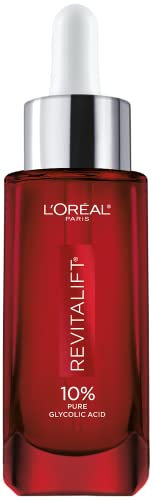
L’Oréal’s 10% glycolic acid option is a face serum, setting it apart from the gel and toners. The brand says the formula includes soothing aloe and is designed for daily use; it also claims visible dark-spot reduction in two weeks. The 1.0-ounce size may appeal to someone who prefers a small serum format. Its concentrated formula and small bottle are less suited to shoppers seeking a toner or a larger-volume product.
Bottom line: Pick this if you want a 10% glycolic acid serum.
How to choose a glycolic acid 10 percent formula
Choose by format first, then concentration and routine tolerance: a gel, toner and serum can feel different even when each contains 10% glycolic acid. Glycolic acid is an alpha hydroxy acid (AHA), a water-soluble exfoliant that loosens bonds between surface cells. A 10% label does not by itself establish the product’s pH or how strongly it exfoliates, so concentration alone cannot predict irritation. If you are new to AHAs, start with less frequent use rather than daily application, and increase only if your skin tolerates it. Avoid combining multiple exfoliating acids in the same routine at first. Sunscreen matters: AHAs can increase sensitivity to sunlight, so use broad-spectrum SPF 30 or higher during the day.
Choose a gel for a leave-on gel texture, a toner for a liquid application, or a serum if that format best fits your routine. The included products range from 1.0 to 8.45 fluid ounces, so bottle size is another practical difference.
Glycolic acid strengths and formats compared
The products differ in both concentration and delivery format, so match the format to your preference rather than treating every glycolic acid product as interchangeable. A lower concentration may be a gentler starting point for some routines, but irritation also depends on pH, application frequency and other ingredients. A serum’s concentration does not guarantee it penetrates better than a toner or gel.
Use this format guide to narrow the choice by what you want to apply and the concentration.
| Format | Concentration | Typical use distinction |
|---|---|---|
| Gel | 10% | Leave-on exfoliant texture |
| Toner | 7% or 10% | Liquid application; one product also mentions scalp use |
| Face serum | 10% | Concentrated face-care format |
Names and format descriptions identify what each product is; they do not establish which texture will feel most comfortable on an individual’s skin.
How often to use glycolic acid safely
Begin glycolic acid one or two evenings per week if your skin is new to exfoliating acids, rather than assuming that a daily-use claim is right for every routine. AHAs can cause stinging, redness or peeling, especially when used too often or alongside retinoids, benzoyl peroxide or other exfoliants. Stop use if irritation develops, and do not apply acid to broken or freshly shaved skin. Use broad-spectrum SPF 30 or higher during the day because AHA use can increase sun sensitivity. Keep products away from eyes and sensitive areas; rinse thoroughly if accidental contact occurs.
Patch-test on a small area before regular use, especially if you have reactive skin. For a new routine, avoid layering two acid products on the same night; spacing them across different evenings makes it easier to identify the cause if irritation occurs.
Frequently Asked Questions
Can glycolic acid be used every day?
Some products are formulated for daily use, but a new user should start one or two nights weekly and increase only if there is no irritation. Daily use can be too frequent for sensitive skin or a routine that already includes exfoliants.
Should glycolic acid be used in the morning or evening?
Evening is a practical time to use glycolic acid because it leaves daytime sunscreen application straightforward. The Ordinary recommends evening use, and broad-spectrum SPF 30 or higher is important during the day when using AHAs.
Can glycolic acid be layered with retinol?
Layering glycolic acid and retinol can raise the chance of irritation, especially for new users. Start them on separate evenings and discontinue use if persistent redness, burning or peeling develops.
Does glycolic acid work for sensitive skin?
Sensitive skin may react to glycolic acid even at 7%, because formula pH and frequency also affect tolerability. Start with a patch test and no more than one weekly application, and stop if irritation occurs.
Do I need sunscreen with glycolic acid?
Yes, use broad-spectrum SPF 30 or higher during the day while using an AHA. Glycolic acid can make skin more sensitive to sunlight, so reapply sunscreen as directed on its packaging.