
Gold Paint for Plastic: 5 Options by Paint Type

Krylon Fusion All-In-One Gold Spray is the closest fit for most plastic projects because its maker says the spray paint is intended for plastic and bonds without sanding or priming. Choose a craft acrylic for brushwork on other surfaces, or a metallic spray for metal and wood; confirm plastic compatibility before using a paint that does not name plastic.
We earn a commission if you buy through links on this page. As an Amazon Associate I earn from qualifying purchases. Products are compared on manufacturer specifications, not hands-on testing.
- Best overall: Krylon Fusion All-In-One Gold Spray – Its maker says the spray paint is suitable for plastic and bonds without sanding or priming.
- Best for larger craft projects: Nicpro Metallic Gold Acrylic, 8.45 oz – The 8.45-ounce acrylic paint offers a larger volume for work on its surfaces.
- Best for small crafts: Apple Barrel King’s Gold Acrylic, 2 oz – The 2-ounce acrylic is sized for basecoating and stenciling, with a matte finish.
| Product | Best for | Format | Size | Finish | Shop |
|---|---|---|---|---|---|
| Krylon Fusion All-In-One Gold Spray | Plastic spray projects | Aerosol spray | 12 oz | — | Check Price on Amazon |
| Nicpro Metallic Gold Acrylic, 8.45 oz | Larger brushwork | Acrylic paint | 8.45 fl oz | Shiny gloss | Check Price on Amazon |
| Apple Barrel King’s Gold Acrylic, 2 oz | Small craft details | Acrylic paint | 2 fl oz | Matte | Check Price on Amazon |
| Krylon COLORmaxx Metallic Gold Spray | Metallic spray finish | Aerosol spray | 11 oz | Metallic | Check Price on Amazon |
| Rust-Oleum Stops Rust Bright Coat Gold | Metal accent pieces | Aerosol spray | 11 oz | Metallic | Check Price on Amazon |
Gold Paint for Plastic and Related Paints
Compare the plastic-compatible spray with related gold paints by format, size, and stated use.
Krylon Fusion All-In-One Gold Spray

For a plastic surface, this aerosol is the clearest match: the maker says it is suitable for plastic, as well as wood, metal, PVC, and tile. Its all-in-one formula is promoted for adhesion without sanding or priming, and the product is intended for indoor and outdoor use. The maker recommends spraying at 55°F to 75°F and mentions humidity as a factor in best results. The main tradeoff is application format: a spray can is less suited than brush-on paint for tiny, controlled details. Use it when the plastic item can be sprayed evenly and safely.
Bottom line: Choose this for plastic projects that suit an aerosol application.
Nicpro Metallic Gold Acrylic, 8.45 oz

Compared with the plastic-focused aerosol, this is a brush-on acrylic in a larger 8.45-ounce bottle, suited to projects on surfaces named by the maker: wood, metal, clay, canvas, and furniture. The maker says its creamy, high-pigment formula dries quickly to a shiny gloss and describes it as non-toxic, acid-free, and low-odor. Plastic is not among its named surfaces, so do not assume the same adhesion as a paint specifically identified for plastic; confirm compatibility before committing to the project. Its volume makes more sense for larger decorative work than a few small accents.
Bottom line: Pick this for larger brush-on projects on its named surfaces.
Apple Barrel King’s Gold Acrylic, 2 oz

Unlike the larger gloss acrylic, this 2-ounce bottle dries matte and is aimed at basecoating and stenciling. The maker names wood, paper, canvas, Styrofoam, and papier-mâché among its usable surfaces, and says wet paint cleans up with soap and water. Those uses make it a compact option for small craft work, but plastic is not named, and the matte finish will not match a metallic gold spray or gloss paint. Treat it as a related craft paint rather than a confirmed plastic coating, and check compatibility before painting a plastic piece.
Bottom line: Choose it for small matte craft projects on its named surfaces.
Krylon COLORmaxx Metallic Gold Spray
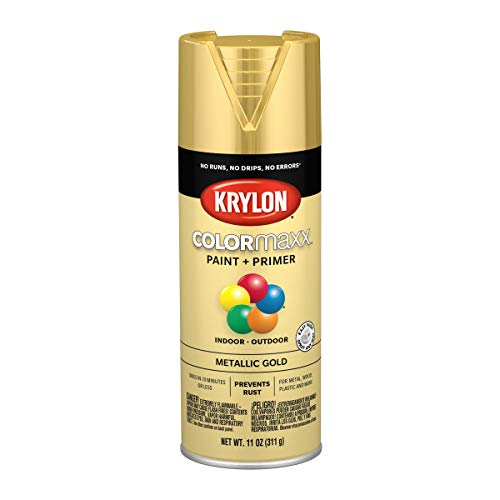
For a metallic aerosol finish, this COLORmaxx paint is identified as metallic gold and as spray paint with primer for indoor and outdoor use. Confirm compatibility before using it on plastic, especially if the piece needs durable adhesion. An aerosol can is better suited to broad, accessible areas than detailed brushwork; mask surrounding surfaces and apply only where spray can be controlled.
Bottom line: Consider it for metallic spray work after confirming plastic compatibility.
Rust-Oleum Stops Rust Bright Coat Gold

This metallic aerosol is specifically aimed at interior projects in metal, wood, concrete, or masonry, rather than at plastic. The maker says the coating resists chips and color loss, and that it dries to the touch or handling in 60 minutes. Those claims make it more relevant to the hard surfaces than to a plastic object; verify the surface fit before considering it for plastic. The bright metallic look may suit an accent piece, but the use cases do not establish adhesion to plastic.
Bottom line: Choose it for the maker-named metal, wood, concrete, or masonry projects.
How to Choose Gold Paint for Plastic
Start with a paint whose maker names plastic as a suitable surface; that is the strongest fit signal in this group. A spray can covers broad, open areas quickly, while brush-on acrylic gives more control for small shapes and edges. Plastic types vary: rigid polystyrene, ABS, and PVC can behave differently, and flexible polyethylene or polypropylene are especially difficult to coat because paint may not adhere well. Test a small, hidden spot before doing the full object. If the paint does not explicitly identify the plastic or the test coat scratches off easily after drying, choose a coating formulated for that plastic rather than layering on more paint.
Preparing Plastic Before Painting
Clean plastic with mild soap and water, rinse, and let it dry completely; oils, dust, and mold-release residue can undermine adhesion. For a product that says it bonds without sanding or priming, follow that stated capability, but do not generalize it to other paints. On other plastics, light abrasion with fine 400-grit sandpaper can help create a key, provided the object can tolerate scuffing and the coating instructions permit it. Keep coats thin: heavy wet coats are more likely to run, pool around edges, or dry unevenly. With under 4 inches of clearance around a spray area, move the piece to a more open, ventilated location instead of spraying in the confined space.
Spray Paint and Craft Acrylic Compared
Choose by the surface named and the finish needed, not just by the word gold. The table distinguishes the available formats and their surface fit.
| Paint type | Stated fit | Format and finish |
|---|---|---|
| Plastic-designated spray | Plastic, plus other hard surfaces | Aerosol; finish not given |
| Metallic acrylic | Wood, metal, clay, canvas, furniture | Brush-on; shiny gloss |
| Craft acrylic | Wood, paper, canvas, Styrofoam, papier-mâché | Brush-on; matte |
| Other gold spray paints | Surface fit differs by product | Aerosol; metallic where named |
A brush is easier to control around details, while an aerosol can leave visible spray texture if held too close or applied unevenly. A craft acrylic’s gold color alone does not establish plastic compatibility.
Safe Application and Drying
Spray paint needs moving air and distance from ignition sources; aerosols and their vapors can be flammable, so never spray near a flame, pilot light, or running heater. Work outdoors or in a well-ventilated area, protect nearby surfaces, and keep people and pets away until vapors clear and the coating has dried. The plastic-designated spray maker recommends 55°F to 75°F for best results, and humidity can affect application. A touch-dry surface is not necessarily fully cured: avoid handling, stacking, or putting the painted object into service until the paint has hardened according to its label. Do not spray an item that will contact food unless the coating is specifically labeled for that use.
Frequently Asked Questions
Can acrylic gold paint stick to plastic?
Some acrylic paints can adhere to plastic when the surface is prepared and the paint is suitable for that plastic, but the craft acrylics here name other surfaces instead. Test a hidden area and let it dry before painting the whole object.
How many coats of spray paint should I use?
Use several light, even passes rather than one heavy coat; a typical approach is 2 to 3 thin coats, allowing the label’s recoat interval between them. Excess paint can run or remain tacky, especially in humid conditions.
Should plastic be sanded before painting?
Light scuffing with fine 400-grit sandpaper can help many rigid plastics, but first check that the paint and object allow abrasion. A product whose maker specifically says no sanding is needed does not require that step for its use.
How long should painted plastic cure before handling?
Touch-dry time is not the same as full cure, which commonly takes several days and can extend to about a week. Temperature, humidity, coat thickness, and the paint formula all affect when the finish can handle regular use.
Can gold spray paint be used on outdoor plastic?
Use only a paint whose maker identifies plastic and the intended indoor or outdoor exposure; outdoor sunlight and temperature changes can stress a coating. The plastic-compatible spray here is described by its maker for indoor and outdoor use.