
Golf Guard Travel Case Options Compared by Protection

The Golf Guard travel case name is absent from these options, so Samsonite Tour Classic Hardside is a strong alternative if you want a hard shell, padded interior and four spinner wheels. Choose a soft-sided model instead if lower case weight or a flexible body matters more than a rigid shell.
Golf travel cases enclose a golf bag and clubs for transport; check your longest club and bag dimensions against the case’s interior before choosing.
We earn a commission if you buy through links on this page. As an Amazon Associate I earn from qualifying purchases. Products are compared on manufacturer specifications, not hands-on testing.
- Best overall: Samsonite Tour Classic Hardside – A hardshell case with a padded interior, compression straps and four spinner wheels fits clubs up to 48 inches.
- Best for rigid shell protection: uniHimal PC Hard Case – A PC hard shell and interior padding accommodate golf bags up to 46 inches long and 10.5 inches wide.
- Best for hybrid construction: Hard-Top 1680D Golf Travel Bag – A hard ABS top combines with a soft-sided 1680D body and multiple carrying options.
| Product | Best for | Construction | Club capacity | Wheels | Shop |
|---|---|---|---|---|---|
| Samsonite Tour Classic Hardside | Spinner-wheel travel | ABS hardshell | Up to 48 in | Four spinner wheels | Check Price on Amazon |
| uniHimal PC Hard Case | Rigid shell coverage | PC hard shell | Up to 46 in | Smooth wheels | Check Price on Amazon |
| Hard-Top 1680D Golf Travel Bag | Hybrid construction | ABS top, 1680D body | — | Off-road-grade wheels | Check Price on Amazon |
| ZEEMO Full-Open Wheeled Cover | Full-open access | Oxford fabric, padded heads | Fits longest clubs | Wheeled | Check Price on Amazon |
| 600D Wheeled Golf Travel Bag | Soft-sided storage | 600D polyester Oxford | — | Wheels | Check Price on Amazon |
Golf Guard Travel Case Alternatives
Compare these golf travel cases by construction, stated club fit and how they roll or carry.
Samsonite Tour Classic Hardside

For a rigid case with four-direction rolling, this Samsonite model combines an ABS hardshell with a quilted padded interior and extra foam cushioning over club heads. It holds clubs up to 48 inches and golf bags up to 10.5 inches wide, with compression straps to limit shifting. Four multidirectional spinner wheels are useful through long airport corridors, while two grip handles provide a lifting option. The 14-pound case is heavier than the soft-sided options here, so it suits travelers who prioritize a rigid exterior over a lighter carry.
Bottom line: Pick this if you want a hard shell, padded interior and spinner wheels.
uniHimal PC Hard Case
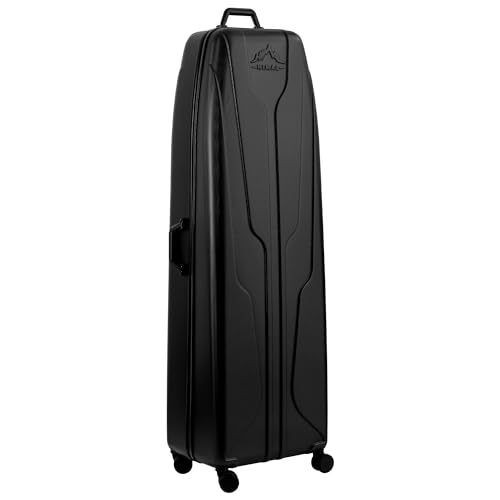
The uniHimal uses a PC hard shell rather than ABS or a fabric body, with thick interior padding for club protection. Its interior is 49 inches high by 16 inches long by 12 inches wide, and it is designed for golf bags up to 46 inches long and 10.5 inches wide. Smooth wheels and reinforced handles address rolling and lifting. At 14.6 pounds, it is a substantial option; compare its club and bag limits with your own equipment, especially if your clubs exceed 46 inches.
Bottom line: Choose this for a PC shell and a fit for bags up to 10.5 inches wide.
Hard-Top 1680D Golf Travel Bag

This hybrid design pairs a hard ABS top with a soft 1680D ballistic nylon body, unlike the fully rigid cases. A thick cushion layer, reinforced bottom shell and off-road-grade wheels are intended to protect and move the bag; the maker also describes the construction as waterproof. Carrying choices include a shoulder strap and multiple handles. The specifications do not give a club-length or bag-width limit, so this is best for buyers who can confirm their bag fits before travel rather than rely on a maximum capacity.
Bottom line: Pick this if you want a hard-top with a flexible fabric body and several carry options.
ZEEMO Full-Open Wheeled Cover

The ZEEMO opens fully for access across the bag, a practical distinction from cases that load through a narrower opening. Its Oxford-fabric cover has extra padding around club heads and external compression straps to reduce club movement; the maker says it fits standard cart bags and accommodates a driver. A contact-card holder is built into the exterior. The soft-sided construction is not a rigid shell, so travelers seeking a hard barrier should choose a hard case design instead.
Bottom line: Choose this for full-open access and padded club heads in a soft-sided cover.
600D Wheeled Golf Travel Bag

The 600D polyester Oxford cover is the straightforward soft-sided choice, with a 55-inch height and wheels for rolling. Multiple zippered compartments add separate storage for items such as shoes and keys, while a soft cushion and robust handles round out the carry setup. Its 7.14-pound weight is lower than the two full hard cases here, which may matter when lifting or stowing the case.
Bottom line: Pick this for a lighter soft cover with extra zippered storage.
How to choose a golf travel case
Start with the kind of protection you need: hard-shell cases have a rigid outer body, while soft covers rely on fabric and padding. A hard case is the clearer choice when a rigid barrier is your priority; a soft case can be easier to lift and store. Hybrid designs pair a hard-top with a fabric body, so protection differs across the case rather than staying uniform. Check two measurements before deciding: your longest club and your golf bag’s widest point. When a case gives a maximum club length or bag width, compare those figures directly; an overall case dimension is not the same as usable interior space.
Also compare rolling hardware and carry handles. Spinner wheels turn in multiple directions, while conventional wheels may need a wider turn. If you expect to lift the case frequently, use its weight as a comparison point rather than assuming wheel type settles portability.
Golf case fit and club length
Measure the longest club from the bottom of its head to the end of the grip, then compare that measurement with the case’s club capacity. Golf drivers commonly measure about 45 inches, and the USGA equipment rules cap club length at 48 inches for most clubs, with a putter exception. Case fit still depends on how the golf bag sits inside, so a maximum club figure does not replace checking bag width. Bags that are too wide can bind even when the clubs are short enough.
When a case states both club length and bag width, use both limits; a case with a 48-inch club allowance may still be too narrow for a large cart bag. If your clubs approach the case maximum or your bag is close to the width, allow room for the bag’s shape and padding rather than matching dimensions exactly.
Hard shell, soft cover and hybrid cases
Construction is the main tradeoff: hard shells use a rigid exterior, soft covers use flexible fabric, and hybrids mix both. The table compares those designs by the protection structure they provide, not by a promise that one case can prevent every travel impact. Interior padding and straps can help cushion or restrain gear, but they are not a substitute for a correct fit. Choose a fully hard-shell design when rigid coverage is your priority; choose a soft cover when lower weight or storage flexibility matters more. A hybrid suits buyers who want a hard-top with a fabric body.
| Type | Outer construction | Decision cue |
|---|---|---|
| Hard shell | Rigid plastic shell | Prioritize rigid exterior coverage |
| Soft cover | Flexible fabric | Prioritize lighter, flexible storage |
| Hybrid | Hard-top, fabric body | Want a mixed construction |
Do not treat a waterproof claim as proof that every seam or zipper is waterproof; the case construction and closures affect exposure points.
Preparing clubs for air travel
Before air travel, secure the clubs inside the bag and keep loose items from shifting around them. Compression straps can restrain movement, and padding around club heads adds a cushion layer; neither changes the case’s maximum fit. Remove or secure accessories that can move freely, then close the case without forcing the zipper or shell. A tight closure can signal that the bag or clubs are overfilling the interior.
Airline handling rules vary, and a golf travel case is not a guarantee against damage or a substitute for checking the carrier’s current baggage rules. Keep identification attached in the holder or another secure place, and check whether the airline has requirements for the outer case, weight or contents. For cases without a clear club-length limit, confirm the interior fit before departure.
Frequently Asked Questions
How do I measure a golf club for case fit?
Measure from the bottom of the club head to the end of the grip, then compare that length with the case’s maximum. Common drivers are about 45 inches long, but check your own longest club rather than assuming.
Will a golf travel case fit a cart bag?
Only if the bag fits the case’s interior length and width. Compare the cart bag’s widest point with the case’s bag-width limit; a case that accepts long clubs can still be too narrow for the bag.
Are hard-shell golf cases safer than soft covers?
A hard shell provides a rigid exterior, while a soft cover uses fabric and padding rather than a rigid barrier. Padding and straps may cushion and restrain clubs, but no case construction guarantees protection from every impact.
Do golf travel cases fit a 48-inch club?
Some cases state a 48-inch capacity, while others give a lower limit or no club-length figure. Measure your longest club and compare it with the case’s usable interior limit, leaving room for the golf bag to sit inside.
Can I put golf shoes in a travel case?
Use a separate zippered compartment when the case has one, and keep shoes from pressing directly against club heads or shafts. Avoid overfilling the case, since crowded gear can shift or make closure difficult.