
Goodman 4 Ton Package Unit: 3 Models Compared

For a Goodman 4 ton package unit, start with the GPH1448H41 if you want a 14 SEER heat pump and its published cabinet dimensions; 4 tons represents 48,000 BTU per hour. Choose a different system type if you need a split system or cooling-only equipment rather than a packaged heat pump.
We earn a commission if you buy through links on this page. As an Amazon Associate I earn from qualifying purchases. Products are compared on manufacturer specifications, not hands-on testing.
- Best overall: Goodman GPH1448H41 14 SEER Heat Pump – The GPH1448H41 pairs a 4-ton packaged heat pump with a 14 SEER rating and a 66.25-inch cabinet length.
- Best for R-32: Goodman GPHM34841 13.4 SEER2 Heat Pump – The GPHM34841 is a 4-ton packaged heat pump with a 13.4 SEER2 rating and R-32 refrigerant.
- Best for efficiency specs: Goodman 4 Ton 13.4 SEER2 Packaged Heat Pump – This packaged heat pump lists 13.4 SEER2, 6.7 HSPF2 and 48,000 BTU capacity.
| Product | Best for | Efficiency | Cabinet dimensions (H × L × W) | Shop |
|---|---|---|---|---|
| Goodman GPH1448H41 14 SEER Heat Pump | Published dimensions | 14 SEER | 38.75 × 66.25 × 34 in. | Check Price on Amazon |
| Goodman GPHM34841 13.4 SEER2 Heat Pump | Compact rating choice | 13.4 SEER2 | — | Check Price on Amazon |
| Goodman 4 Ton 13.4 SEER2 Packaged Heat Pump | Heating efficiency data | 13.4 SEER2; 6.7 HSPF2 | 34 × 66 × 35 in. | Check Price on Amazon |
Goodman 4 Ton Package Unit Options
Compare the packaged heat pump models by their published ratings and physical dimensions before matching one to the home and ductwork.
Goodman GPH1448H41 14 SEER Heat Pump

The GPH1448H41 is the option here with a 14 SEER rating and a complete set of cabinet dimensions. Goodman identifies it as a 4-ton heat pump package unit, which combines heating and cooling components in one outdoor cabinet. Its height, length and width can help narrow a replacement search where the existing equipment pad or service area is constrained. The specifications do not give a refrigerant type or a SEER2 rating, so buyers comparing current efficiency labels should verify those before choosing. This model suits someone prioritizing known physical fit measurements over a SEER2 figure.
Bottom line: Choose this when the 14 SEER rating and known cabinet dimensions are the deciding factors.
Goodman GPHM34841 13.4 SEER2 Heat Pump
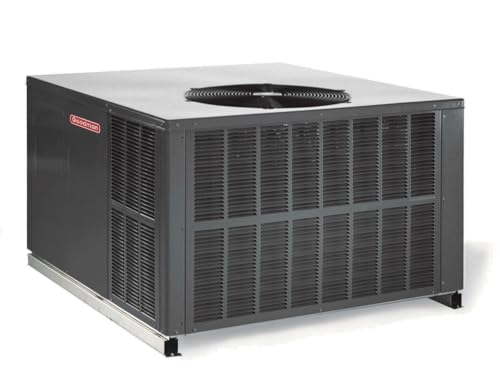
The GPHM34841 stands apart for its 13.4 SEER2 rating and multi-position design. It is a 4-ton packaged heat pump, so the heating and cooling equipment is grouped in a single cabinet rather than split between an outdoor condenser and an indoor air handler. That makes it a better starting point for comparing stated efficiency than for confirming replacement fit. Before selecting it for an existing installation, verify the cabinet footprint and the required duct connection orientation.
Bottom line: Pick this when a multi-position 4-ton heat pump is the priority and installation dimensions can be confirmed.
Goodman 4 Ton 13.4 SEER2 Packaged Heat Pump

This Goodman 4-ton packaged heat pump is the only option here with both SEER2 and HSPF2 ratings plus an identified refrigerant. The specifications give 48,000 BTU capacity, 13.4 SEER2 cooling efficiency and 6.7 HSPF2 heating efficiency; Goodman also specifies a horizontal design. Its 34-by-66-by-35-inch cabinet may help with fit comparisons, though dimensions alone do not establish service clearances or duct compatibility. The specifications describe an aluminum evaporator coil and a copper-tube, aluminum-fin condenser coil. Choose it when you want those heating and refrigerant specifications in the comparison.
Bottom line: Choose this when the R-32 refrigerant and paired heating and cooling ratings matter.
How to choose a 4 ton package unit
Choose by heating and cooling load, not floor area alone: a Manual J load calculation accounts for insulation, windows, air leakage, climate and occupancy. Four tons equals 48,000 BTU per hour, but that capacity can be too large or too small for a particular home. Compare SEER2 for cooling efficiency and HSPF2 for heat pump heating efficiency; higher ratings indicate more efficient operation under standardized rating conditions, not a guarantee of a specific utility bill. Check whether the replacement needs a packaged heat pump, an air conditioner with separate heat, or a split system. A packaged unit contains major HVAC components in one outdoor cabinet and connects to the building through ductwork, so cabinet orientation and duct transitions matter alongside capacity.
Check cabinet fit and duct orientation
Measure the existing equipment footprint, duct opening, platform and access path before comparing cabinet dimensions. Leave the manufacturer’s required service and airflow clearances; a cabinet that fits between walls may still be too cramped to service safely or breathe properly. Horizontal and multi-position designs refer to installation orientation options, but the duct connection and drain arrangement must match the actual site. Measure the old unit’s height, length and width, then compare all three dimensions rather than relying on nominal tonnage. Also account for electrical disconnect access, refrigerant line or duct routing, condensate drainage and local code requirements. A qualified HVAC contractor can confirm those installation constraints and verify capacity against the home’s load calculation.
The basic equipment types differ in where heating and cooling components sit, so use this comparison to identify the system category before focusing on ratings.
| Type | Equipment arrangement | Useful fit check |
|---|---|---|
| Packaged heat pump | Major heating and cooling components in one cabinet | Outdoor footprint and duct connections |
| Split heat pump | Outdoor unit paired with an indoor air handler | Indoor equipment space and line-set route |
| Packaged air conditioner | Packaged cooling equipment; heating may require another source | Heating method and duct arrangement |
Understand SEER2 and HSPF2 ratings
SEER2 measures seasonal cooling efficiency, while HSPF2 measures seasonal heat pump heating efficiency. These ratings use updated test procedures and should be compared like-for-like; a SEER figure and a SEER2 figure are not directly interchangeable. For a heat pump, review both cooling and heating ratings because climate and heating use affect which efficiency figure matters most. Rating alone does not determine performance in a particular home: correct equipment sizing, airflow, duct condition and installation quality also affect comfort and energy use. Ask the installer to confirm that the selected capacity matches a load calculation and that the indoor airflow and duct system are appropriate for the unit.
Plan safe installation and routine care
Packaged heat pumps combine high-voltage electrical equipment, moving blower components and pressurized refrigerant, so installation and refrigerant service belong with qualified HVAC professionals. Refrigerant handling in the United States is subject to EPA Section 608 certification requirements. Keep the outdoor cabinet clear of leaves, snow and other obstructions so airflow is not blocked, and replace or clean the indoor air filter on the schedule that fits the filter and household conditions; a clogged filter reduces airflow. Have the system inspected periodically for coil cleanliness, electrical condition, drainage and refrigerant-system issues. Never remove cabinet panels or attempt refrigerant work as routine homeowner maintenance.
Frequently Asked Questions
How many BTUs are in a 4 ton heat pump?
A 4-ton heat pump represents 48,000 BTU per hour of nominal capacity. The home still needs a load calculation because nominal tonnage alone does not determine the right size.
Can a packaged heat pump replace a split system?
A packaged heat pump can replace a split system only when the site can accommodate the outdoor cabinet and its duct connections. The installer also needs to verify capacity, electrical service, clearances and drainage.
What do SEER2 and HSPF2 mean on a heat pump?
SEER2 is a seasonal cooling efficiency rating, and HSPF2 is a seasonal heating efficiency rating for heat pumps. Compare the same rating type across equipment rather than treating older SEER and newer SEER2 numbers as directly equivalent.
How often should a heat pump air filter be changed?
Many standard filters need replacement about every 1 to 3 months, while filter type, system use, pets and dust can change that interval. Check the filter monthly and replace it when dirty or at its specified service interval.
Who can handle heat pump refrigerant service?
Refrigerant work should be handled by an EPA Section 608-certified technician. Refrigerant is pressurized, and federal certification rules apply to technicians who maintain, service, repair or dispose of covered equipment.