
Grandpa Gus Mouse Repellent: 4 Formats Compared

Grandpa Gus Peppermint & Cinnamon Pouches is the most versatile starting point among these Grandpa Gus mouse repellents because its 10 pouches are intended for enclosed spaces including homes, cabins, garages, storage areas, and vehicles. Choose a spray instead if you need to target entry points or cover vehicle areas, and address any active infestation before using a repellent as prevention.
We earn a commission if you buy through links on this page. As an Amazon Associate I earn from qualifying purchases. Products are compared on manufacturer specifications, not hands-on testing.
- Best overall: Grandpa Gus Peppermint & Cinnamon Pouches – Ten pouches offer placement in multiple enclosed spaces without spraying.
- Best for entry points: Grandpa Gus MAX Peppermint Spray, 16 Fl Oz – The 16-fluid-ounce spray is designed for thresholds, cracks, and hidden access points.
- Best for stored vehicles: Grandpa Gus Peppermint & Cinnamon Spray, 128 Fl Oz – The vehicle-specific spray is designed for engine compartments and other vehicle areas.
| Product | Best for | Format | Volume or count | Intended use | Shop |
|---|---|---|---|---|---|
| Grandpa Gus Peppermint & Cinnamon Pouches | Enclosed spaces | Pouches | 10 count | Homes, garages, vehicles | Check Price on Amazon |
| Grandpa Gus MAX Peppermint Spray, 16 Fl Oz | Entry points | Spray | 16 fl oz | Thresholds, cracks, appliances | Check Price on Amazon |
| Grandpa Gus Peppermint & Cinnamon Spray, 128 Fl Oz | Large storage areas | Spray | 128 fl oz | Homes, garages, vehicles | Check Price on Amazon |
| Grandpa Gus Vehicle Repellent Spray, 128 Fl Oz | Vehicle protection | Spray | 128 fl oz | Cars, trucks, RVs, ATVs | Check Price on Amazon |
Grandpa Gus Mouse Repellent Options
Compare these formats by how you plan to apply them and where you need coverage.
Grandpa Gus Peppermint & Cinnamon Pouches

Unlike the sprays, these 10 pouches provide a placement-based option for enclosed areas. Grandpa Gus says the time-release peppermint and cinnamon scent helps deter mice and prevent nesting or return activity. The product is intended for homes, cabins, garages, storage spaces, and vehicles, making it a fit when you want to position deterrent pouches in several locations. Its limitation is that pouches do not target cracks or entry points with a spray; choose a liquid format when precise application is the priority.
Bottom line: Choose this format for placing scent deterrent in multiple enclosed spaces.
Grandpa Gus MAX Peppermint Spray, 16 Fl Oz
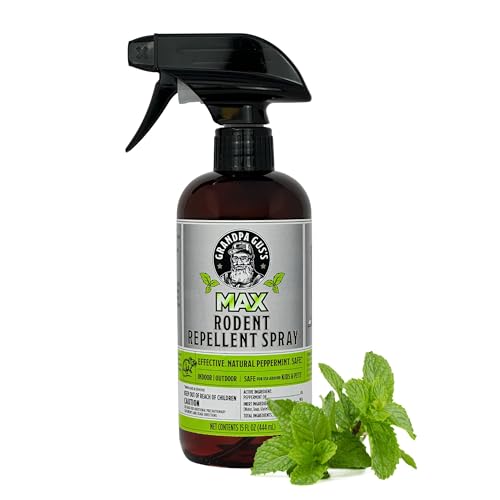
The 16-fluid-ounce MAX spray is the most targeted format here, designed for thresholds, nooks, cracks, and hidden access points. Grandpa Gus says its concentrated peppermint oil creates a scent barrier to help deter mice from treated areas. It can also be applied around cabinets, appliances, garage areas, and vehicle engine wiring. The smaller container is suited to focused treatment rather than broad-area coverage; buyers covering many storage areas or vehicles may prefer one of the larger sprays.
Bottom line: Pick this spray when targeted application around entry points matters most.
Grandpa Gus Peppermint & Cinnamon Spray, 128 Fl Oz

The 128-fluid-ounce general-purpose spray provides substantially more volume than the 16-fluid-ounce bottle and is aimed at larger areas such as garages, attics, basements, cupboards, and enclosed vehicle storage. Grandpa Gus says its peppermint and cinnamon oil blend helps prevent nesting and chewing in enclosed spaces. This is the broader-use option for buyers treating several storage locations. Its general-purpose focus is less specialized than the vehicle-specific spray, so select that alternative if engine areas and vehicle access points are the main concern.
Bottom line: Choose this larger container for treating multiple home and storage areas.
Grandpa Gus Vehicle Repellent Spray, 128 Fl Oz

The vehicle-specific 128-fluid-ounce spray is tailored to cars, trucks, RVs, motorcycles, and ATVs, unlike the general-purpose spray. Grandpa Gus says its peppermint and cinnamon blend helps deter rodents from chewing vehicle wiring and nesting in engine compartments. Its adjustable spray settings are intended for areas such as engine spaces, tailpipes, wheel wells, and interior access points. The focused vehicle purpose is a limitation for households seeking a single format primarily for cabinets, attics, or other non-vehicle spaces.
Bottom line: Select this formula when parked or stored vehicles are the priority.
How to choose a mouse repellent format
Choose by the area and application method: pouches suit placement in enclosed spaces, while sprays let you treat selected surfaces and access points. Mouse-proofing still matters more than scent alone; house mice can squeeze through gaps about 1/4 inch wide, so inspect pipe openings, door edges, and utility penetrations. Seal small gaps with durable materials such as metal mesh and sealant, and repair larger openings with appropriate solid materials. Repellents should be treated as one part of a prevention plan, not a substitute for removing food access and closing entry routes. If activity is ongoing, address the infestation before relying on a deterrent for prevention.
Where mice enter and how to block access
Mice can enter through openings around 1/4 inch across, so even a narrow utility gap can matter. Inspect the foundation line, garage door corners, pipe penetrations, and gaps where siding meets the foundation; look for droppings, gnawing, or nesting material as clues. Seal openings with mouse-resistant materials rather than relying on soft foam alone, which rodents can gnaw through. For a garage or vehicle storage area, clear clutter from walls and keep food, birdseed, and pet food in sealed containers. A scent product may complement these measures, but physical exclusion is the measurable step: close every gap large enough to admit a pencil-width opening.
Using sprays and pouches around vehicles
For vehicle protection, distinguish between an engine-area spray and a pouch intended for enclosed placement. Before spraying, identify the surfaces and access points that need coverage, and avoid applying liquid to hot components or electrical connectors unless the label explicitly permits it. Let an engine cool completely before working nearby, and never reach into moving or hot engine areas. Pouches avoid spraying but still need placement where children and pets cannot handle or chew them. Peppermint and cinnamon oils are concentrated scents; keep products secured and follow their label precautions. Neither format repairs existing chewed wiring, so inspect a stored vehicle before starting it after a period of inactivity.
Limits of scent-based mouse deterrents
Scent deterrents are not a replacement for traps, exclusion, or sanitation when mice are already present. Remove accessible food and nesting materials, seal entry points, and use an appropriate control method for active rodent signs; seek professional help when the infestation is extensive or hard to locate. Do not assume a scent barrier protects every surface or remains effective indefinitely, especially where air movement, moisture, or repeated disturbance may affect the treated area. For any spray or pouch, use the product label for placement and reapplication because coverage and directions differ by format. Keep all deterrents away from children and animals, even when packaging describes them as suitable around families or pets.
Frequently Asked Questions
Can mouse repellent stop an active infestation?
A scent repellent alone should not be relied on to remove an active infestation. Seal entry gaps around 1/4 inch or larger, remove food sources, and use appropriate trapping or professional pest control for ongoing signs.
What size gap can a mouse squeeze through?
A house mouse can pass through an opening about 1/4 inch wide. Check utility penetrations, door edges, and foundation gaps, then close openings with gnaw-resistant materials.
Can I spray repellent on a car engine?
Only apply a spray to engine areas if its label permits that surface and use. Let the engine cool fully, avoid electrical connectors unless the label allows application, and keep clear of moving parts.
Should I use pouches or spray in storage?
Pouches fit enclosed spaces where you want to place a deterrent without spraying surfaces; spray is more suited to selected thresholds or access points. First seal gaps around 1/4 inch wide and remove accessible food.
Are peppermint oil repellents safe around pets?
Keep essential-oil products out of reach of pets and follow the label’s species-specific precautions. Do not let animals lick, chew, or contact treated surfaces until the label says they may.