
GW Knife 440C Steel Options Compared by Blade and Fit

The GW knife named in your search is not among these options, so choose an alternative based on blade size and construction; Purple Dragon 3.7-Inch 440C Fixed Blade is the closest general-purpose match because it pairs a 3.7-inch 440C blade with a full tang and G10 handle.
Choose a different option if you need a compact blade, a longer 4.7-inch blade, or steel stock for making a blade rather than a finished knife.
We earn a commission if you buy through links on this page. As an Amazon Associate I earn from qualifying purchases. Products are compared on manufacturer specifications, not hands-on testing.
- Best overall: Purple Dragon 3.7-Inch 440C Fixed Blade – A 3.7-inch 440C drop point blade, full tang, G10 handle, and horizontal-carry sheath suit general outdoor tasks.
- Best for compact carry: 6.7-Inch 440C Fixed Blade – Its 2.44-inch blade and 1.81-ounce weight make it the smallest finished knife listed by blade length and weight.
- Best for a longer blade: HUAAO 4.7-Inch 440C Fixed Blade – The 4.7-inch 440C blade and 4.7-inch handle give it the longest blade among the finished knives.
| Product | Best for | Blade length | Handle | Sheath | Shop |
|---|---|---|---|---|---|
| Purple Dragon 3.7-Inch 440C Fixed Blade | General outdoor use | 3.7 in | G10 | Horizontal-carry sheath | Check Price on Amazon |
| HUAAO 4.7-Inch 440C Fixed Blade | Longer blade reach | 4.7 in | Aviation aluminum | Kydex sheath | Check Price on Amazon |
| REAT 4.1-Inch Fixed Blade | Clip-point detail work | 4.1 in | ABS plastic | Nylon sheath | Check Price on Amazon |
| 6.7-Inch 440C Fixed Blade | Compact lightweight carry | 2.44 in | Steel | ABS sheath | Check Price on Amazon |
440C Steel Knives and Knife-Making Stock
Compare the finished knives by blade size and construction, or choose the barstock if you plan to make a blade.
Purple Dragon 3.7-Inch 440C Fixed Blade

Among the finished knives here, this model combines a mid-length 3.7-inch drop point blade with a textured G10 handle and full-tang construction. Its maker identifies the blade steel as 440C and describes the edge as hand sharpened. A horizontal-carry sheath is included, and the uses include rope, wood, food preparation, and campsite tasks. The drop point suits controlled, general-purpose cutting better than a narrow piercing-focused profile. Its blade is shorter than the 4.7-inch option, so choose another model if reach is the priority.
Bottom line: Choose this for a balanced outdoor knife with a full tang and horizontal carry.
HUAAO 4.7-Inch 440C Fixed Blade
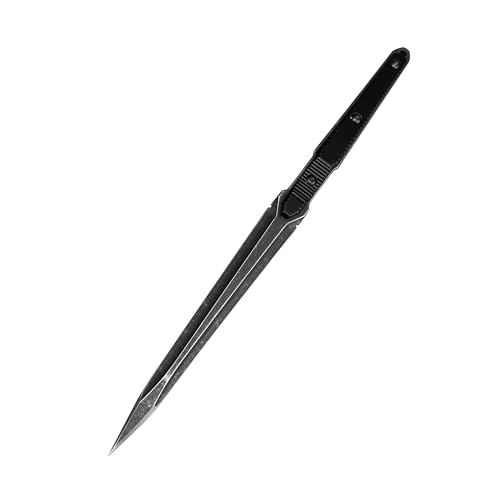
The 4.7-inch blade is the longest among these finished knives, making this a fit for buyers who want more blade reach than the compact models provide. The maker specifies 440C stainless steel, a black aviation aluminum handle, and an overall length of 9.4 inches; the knife weighs 6 ounces. A Kydex sheath is included for carry. The aluminum handle differs from the G10 and ABS options, so buyers who specifically want a textured polymer grip should consider another model. Its larger blade may be less convenient where a short cutting edge is preferred.
Bottom line: Choose this when a 4.7-inch blade and aluminum handle are the priority.
REAT 4.1-Inch Fixed Blade

The clip point distinguishes this 4.1-inch fixed blade, with the maker highlighting piercing and detail work in tight places. It has full-tang construction, a curved ABS handle, and a nylon sheath with a snap fastener and belt loop. This is the only knife with that specific clip-point and snap-sheath combination. Buyers wanting a drop point or a hard-shell sheath may prefer another option.
Bottom line: Choose this for a clip point, ABS handle, and belt-loop nylon sheath.
6.7-Inch 440C Fixed Blade

This model has the shortest specified blade at 2.44 inches and weighs 1.81 ounces, making it the compact, lightweight choice among the finished knives. The maker describes a 4.35 mm blade thickness, a 4.2-inch handle, and an overall length of 6.7 inches; it comes with an ABS sheath. Its handle is described as steel, unlike the separate aluminum, ABS-plastic, and G10 handles in this comparison. The short cutting edge gives less reach than the 3.7- and 4.7-inch blades, so it may not suit buyers prioritizing a longer blade.
Bottom line: Choose this for a short blade and low stated weight.
How to choose a 440C knife
Start with blade length and profile, because those determine reach and the kind of cuts the shape favors. These options range from a 2.44-inch blade to a 4.7-inch blade; a short blade is easier to control in confined cutting, while a longer edge gives more reach. A clip point narrows toward the tip for piercing and detail work, while a drop point has a more convex spine toward the tip and is commonly used for general-purpose cutting. Handle material and sheath style then narrow the choice: G10, ABS plastic, and aluminum have different construction, while soft nylon and rigid Kydex or ABS sheaths differ in form. Pick by the task and carry arrangement you actually need.
What 440C steel means for a knife
440C is a high-carbon stainless steel grade commonly specified around 16% to 18% chromium and 0.95% to 1.20% carbon. Those alloy contents help explain why makers use it for knife blades: it can be hardened for edge holding while retaining stainless-steel corrosion resistance, but “stainless” does not mean rust-proof. Heat treatment affects hardness and edge performance, and the specifications here do not give a hardness value for the finished blades. Dry a blade after wet use and clean off salt or food residue; corrosion risk rises when moisture or contaminants remain on steel. Do not assume two blades with the same steel name will perform identically, because geometry and heat treatment also matter.
Blade length, tang, and sheath fit
Match blade length to the work and the way you plan to carry the knife. The finished options list blade lengths of 2.44, 3.7, 4.1, and 4.7 inches, so a buyer wanting a blade under 3 inches has one option here, while buyers needing more than 4 inches can compare two. Full-tang construction means the blade steel extends through the handle; handle scales and shape still affect grip, so tang alone does not establish comfort. Sheath styles also differ: nylon has a snap closure and belt loop on one model, while Kydex and ABS are rigid sheath materials. Verify that the sheath carries in the orientation and on the belt or pack setup you intend to use.
440C barstock versus a finished knife
Choose barstock only when you are equipped to turn raw steel into a blade; a finished fixed blade is the right category for immediate cutting and carry. The stock option measures 1/8 by 1-1/2 by 12 inches, while the finished knife options arrive with handles and sheaths. A knife blade generally needs profiling, bevel grinding, heat treatment, and sharpening, and heat treatment is a critical step rather than an optional finishing detail. Work with appropriate eye protection and secure the stock during cutting and grinding; hot metal and abrasive debris can cause serious injury.
Frequently Asked Questions
Does 440C steel resist rust completely?
No, 440C is stainless but can still corrode when moisture, salt, or food residue remains on the blade. Dry and clean the knife after exposure, especially after use near salt water.
What 440C blade length is best for everyday carry?
There is no universal best length, but a 2.44-inch blade is the shortest option here and a 4.7-inch blade the longest. Choose based on the tasks and carry restrictions that apply where you live.
Is a full-tang knife stronger than a partial-tang knife?
A full tang extends the blade steel through the handle and can provide a sturdier structure than a partial tang. Handle shape, material, and construction still affect how the knife performs.
Can I use the barstock as a finished knife blade?
No, the 1/8 by 1-1/2 by 12-inch barstock is raw material, not a sharpened or handled knife. Making a blade requires shaping and appropriate heat treatment, plus safe cutting and grinding practices.
How should I choose between a clip point and drop point?
A clip point has a more acute tip that can suit piercing and detail cuts, while a drop point is a common general-purpose profile. Choose the clip point when tip precision matters more than a broader, more gradual point.