
Handheld Sleep Aid Devices Compared by Use and Settings

For a handheld sleep aid device aimed specifically at bedtime, WinkithW Handheld Sleep Aid Device stands out for its eight adjustable pulse levels and stated 15–20-minute wind-down use. Choose another model if you want a display with more intensity settings, a wristband format, or a device also framed for daytime relaxation.
These palm-held or wrist-worn wellness devices offer a tactile focus during a calming routine; they are not a substitute for medical care or established treatment for sleep problems.
We earn a commission if you buy through links on this page. As an Amazon Associate I earn from qualifying purchases. Products are compared on manufacturer specifications, not hands-on testing.
- Best overall: WinkithW Handheld Sleep Aid Device – Its maker positions it for bedtime and describes eight adjustable pulse levels.
- Best for wrist wear: Sleep Relaxation Wristband – The strap design is intended to keep the device in place during sleep.
- Best for many settings: Handheld Relaxation Device, Green – It offers two modes and 20 intensity levels with an LED display.
| Product | Best for | Format | Intensity settings | Charging | Shop |
|---|---|---|---|---|---|
| WinkithW Handheld Sleep Aid Device | Bedtime wind-down | Palm-held | 8 levels | USB-C rechargeable | Check Price on Amazon |
| Handheld Relaxation Device, Green | Display controls | Palm-held | 20 levels, 2 modes | USB-C; 1-hour recharge | Check Price on Amazon |
| Sleep Relaxation Wristband | Strap-on wear | Wristband | Adjustable gear; count unstated | USB charging | Check Price on Amazon |
| YAMEOME Handheld Relax Device | Day and night modes | Handheld | 20 levels, 2 modes | USB-C; 2-hour charging | Check Price on Amazon |
Handheld sleep aid devices
Compare each device’s format, controls and stated use to find one that fits your calming routine.
WinkithW Handheld Sleep Aid Device
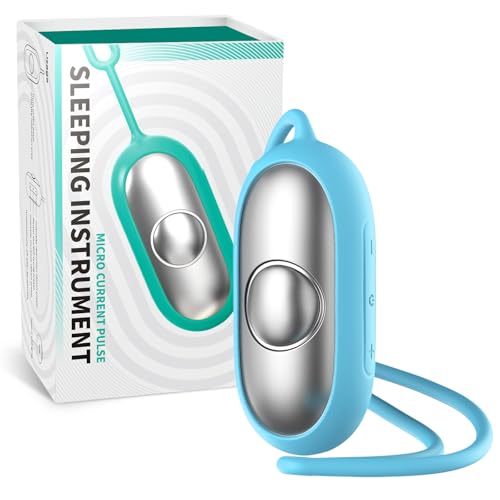
Unlike the wristband and general relaxation models, this handheld device is explicitly framed for winding down before bed. Its maker describes a gentle pulse with eight levels and suggests holding it for 15–20 minutes; the product is also described for adults and children age 3 and older with adult supervision. The compact dimensions supplied are unusually small, so confirm the physical size before choosing if you need a particular grip or fit. Its narrow bedtime focus may matter if you want a device also framed for daytime use.
Bottom line: Choose this for a bedtime-oriented handheld format with eight adjustable levels.
Handheld Relaxation Device, Green

The LED display and 20 intensity levels distinguish this palm-sized model from the simpler controls of the other devices. It has two modes, an anti-slip strap, and weighs 0.06 pounds. The maker says a one-hour USB-C recharge powers five days of 20-minute sessions, and that the device automatically shuts off after 15 minutes. Its use centers on everyday relaxation rather than a bedtime-specific routine, so shoppers seeking a sleep-focused device may prefer a model explicitly positioned for before bed.
Bottom line: Choose this if visible controls and a wide range of settings matter most.
Sleep Relaxation Wristband
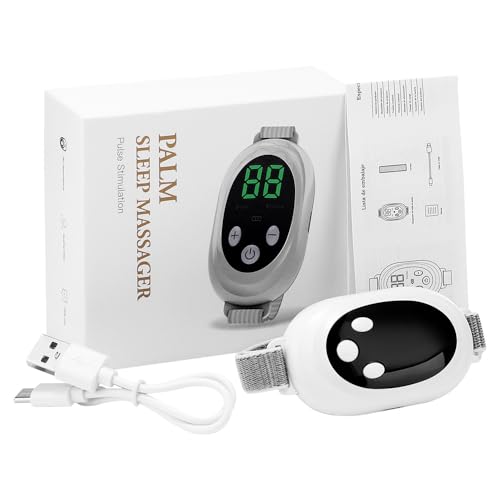
The wristband format sets this model apart from the palm-held options and may suit someone who wants a strap to help keep a device in place during sleep. It has a display and buttons for adjusting the gear, and its compact design is described as portable for home, office or travel. The color is white. The specifications do not give a count for its settings, so it is harder to compare adjustment granularity with the devices that specify level counts. Its wrist-worn design also differs from a handheld device used while winding down.
Bottom line: Choose this for a strap-on format rather than a palm-held device.
YAMEOME Handheld Relax Device

Separate bedtime and daytime modes give this handheld model a use distinction that the bedtime-focused option does not emphasize. Its 20 settings are divided into gears 1–10 for Bedtime Soft Mode and 11–20 for Day Calming Mode; the maker describes the pulses as low-frequency. The product also gives a two-hour charging time and a 0.22-pound weight. That weight is higher than the 0.06-pound figure supplied for another handheld option, which may matter if you plan to hold a device for an extended session.
Bottom line: Choose this if separate day and bedtime settings are useful.
How to choose a handheld sleep aid device
Choose by format and control style first: a wristband is worn, while a handheld model is held in the palm. Level counts are not a shared measurement scale, so 20 settings on one device cannot be assumed to feel stronger or work better than eight on another. Look for a bedtime-specific mode if you want the controls labeled for evening use; a device with separate day and night modes offers a different setup. Treat pulse sensations as a personal comfort preference, not a measure of sleep effectiveness. If a setting feels uncomfortable, stop using it rather than turning it up. Anyone with an implanted electronic device or a medical concern should ask a clinician before using an electrical-pulse product.
What the pulse settings mean
Pulse-level numbers describe selectable settings on a particular device, not a recognized cross-brand intensity standard. A 20-level control offers more increments to try than an eight-level control, but the numbers alone do not tell you the pulse strength, waveform or sensation. The specifications use terms such as microcurrent, low-frequency pulse and gentle pulse, but those labels do not establish equivalent output across devices. Start with the lowest available setting and stop if you feel pain, irritation or an unexpected sensation. For electrical stimulation, people with pacemakers or other implanted electronics should get medical guidance before use; a calming routine is not worth risking interference.
Handheld versus wristband sleep devices
A handheld device is suited to a deliberate session when you can keep it in your palm, while a wristband is designed to stay attached during use. That distinction can matter more than the number of settings: holding a device for a timed wind-down requires a free hand, whereas a strap may suit someone who wants hands-free wear. None of these formats guarantees better sleep, and an adjustable pulse setting is not a clinical sleep measure. Match the format to when and how you plan to use it, and check the physical dimensions if grip comfort is important. Do not use the bedtime label as a reason to ignore discomfort or a medical restriction.
Building a calming routine around a device
A handheld device works best as one optional cue within a predictable routine, not as a replacement for adequate sleep opportunity. Adults generally need at least seven hours of sleep per night, while children need more according to age; a device cannot make a too-short sleep window sufficient. Keep the wind-down period calm and consistent, and avoid treating a claimed relaxation effect as proof that insomnia has been addressed. The suggested 15–20-minute session for one product is a maker recommendation, not a universal duration for this category. Stop if the sensation distracts you, and seek clinical advice for persistent sleep difficulty rather than escalating intensity.
Frequently Asked Questions
Are handheld sleep aid devices medical treatments?
No; these products are presented as wellness or relaxation devices, not as established medical treatment for insomnia. Persistent sleep problems warrant a conversation with a healthcare professional rather than relying on a pulse setting.
How many settings should a sleep aid device have?
There is no standard number of settings for this category. Eight or 20 levels are product-specific steps, so choose a control layout you can adjust comfortably rather than assuming more levels mean greater effectiveness.
Can children use a handheld sleep aid device?
The WinkithW product is described for children age 3 and older with adult supervision, but that statement applies to that product alone. Check with a pediatric clinician before using an electrical-pulse device with a child, especially if the child has a medical condition or implanted device.
Can I use an electrical pulse device with a pacemaker?
Ask the clinician who manages the pacemaker before using any electrical-pulse device. Electrical stimulation can be a concern around implanted electronics, so do not infer compatibility from a low setting or a bedtime label.
How long should a bedtime session last?
There is no universal session length across these devices. One maker suggests 15–20 minutes, while another describes a 15-minute automatic shutoff; follow the specific device’s controls and stop sooner if the sensation is uncomfortable.