
Heat Shield for Wall Next to Stove: 5 Compared

For a wall next to a stove, Stainless Steel Stove Backsplash 12 x 16 is the closest match because it is a 12 x 16-inch stainless steel kitchen backsplash with adhesive or screw mounting. Choose a flexible heat mat instead if you need a trimmable sheet or a larger grill barrier, but those options are not kitchen-specific.
Before installation, confirm the stove manufacturer’s wall-clearance and heat shield requirements; a shield does not automatically make an unsafe clearance acceptable.
We earn a commission if you buy through links on this page. As an Amazon Associate I earn from qualifying purchases. Products are compared on manufacturer specifications, not hands-on testing.
- Best overall: Stainless Steel Stove Backsplash 12 x 16 – A stainless steel backsplash sized for kitchen walls, with adhesive or screw mounting.
- Best for large grill areas: Grill Wall Shield 36 x 60 – Its 36 x 60-inch fiberglass sheet is designed for outdoor grill and fence protection.
- Best for custom trimming: FLASLD Aluminized Heat Shield Mat 12 x 24 – The 12 x 24-inch aluminized sheet can be cut to fit a selected area.
| Product | Best for | Material | Dimensions | Mounting or use | Shop |
|---|---|---|---|---|---|
| Stainless Steel Stove Backsplash 12 x 16 | Kitchen wall splatter | Stainless steel | 12 x 16 in | Adhesive or screws | Check Price on Amazon |
| FLASLD Aluminized Heat Shield Mat 12 x 24 | Trim-to-fit coverage | Aluminized surface | 12 x 24 in | Self-adhesive | Check Price on Amazon |
| DEGEOBERLIN Titanium Barrier Mat 12 x 24 | High-heat barrier use | Two-layer basalt | 12 x 24 in | Adhesive-backed | Check Price on Amazon |
| Grill Wall Shield 36 x 60 | Large outdoor grill area | Silicone-coated fiberglass | 36 x 60 in | — | Check Price on Amazon |
| Titanium Thermal Barrier Mat 12 x 24 | Basalt thermal barrier | Two-layer basalt | 12 x 24 in | Adhesive-backed | Check Price on Amazon |
Heat shields for a wall next to a stove
Compare each option by its intended use, coverage, and installation approach before choosing a shield.
Stainless Steel Stove Backsplash 12 x 16

Unlike the flexible thermal mats, this is a purpose-made kitchen backsplash that also serves as a splatter shield. The 12 x 16-inch brushed-silver panel has rounded corners, and its maker says it resists heat near gas or electric stoves up to 500°F. Acrylic tape is an option for tile or glass; the maker specifies screw mounting for brick, concrete, or wood.
The panel suits a compact cooking area where a rigid, wipeable surface is useful. Its limitation is coverage: at 12 x 16 inches, it may not reach a broad wall area, so measure the zone exposed to cooking before choosing it.
Bottom line: Choose this for a compact kitchen wall area where a rigid stainless backsplash fits.
FLASLD Aluminized Heat Shield Mat 12 x 24
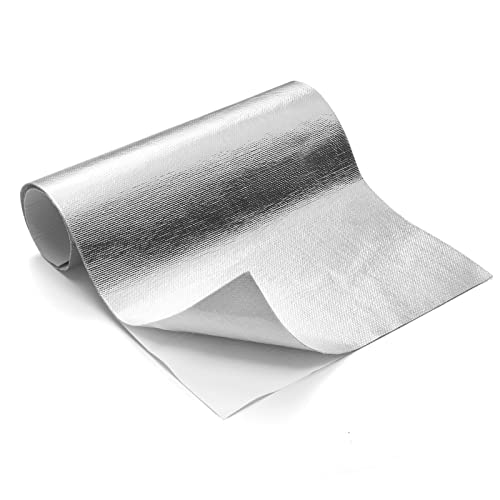
Compared with the stainless backsplash, this 12 x 24-inch aluminized sheet is flexible and can be trimmed for a custom shape. Its reflective surface is intended to redirect radiant heat, and the self-adhesive backing makes it suitable only where the installation surface and heat exposure are compatible.
The 2-square-foot sheet may suit a small, irregular area rather than a full backsplash. Plan the cut before applying it, since trimming reduces the remaining coverage.
Bottom line: Choose this when a small, trimmable reflective sheet is more useful than a rigid backsplash.
DEGEOBERLIN Titanium Barrier Mat 12 x 24

This adhesive-backed mat differs from the kitchen backsplash by using two layers of basalt material rather than a rigid metal panel. The maker claims insulation capability up to 2,500°F and promotes the mat for grill wall and other thermal-barrier uses.
A 12 x 24-inch sheet is suited to a defined patch, not a broad wall. The maker’s broad high-temperature claim does not establish a safe stove clearance or confirm compatibility with a particular wall finish. Treat this as a specialized thermal mat, and choose it only when its surface, adhesive, and placement are appropriate for the stove environment.
Bottom line: Choose this for a small area when a basalt thermal mat matches the installation conditions.
Grill Wall Shield 36 x 60

The largest shield here is a 36 x 60-inch silicone-coated fiberglass sheet, unlike the smaller stove backsplash and 12 x 24-inch mats. Its maker says the material is intended for outdoor grill heat, falling embers, and oil, with a use range up to 900°F and a 2,000°F melting point.
This size and purpose make it more appropriate for a deck fence or broad outdoor grill zone than a typical kitchen backsplash. It can be cleaned with soap and water, but the specifications do not establish a kitchen-wall mounting method. Do not assume a large sheet can be safely fastened beside an indoor stove without confirming the installation requirements.
Bottom line: Choose this for broad outdoor grill protection, not as a default indoor backsplash.
Titanium Thermal Barrier Mat 12 x 24

Like DEGEOBERLIN Titanium Barrier Mat 12 x 24, this adhesive-backed thermal barrier is made from two layers of basalt, and its maker claims temperature capability up to 2,500°F. It is promoted for a wall behind a grill, fireplace, or kitchen cabinet, and can be wiped clean with a damp towel.
The product is a specialized mat rather than a rigid kitchen backsplash, so it will not provide the same defined metal face for wiping cooking splashes. Its 12 x 24-inch format covers a limited area; account for overlaps or edge gaps if the exposed wall extends beyond that footprint. The maker’s heat figure alone does not determine safe spacing beside a particular stove.
Bottom line: Choose this when a basalt heat mat suits the specific wall and heat exposure.
How to choose a stove wall heat shield
Choose by heat source, wall surface, and the area that needs coverage, not by a temperature claim alone. A rigid stainless panel works as a wipeable kitchen backsplash, while flexible reflective or basalt mats are intended for thermal-barrier applications and can be cut or applied to surfaces. A shield’s material, mounting method, and edge coverage all affect whether it suits the spot. Heat rating and stove clearance are separate questions: the rating does not override the appliance manufacturer’s required spacing. If the wall area is wider than 16 inches, compare the measured area with the panel dimensions before deciding; a small panel can leave exposed wall around its edges.
Stove clearance and wall safety
Use the stove manufacturer’s required clearance to combustible surfaces as the controlling measurement; there is no single safe distance that applies to every stove and wall shield. Heat shields can reduce radiant exposure, but the wall material, shield construction, air gap, and mounting method all matter. A shield fastened directly to a wall is not automatically equivalent to a tested, ventilated barrier. Do not block vents or place adhesive where the appliance’s heat can exceed its intended service conditions. For a practical decision, if the proposed installation would place the stove closer to a combustible wall than its manual allows, stop and confirm an approved shield design or adjust the clearance before use.
Compare backsplash panels and thermal mats
A kitchen backsplash and an industrial-style thermal mat solve related but different problems. Stainless steel is a rigid face that can catch splashes and wipe clean; aluminized and basalt sheets are flexible barriers for defined heat-exposed areas. Fiberglass grill shields are sized and promoted for outdoor fence protection rather than routine indoor cooking splatter. Use this comparison to match the product type to the task, then confirm the mounting approach independently.
| Need | Product type | Key tradeoff |
|---|---|---|
| Wipeable kitchen splatter area | Stainless backsplash | Rigid panel with limited coverage |
| Custom-shaped small barrier | Aluminized or basalt mat | Flexible sheet; application compatibility matters |
| Broad outdoor grill zone | Silicone-coated fiberglass sheet | Large coverage, not a default indoor solution |
Measure coverage and plan installation
Measure the full exposed wall zone before selecting a shield, including the width behind burners and the height where heat or splatter reaches. A 12 x 16-inch panel covers less area than a 12 x 24-inch sheet, while a 36 x 60-inch outdoor shield is intended for a substantially broader space. Keep edges and seams in mind: a narrow uncovered strip can still receive heat or cooking residue. Adhesive mounting depends on surface compatibility; the stainless panel’s maker limits tape use to tile or glass and describes screws for solid brick, concrete, or wood walls. Mark the final footprint first and confirm that the chosen mounting method is suitable for the wall and heat conditions.
Frequently Asked Questions
Can a heat shield touch the stove?
Do not assume a wall shield can touch the stove; required spacing depends on the appliance and the shield installation. Use the stove manual’s clearance measurement, and maintain it unless the manufacturer explicitly approves a different configuration.
Does stainless steel protect a wall from stove heat?
A stainless panel can provide a noncombustible facing and help resist cooking splashes, but the metal alone does not establish a safe clearance. Panel mounting and any required air gap matter, so compare the installation with the stove’s specified wall clearances.
What size heat shield should go behind a stove?
Measure the full wall area exposed to heat and splashes, then choose dimensions that cover that footprint. A 12 x 16-inch backsplash covers less wall than a 12 x 24-inch sheet, and neither should be assumed to protect an uncovered edge.
Can I use an outdoor grill heat shield indoors?
An outdoor grill shield is not automatically suitable for an indoor stove wall. For example, a fiberglass sheet intended for deck fences does not by itself establish an indoor mounting method or clearance; confirm both with the appliance and shield requirements.
Do adhesive heat shields work on painted walls?
Adhesive compatibility depends on the exact product and surface. The stainless backsplash’s maker specifically excludes painted walls for its tape mounting, so use only a mounting method approved for the wall rather than assuming the adhesive will hold.