
Heaters for Water Troughs: 4 Options Compared

For a Rubbermaid stock tank with a drain-plug opening over 1.75 inches, Rubbermaid 1500W Tank Heater is the most direct fit; its 1500W design is made for several Rubbermaid tank sizes. Choose a different heater for other tank brands, smaller containers, or when a thermostat range better matches your conditions.
Stock-tank de-icers warm water to help limit ice formation, but they require safe placement and adequate water coverage. Match wattage and tank capacity to your container and check water levels regularly.
We earn a commission if you buy through links on this page. As an Amazon Associate I earn from qualifying purchases. Products are compared on manufacturer specifications, not hands-on testing.
- Best overall: Rubbermaid 1500W Tank Heater – Made for Rubbermaid stock tanks from 50 to 300 gallons, provided the drain-plug opening is over 1.75 inches.
- Best for 41–100-gallon tanks: 500W Thermostatic Trough De-Icer – 500W unit with an automatic temperature range from 50°F to 95°F.
- Best for 5–50-gallon containers: 500W Cast-Aluminum Submersible De-Icer – 500W de-icer sized for smaller containers, with a 10-foot power cord.
| Product | Best for | Wattage | Tank fit | Thermostat range | Shop |
|---|---|---|---|---|---|
| Rubbermaid 1500W Tank Heater | Rubbermaid tanks | 1500W | 50–300 gal | — | Check Price on Amazon |
| 500W Thermostatic Trough De-Icer | 41–100-gallon tanks | 500W | 41–100 gal | 50–95°F | Check Price on Amazon |
| 500W Cast-Aluminum Submersible De-Icer | Poultry and livestock | 500W | — | — | Check Price on Amazon |
| Qanskm 500W Utility De-Icer | Small waterers | 500W | 5–50 gal | 35–77°F | Check Price on Amazon |
Heaters for Water Troughs Compared
Compare tank compatibility, wattage and thermostat behavior before choosing a trough de-icer.
Rubbermaid 1500W Tank Heater

Unlike the general-purpose 500W units, this 1500W heater is designed around Rubbermaid stock tanks and their drain-plug openings. It fits listed Rubbermaid tank capacities of 50, 70, 100, 150 and 300 gallons, and its drain-plug hole must measure more than 1.75 inches across. The built-in thermostat is intended to control heating automatically. Before judging whether the heater cycles on, the maker says to cool it in a freezer for about 10 minutes to activate the internal thermostat. This specialized fit is useful for compatible tanks, but it is not a universal choice for other trough designs.
Bottom line: Choose this for a compatible Rubbermaid stock tank after checking its drain opening.
500W Thermostatic Trough De-Icer

Unlike the tank-specific option, this 500W heater is aimed at livestock tanks in the 41–100-gallon range and also mentions rain barrels. Its thermostat activates below 50°F and shuts off around 95°F, giving buyers a defined operating range to compare with local winter conditions. The body is described as aluminum with a painted PTFE finish, and the heater is submersible. The wattage and capacity make it a more targeted fit than a higher-powered tank heater, but capacity alone cannot guarantee ice prevention in every climate; colder, windier exposure can increase heat loss.
Bottom line: Pick this when a 41–100-gallon capacity and 50–95°F cycle suit your setup.
500W Cast-Aluminum Submersible De-Icer

Cast-aluminum sets this model apart from the painted-aluminum unit, and its uses center on poultry buckets as well as horse and cattle water troughs. The 500W submersible heater has an automatic thermostat that cycles heating without manual temperature adjustment. Its wattage is a useful comparison point, but the tank-size range is not enough to assign a reliable capacity match, so choose based on the actual water volume and outdoor conditions rather than wattage alone. The heater is described for 120VAC use. The main limitation is the lack of a thermostat range, which matters if you need to compare precise on-and-off temperatures.
Bottom line: Choose it for a 500W cast-aluminum option across poultry and livestock watering containers.
Qanskm 500W Utility De-Icer
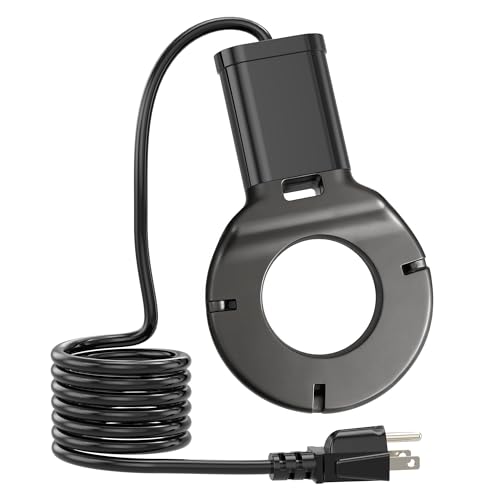
Among these choices, this 500W unit gives the clearest fit for smaller containers: it is intended for 5–50 gallons, including buckets, small animal waterers and birdbaths. Its thermostat starts below 35°F and shuts off at 77°F, while a 10-foot power cord can help with placement where the outlet is farther away. The dimensions are 7.4 inches long by 4.6 inches wide and 0.39 inch high. That smaller-container range is its key distinction; buyers with larger troughs should instead match a model whose capacity covers the tank.
Bottom line: Pick this for a 5–50-gallon waterer when the temperature cycle and cord length fit.
How to choose a water trough heater
Start with tank capacity, then compare wattage and the heater’s intended container range. Here, the choices span a Rubbermaid-specific 1500W design and general-purpose 500W heaters, with capacity ranges from 5 to 100 gallons for the latter group. A higher wattage does not by itself guarantee that water will stay ice-free: heat loss also depends on wind, exposure, water volume and how cold the air gets. As a practical screening rule, use a heater with an explicit capacity range that includes your filled container; avoid extrapolating the 5–50-gallon unit to a larger trough. Keep the water level adequate for the heater’s submersible placement, and check the water and cord condition daily in freezing weather.
How tank fit and thermostat range affect the choice
Fit requirements can rule out a heater before wattage does. The Rubbermaid-specific model is intended for 50-, 70-, 100-, 150- and 300-gallon tanks, but its drain-plug opening must be wider than 1.75 inches. For other containers, compare the capacity range and thermostat figures where given; the 500W models cover different use cases rather than being interchangeable. Thermostat cut-in and shutoff values describe when a unit cycles, not a guaranteed water temperature under every weather condition.
| Need | Compare | Condition |
|---|---|---|
| Compatible Rubbermaid tank | 1500W tank heater | Drain hole over 1.75 in |
| 41–100-gallon tank | 500W trough de-icer | Cycles below 50°F, off around 95°F |
| 5–50-gallon container | 500W utility de-icer | Cycles below 35°F, off at 77°F |
Safe use of submersible trough de-icers
Submersible heaters and water create an electrical hazard, so use only a unit intended for immersion and keep its power connection protected from water. These products are specified for livestock or small-container use, but the features do not establish a common cord-protection rating or an animal-guard design across all four models. Position the heater so animals cannot damage the cord or pull the unit out of the water, and inspect the cord and housing for wear before use. Never run a submersible heater dry; maintain its intended water coverage and switch power off before handling it. A ground-fault circuit interrupter (GFCI) is a prudent protection for outdoor electrical equipment near water.
Common mistakes when choosing a trough heater
The most common mismatch is treating wattage as the only sizing rule. A 500W heater intended for up to 50 gallons is not the same fit as one described for 41–100 gallons, and the Rubbermaid-specific 1500W model has a tank-opening constraint in addition to its capacity range. Another mistake is expecting a thermostat to hold water at its shutoff temperature; those values are cycle controls, while wind and ambient temperature affect actual water conditions. Check container volume, heater compatibility and outlet placement before use. For the Rubbermaid model, measure the drain opening first; for units with a temperature cycle, compare those thresholds with the freezing conditions where the waterer will sit.
Frequently Asked Questions
Can a 500W heater handle a large stock tank?
Only when the heater’s capacity includes the tank; one 500W model is intended for 41–100 gallons, while another covers 5–50 gallons. Tank exposure and outdoor temperature also affect how much heat is lost.
What drain hole size does the Rubbermaid heater need?
The Rubbermaid-specific heater requires a drain-plug opening wider than 1.75 inches. Measure the hole before choosing it, even if the tank capacity is one of its sizes.
At what temperature does a trough de-icer turn on?
The thresholds differ: one model activates below 50°F and shuts off around 95°F, while another starts below 35°F and shuts off at 77°F. Actual water conditions can still change with wind and ambient cold.
Can a submersible water trough heater run dry?
No; a submersible heater should remain covered by water during operation. Switch off power before repositioning it, and inspect its cord and housing regularly around livestock.
How often should I check a heated livestock waterer?
Check the water level, heater position and cord condition daily during freezing weather. Low water can expose a submersible heater, while livestock can shift equipment or damage cords.