
HEET for Gas Tank: 5 Water Removers Compared

For a single 12-ounce bottle of HEET for a gas tank, HEET Water Remover, 12 oz is the straightforward pick because it combines water removal with gas-line antifreeze claims. Choose Iso-HEET Water Remover, 12 oz instead if you want the Iso-HEET formula, or a 24-pack if you need multiple bottles.
Gas-line antifreeze is a fuel additive intended to address water in the fuel system; select the formula and dose from the product label for your vehicle and tank.
We earn a commission if you buy through links on this page. As an Amazon Associate I earn from qualifying purchases. Products are compared on manufacturer specifications, not hands-on testing.
- Best overall: HEET Water Remover, 12 oz – A single 12-ounce bottle combines water-removal and gas-line antifreeze claims.
- Best for Iso-HEET: Iso-HEET Water Remover, 12 oz – The Iso-HEET variant comes in a single 12-ounce bottle and claims to absorb more water than regular gas dryers.
- Best for multipacks: HEET Water Remover, 24-Pack – The 24-pack provides twenty-four 12-ounce bottles.
| Product | Best for | Pack count | Shop |
|---|---|---|---|
| HEET Water Remover, 12 oz | Single-bottle use | 1 | Check Price on Amazon |
| Iso-HEET Water Remover, 12 oz | Iso-HEET formula | 1 | Check Price on Amazon |
| HEET Water Remover, 24-Pack | Bulk supply | 24 | Check Price on Amazon |
| Gold Eagle HEET Gasline Antifreeze, 24-Pack | Cold-weather supply | 24 | Check Price on Amazon |
| Gold Eagle ISO-HEET, 12 oz | Quick-start focus | 1 | Check Price on Amazon |
HEET for Gas Tank Options
Compare these HEET formulas and pack sizes by their uses and bottle counts.
HEET Water Remover, 12 oz
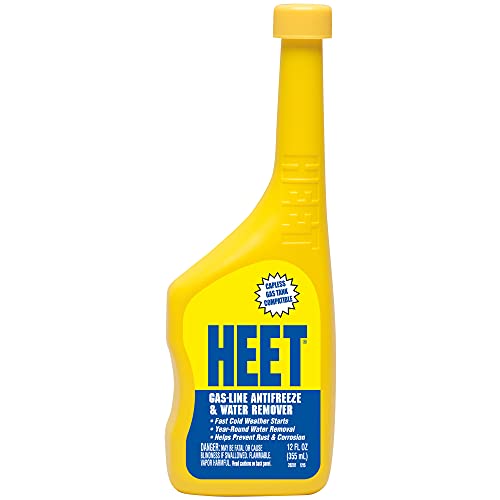
For a single bottle with explicit water-removal and antifreeze claims, this HEET option is a direct match. Each container holds 12 fluid ounces. HEET says it removes water from fuel systems and helps prevent fuel-line freeze-up; the maker also claims rust and corrosion prevention. That combination suits a buyer addressing water concerns and winter fuel-line freeze-up with one additive. Its main limitation is quantity: one bottle is less practical than a multipack when treating several vehicles or keeping multiple bottles on hand. Check the container label for the dose appropriate to your tank.
Bottom line: Pick this for a single 12-ounce bottle with water-removal and antifreeze claims.
Iso-HEET Water Remover, 12 oz
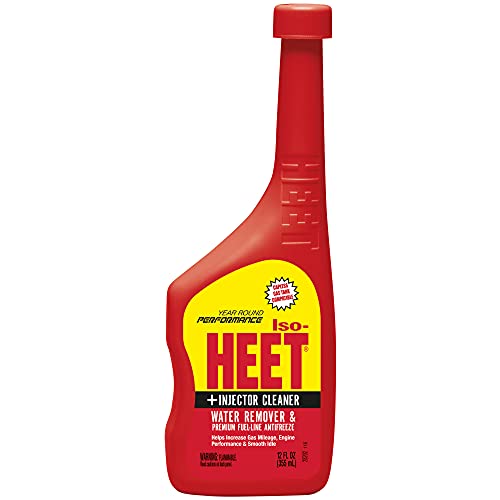
The Iso-HEET version stands apart by claiming greater water absorption than regular gas dryers. The 12-ounce bottle is described as an easy-pour dry-gas additive, and HEET says it removes water and helps prevent fuel-line freeze-up. This is the choice for someone specifically seeking the Iso-HEET variant rather than the standard yellow HEET formula. Buyers needing several bottles may prefer a multipack.
Bottom line: Choose this if you specifically want the Iso-HEET formula in a single bottle.
HEET Water Remover, 24-Pack

This option differs by packaging: it contains twenty-four 12-ounce bottles, suited to stocking multiple vehicles or keeping a supply for repeated seasonal needs. HEET says the additive removes water and prevents gas-line freeze-up; the features also say it is safe for use in 4-cycle engines, including fuel-injected engines, and does not contain ethylene glycol. Those claims make it useful when engine compatibility and pack quantity matter. The tradeoff is that twenty-four bottles may be more than a single vehicle owner needs. Use the bottle label to confirm the amount for each tank.
Bottom line: Pick the multipack when you need bottles for several vehicles or repeated use.
Gold Eagle HEET Gasline Antifreeze, 24-Pack

Unlike the water remover-focused options, this 24-pack is characterized primarily as gas-line antifreeze that aids cold-weather starting. Each bottle is 12 ounces, and Gold Eagle describes the additive as a gas-system antifreeze. It may suit a buyer prioritizing a larger supply for winter readiness across more than one vehicle. The features do not include a water-removal claim, so a buyer specifically looking to address water in fuel should compare the water remover options instead. Confirm the appropriate application amount on the bottle before use.
Bottom line: Choose this when a 24-bottle supply and cold-weather starting are the priorities.
Gold Eagle ISO-HEET, 12 oz

This Gold Eagle ISO-HEET option is distinct for its quick-start emphasis and single 12-ounce size. Its feature claim is “quick easy starts,” while the product name identifies it as a gas-line antifreeze. That makes it a compact option for buyers focused on a single bottle and the maker’s starting claim. The features do not specify water-removal performance or an engine compatibility range, so shoppers who need those particular assurances should consider an option with those claims explicitly included. Check the label for dosage and vehicle suitability.
Bottom line: Pick this single bottle if the quick-start claim is your main selection factor.
How to Choose HEET for a Gas Tank
Choose by the problem you are addressing, the formula, and how many bottles you need. A fuel-line antifreeze is aimed at water-related fuel-system issues in cold conditions; a water remover claim matters if water is your central concern. The standard HEET and Iso-HEET options here are single 12-ounce bottles, while the 24-packs provide bottles for multiple vehicles or future use. Do not estimate a dose from bottle size alone: tank capacity and the product label determine application. If you cannot match the label dose to your tank, confirm the dosage before adding the product. More additive is not automatically better.
When Gas-Line Antifreeze May Help
Water freezes at 32°F, while gasoline remains liquid at far lower temperatures; ice from water in a fuel system, rather than frozen gasoline, is the relevant winter concern. A gas-line antifreeze additive is intended to help manage small amounts of water, but it is not a substitute for fixing a leaking tank or contaminated fuel. Gasoline vapor is highly flammable, so work outdoors or in a well-ventilated area, keep the additive away from flames and sparks, and avoid skin and eye contact. A decision rule: if the engine has a persistent fuel problem after using an additive according to its label, stop adding more and have the system checked.
Single Bottles Versus HEET Multipacks
Single bottles suit one-time or occasional use, while a 24-pack makes sense when you have several vehicles or expect repeated seasonal use. Each bottle in the compared products is 12 ounces, so the major quantity difference is pack count rather than bottle size. Store fuel additives in their original, closed containers, away from heat and ignition sources, and where children cannot reach them. Keep the label available so the product identity and handling directions remain clear. A multipack is not a reason to treat every vehicle at once; apply only the amount the label specifies for the tank being treated.
Using a Fuel Additive Safely
Pour fuel additives only into the fuel system and in the sequence specified on the container. Many additives are intended to be added before refueling so fuel can mix them, but follow the particular label rather than assuming that sequence for every formula. Never pour a fuel additive into engine oil, coolant, or a diesel tank unless the label explicitly identifies that use; these options are presented for gasoline systems. Gasoline and many fuel additives can ignite easily, so do not smoke or use an open flame during handling. Wipe spills promptly using the label’s cleanup guidance, and keep the container sealed between uses.
Frequently Asked Questions
Can HEET be used in a fuel-injected engine?
The 24-pack HEET option says it is safe for use in 4-cycle engines, including fuel-injected engines. Check the specific container label for the product’s application directions and dose.
How much HEET should I add to my gas tank?
Use the dose printed on the bottle for your tank and product; the compared products are 12-ounce bottles, but bottle size does not establish the correct dose. If the label dose does not match your tank capacity, confirm the amount before pouring.
Does gas-line antifreeze treat frozen gasoline?
Gasoline does not freeze at ordinary winter temperatures; water freezes at 32°F and can be the relevant fuel-system concern. An additive is not a fix for a leak or a large amount of contaminated fuel.
Can I add HEET to an almost full tank?
The proper application sequence and amount depend on the bottle label, so check both before adding it to a nearly full tank. Do not exceed the label dose to compensate for limited space.
Is it safe to handle fuel additives near a running engine?
Gasoline vapor and fuel additives can ignite, so avoid flames, sparks, smoking, and hot surfaces while handling them. Use the product outdoors or in a well-ventilated area and keep it away from children.