
High Heat Tape for Exhaust: 4 Options Compared

For most exhaust-pipe projects, SunplusTrade 2-Inch Exhaust Wrap, 50-Foot is the most versatile choice because its 50-foot fiberglass wrap covers more pipe than the compact 16-foot roll. Choose NEZUIBAN 2-Inch Exhaust Wrap, 16-Foot for a shorter motorcycle or header section, or consider reflective tape only when you need a surface barrier rather than a wrap.
Exhaust wrap is a woven strip secured around a pipe; adhesive heat-shield tape is applied to a surface and serves a different purpose.
We earn a commission if you buy through links on this page. As an Amazon Associate I earn from qualifying purchases. Products are compared on manufacturer specifications, not hands-on testing.
- Best overall: SunplusTrade 2-Inch Exhaust Wrap, 50-Foot – Its 2-inch-wide, 50-foot fiberglass wrap and six stainless ties suit longer or multiple pipe sections.
- Best for short pipes: NEZUIBAN 2-Inch Exhaust Wrap, 16-Foot – The 16-foot roll and six ties are sized for compact projects such as motorcycle pipes and short headers.
- Best for reflective shielding: FIREWESS Aluminum-Fiberglass Tape, 2-Inch – The 2-inch by 66-foot fiberglass-and-aluminum tape is intended for heat reflection and exhaust-related uses.
| Product | Best for | Width | Length | Shop |
|---|---|---|---|---|
| SunplusTrade 2-Inch Exhaust Wrap, 50-Foot | Long pipe runs | 2 in | 50 ft | Check Price on Amazon |
| NEZUIBAN 2-Inch Exhaust Wrap, 16-Foot | Compact projects | 2 in | 16 ft | Check Price on Amazon |
| FIREWESS Aluminum-Fiberglass Tape, 2-Inch | Reflective shielding | 2 in | 66 ft | Check Price on Amazon |
| Klyyo Clyro Adhesive Heat Shield Tape | Low-heat barriers | 1.97 in | 16.4 ft | Check Price on Amazon |
High Heat Tape for Exhaust Compared
Match the application style and coverage length to your pipe or nearby surface before choosing.
SunplusTrade 2-Inch Exhaust Wrap, 50-Foot
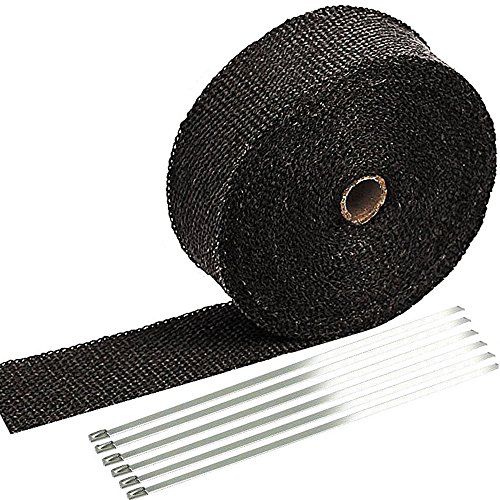
For longer runs, this 50-foot fiberglass wrap provides substantially more coverage than the 16-foot option. The roll is 2 inches wide and comes with six 12-inch stainless steel ties, so it can be secured around curved exhaust sections without adding separate fasteners. The maker says it withstands 1,400°F direct heat and 2,000°F radiant heat, and claims it can reduce under-hood heat by up to 50%.
The longer roll suits multiple sections or a longer pipe, but may be more material than a short motorcycle header needs.
Bottom line: Pick this for longer or multiple exhaust sections that need wrap coverage.
NEZUIBAN 2-Inch Exhaust Wrap, 16-Foot

For a small exhaust job, this 16-foot fiberglass wrap is the compact alternative to a 50-foot roll. Its flexible woven construction is intended to follow bends and irregular pipe shapes, and six stainless steel ties are included to secure the wrap. The maker says it handles up to 1,400°F direct heat and 2,000°F intermittent heat.
Motorcycle pipes, short headers, and individual pipe sections fit its use. The shorter length limits how many sections it can cover, so measure the pipe run before choosing it for a larger project.
Bottom line: Choose this when the exhaust section is short and compact coverage is enough.
FIREWESS Aluminum-Fiberglass Tape, 2-Inch

For surface shielding rather than a woven pipe wrap, this 2-inch-wide tape combines fiberglass fabric with an aluminum-plated outer layer. The 66-foot roll can be cut to length, and its uses include exhaust, hose, and automotive applications. The maker describes it as reflective and adhesive-backed, making the application style distinct from a wrap secured with ties.
It may suit seams or nearby surfaces where a reflective tape format is wanted.
Bottom line: Choose this for reflective tape applications, after confirming the temperature rating suits the location.
Klyyo Clyro Adhesive Heat Shield Tape

For adhesive-backed engine-bay shielding, this aluminum-fiberglass tape is designed to reflect radiant heat, unlike exhaust wraps that encircle a pipe. The roll measures 1.97 inches by 16.4 feet, and the maker says it reflects up to 90% of radiant heat. Its adhesive heat limit is 400°F, and the maker cautions against direct use on manifolds or catalytic converters that exceed its rating.
This can suit a nearby barrier where the adhesive-side limit is respected. It is not a substitute for high-temperature wrap directly around an exhaust manifold.
Bottom line: Use this only for a nearby shield where temperatures remain within its adhesive limit.
How to Choose Exhaust Heat Tape
Choose by application first: a wrap encircles the pipe, while adhesive tape shields a surface or seam. Fiberglass exhaust wrap is commonly used on headers and pipes; reflective foil-faced barriers are used to redirect radiant heat from nearby components. A wrap’s direct-heat rating and an adhesive tape’s rating are not interchangeable, because adhesives can have lower limits than the facing material.
Measure the pipe run and allow extra length for bends and overlap. A 2-inch wrap covers a narrower band per turn than a wider wrap, so it takes more turns to cover the same pipe length. For direct contact with a hot pipe, choose a product with a clear direct-heat rating above the expected exposure; use adhesive barriers only within their temperature limits.
Exhaust Wrap Versus Reflective Tape
Exhaust wrap is the better format for covering a pipe, while reflective tape is for shielding a surface from radiant heat. Fiberglass wrap is secured with ties and can follow bends; adhesive-backed foil or fiberglass tape sticks to a surface and can help shield hoses, wiring, or panels when the temperature is suitable.
The table separates common applications so the format is easier to choose. A wrap may retain heat in the exhaust and can trap moisture against metal, increasing corrosion risk, especially on steel pipes. Remove wrap periodically to inspect the pipe and replace it if it becomes damaged. Adhesive barriers also need a clean, compatible surface and cannot compensate for a temperature beyond their rating.
| Application | Typical choice | Key check |
|---|---|---|
| Covering a hot pipe | Fiberglass exhaust wrap | Direct-heat rating and length |
| Shielding a nearby surface | Reflective adhesive tape | Adhesive temperature limit |
| Sealing a heating duct seam | Flue tape | Confirm it is rated for the duct use |
How Much Exhaust Wrap You Need
Estimate material from pipe length, circumference, and overlap rather than relying on roll length alone. A 2-inch-wide strip covers roughly 2 inches along the pipe per turn before overlap; tighter overlap increases the material needed. Bends and flanges also consume extra wrap, so a short roll can run out sooner on a complex header than on a straight pipe.
Measure each section you plan to cover, then compare the total with the roll length and leave a margin for turns and securing the ends. Stainless ties are commonly used to hold wrap ends in place because ordinary plastic ties cannot tolerate exhaust temperatures. Keep wrap clear of moving parts and inspect the pipe underneath periodically for corrosion or damage.
Frequently Asked Questions
Can high heat tape go directly on an exhaust pipe?
Only a product specifically rated for direct exhaust heat should touch the pipe. Adhesive-backed heat shield tape may have a lower limit than exhaust wrap, so compare its applicable temperature rating with the pipe location before use.
Should exhaust wrap overlap as it goes around a pipe?
Yes, a slight overlap helps avoid exposed gaps between turns. More overlap means more material per foot of pipe, so estimate the roll length using the pipe circumference and the overlap you intend to use.
Does exhaust wrap cause pipe corrosion?
Wrap can hold moisture against the pipe and increase corrosion risk, particularly on steel exhaust components. Remove it periodically to inspect the metal underneath, and avoid leaving a damaged or persistently wet wrap in place.
How do you secure exhaust heat wrap?
Use metal locking ties or clamps made for hot exhaust applications at the ends and, where needed, along the wrap. Plastic cable ties can soften or fail near hot pipes, so keep them away from exhaust temperatures.
Is flue tape suitable for motorcycle exhaust pipes?
No; flue tape is intended for heating-duct seams, not direct motorcycle exhaust contact. Exhaust pipes need a wrap or shield with a temperature rating suited to direct or radiant exposure, depending on placement.