
High-Temp Sealant for Smokers: 4 Options Compared

For most smoker-sealing jobs, LavaLock RTV 650°F, 3 oz is the strongest match because its maker gives it a 650°F maximum temperature rating. Choose LavaLock Black RTV, 3 oz instead if a 450°F-rated black RTV suits the joint, or LavaLock RTV, 10 oz cartridge when you need a larger 10-ounce cartridge.
RTV silicone is a sealant that cures into a flexible rubber-like joint; its maximum temperature rating is a limit, not a target operating temperature.
We earn a commission if you buy through links on this page. As an Amazon Associate I earn from qualifying purchases. Products are compared on manufacturer specifications, not hands-on testing.
- Best overall: LavaLock RTV 650°F, 3 oz – Its maker gives this 3-ounce RTV sealant a 650°F maximum temperature rating.
- Best for gasket making: LavaLock RTV 600°F, 3 oz – The maker describes it for forming or adhering gaskets and gives it a 600°F maximum.
- Best for larger jobs: LavaLock RTV, 10 oz cartridge – The 10-ounce cartridge is larger than the other sealant packages.
| Product | Best for | Maximum temperature | Package size | Color | Shop |
|---|---|---|---|---|---|
| LavaLock RTV 650°F, 3 oz | Higher heat limit | 650°F | 3 oz | Red | Check Price on Amazon |
| LavaLock RTV 600°F, 3 oz | Gasket formation | 600°F | 3 oz | Red | Check Price on Amazon |
| LavaLock RTV, 10 oz cartridge | Larger applications | 450–600°F | 10 oz | Red | Check Price on Amazon |
| LavaLock Black RTV, 3 oz | Black finish | 450°F | 3 oz | Black | Check Price on Amazon |
High-temp sealant for smokers
Compare these RTV sealants by their heat limits, package formats and intended smoker uses.
LavaLock RTV 650°F, 3 oz

LavaLock RTV 650°F, 3 oz has the highest maximum temperature among these sealants: its maker gives it a 650°F limit. The red RTV comes in a 3-ounce tube and is described for sealing, creating or adhering gaskets, including around smoker doors, lids and smoke stacks. Its food-contact-safe claim and weatherproofing are also maker claims.
The 650°F figure is a maximum rating, not a recommended continuous operating temperature. Choose another option if you need a black sealant or a larger package for a long run of joints.
Bottom line: Choose this if the highest heat limit matters more than color or package size.
LavaLock RTV 600°F, 3 oz

LavaLock RTV 600°F, 3 oz is explicitly sold as both a sealer and gasket maker, making it a fit when the job involves forming or adhering a gasket. Its title gives a 600°F maximum, and the red RTV comes in a 3-ounce tube. The maker also describes it for wood-stove vent pipes, smoke stacks, doors, lids and cooking equipment.
The maker says the cured sealant is not paintable, so it is a poor choice when the finished joint must take a coating. Its food-contact-safe wording is a maker claim; do not treat that as permission to apply sealant directly to food.
Bottom line: Pick this for gasket-forming jobs where a 600°F maximum is sufficient.
LavaLock RTV, 10 oz cartridge
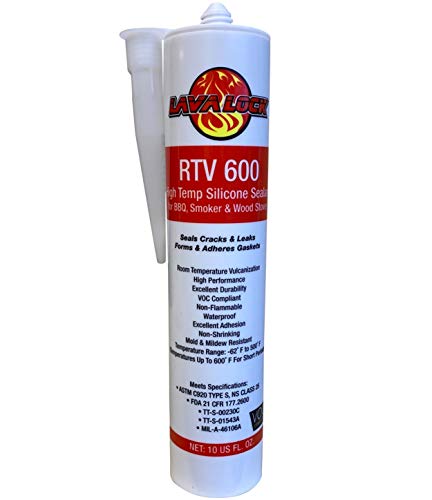
LavaLock RTV, 10 oz cartridge stands apart with a 10-ounce cartridge rather than a 3-ounce tube, which suits longer sealing runs or multiple joints. The maker gives a temperature range of 450°F to 600°F and describes it for forming or adhering gaskets. Its removable tip is said to make a 1/8-inch bead up to 100 feet long.
The heat limit spans 150°F, so confirm which rating applies to the exact cartridge before using it near a hotter joint. This larger format may be less convenient when a small repair calls for only a short bead.
Bottom line: Choose this when you need more sealant and can verify the applicable heat limit.
LavaLock Black RTV, 3 oz
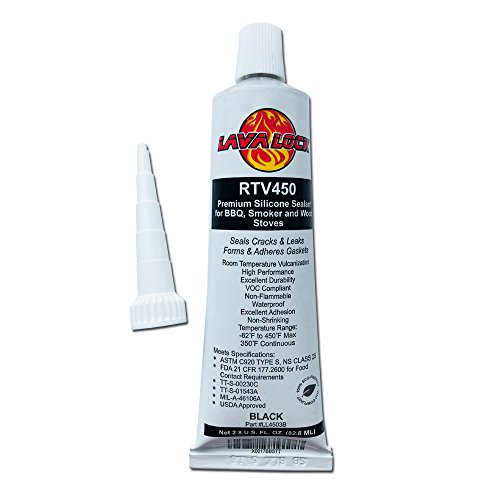
LavaLock Black RTV, 3 oz is the only black RTV in this group, which can matter when a visible bead should blend with a dark smoker surface. Its maker gives it a 450°F maximum temperature and describes it as food-contact safe and suitable for gaskets, doors, lids and grill surfaces. The maker also says a 1/8-inch bead can extend 29 feet from the 3-ounce tube.
The 450°F ceiling is lower than the limits given for the red RTV choices. Select another option if the joint may exceed that rating; color alone should not decide a high-heat application.
Bottom line: Pick this for a black bead when the joint stays within its 450°F maximum.
How to choose high-temp sealant for a smoker
Choose a sealant whose maximum temperature is above the hottest temperature expected at the joint, not just the smoker’s cooking setting. Many backyard smoking sessions run around 225°F to 275°F, while fireboxes and exhaust connections can be substantially hotter. A measurable rule is to avoid a sealant rated below the joint’s expected peak; for example, a joint that could reach 500°F rules out a 450°F maximum product.
RTV silicone cures into a flexible seal, but its temperature maximum is a limit rather than a recommended operating target. Allow a margin below that limit because the bead may experience temperature swings and local hot spots. Compare the joint location and expected heat alongside the package’s rating.
| Need | Decision rule |
|---|---|
| Hotter joint | Select a rating above expected peak joint temperature |
| Visible bead | Match color when appearance matters |
| Long bead run | Compare package size and stated bead yield |
Where smoker sealant belongs
Use RTV sealant on compatible joints such as doors, lids, smoke stacks or vent connections when the maker identifies those uses. A smoker’s cooking chamber, firebox and exhaust can expose different joints to different temperatures, so choose by the location being sealed rather than by the smoker’s dial alone. Food-contact-safe wording does not mean a bead should touch food; keep sealant on the joint and away from cooking surfaces.
Sealant can form or adhere a gasket, but it is not automatically a substitute for a separate gasket required by an appliance design. Measure the gap and inspect whether the joint needs a flexible bead or a compressible gasket before applying material. For a worn gasket that needs replacement rather than bonding, use a gasket product sized to the channel instead of assuming RTV will fill the same role.
How to apply and cure RTV silicone
Apply RTV to clean, dry surfaces and use a consistent bead; a 1/8-inch bead is a common application size, though the joint geometry determines what is appropriate. Remove old loose sealant and grease so the new material can contact the surface. Avoid overfilling a narrow joint, since excess material can squeeze inward or outward when the parts meet.
RTV silicone generally cures as moisture in the air reacts with it, so a thicker bead takes longer to cure through than a thin one. Let the material cure before exposing the joint to smoker heat, and use the maker’s cure-time instructions for the specific formulation. Do not judge readiness by a dry outer skin alone; the interior may remain uncured.
Common smoker-sealant mistakes
The most common mistake is selecting by normal cooking temperature instead of the hottest joint temperature. A smoker set to 250°F can still have hotter firebox or exhaust areas, so a 450°F rating is unsuitable if the actual joint may exceed that ceiling. Another mistake is treating a maximum temperature as a continuous-use guarantee under every condition; keep expected heat below the rating and account for hot spots.
Do not assume every red RTV or every food-contact claim means the same thing; compare the actual temperature rating and intended use for the exact product. A food-contact claim does not authorize applying sealant to food or a food-contact surface. Also avoid painting over a product identified as not paintable, and check that the bead color and package format suit the joint before starting.
Frequently Asked Questions
Can smoker sealant touch food directly?
Food-contact-safe wording does not mean sealant should be applied directly to food. Keep cured sealant on the smoker joint or gasket area, away from food and cooking surfaces.
How hot does a smoker usually run?
Many backyard smoking sessions are around 225°F to 275°F. The firebox, exhaust or a flare-up may be hotter, so judge the sealant against the joint temperature rather than the cooking-chamber setting.
Can I use a 450°F sealant on a smoker?
A 450°F-rated sealant can suit a joint that stays below 450°F after cure. Do not rely on the smoker’s usual cooking temperature if the joint is near a hotter firebox or exhaust.
Does RTV silicone work as a smoker gasket maker?
RTV silicone can be used to form or adhere a gasket when its maker identifies that use. A formed bead is not automatically a replacement for a separate gasket where the appliance design requires one.
Should sealant be cured before heating a smoker?
Yes, allow the sealant to cure before exposing it to smoker heat. RTV silicone generally cures as moisture in the air reacts with the material, and a thicker bead can take longer than a thin one; use the product maker’s cure-time directions.