
Highlighters That Don’t Bleed Through: 3 Compared

For a mix of highlighting and precise underlining, choose Zebra Pen Mildliner Dual-Tip, 15-Pack: its dual tips offer two marking widths, and its ink is designed to minimize show-through on thin pages. Choose U.S. Office Supply Bible Safe Gel Highlighters, 6-Pack if you prefer a twist-up gel stick, or BLIEVE Pastel Highlighters and Gel Pens, 10-Piece if you want pastel highlighters bundled with pens.
We earn a commission if you buy through links on this page. As an Amazon Associate I earn from qualifying purchases. Products are compared on manufacturer specifications, not hands-on testing.
- Best overall: Zebra Pen Mildliner Dual-Tip, 15-Pack – Broad chisel and fine bullet tips handle highlighting and detail work in one marker.
- Best for gel format: U.S. Office Supply Bible Safe Gel Highlighters, 6-Pack – Twist-up gel sticks glide across pages and do not need caps.
- Best for pastel notes: BLIEVE Pastel Highlighters and Gel Pens, 10-Piece – The set pairs five pastel highlighters with five gel pens.
| Product | Best for | Format | Tip or point | Set contents | Shop |
|---|---|---|---|---|---|
| Zebra Pen Mildliner Dual-Tip, 15-Pack | Versatile marking | Water-based pigment ink | Broad chisel and fine bullet | 15 highlighters | Check Price on Amazon |
| U.S. Office Supply Bible Safe Gel Highlighters, 6-Pack | Gel marker format | Twist-up gel stick | Gel stick | 6 highlighters | Check Price on Amazon |
| BLIEVE Pastel Highlighters and Gel Pens, 10-Piece | Pastel study sets | Water-based ink | Chisel tip; 0.5 mm pen point | 5 highlighters, 5 pens | Check Price on Amazon |
Highlighters That Don’t Bleed Through
Compare marker format, tip style and set contents to find a match for your pages and note-taking habits.
Zebra Pen Mildliner Dual-Tip, 15-Pack

Zebra Pen Mildliner Dual-Tip, 15-Pack stands apart with two tip shapes on each highlighter, so one marker can make broad highlight bands and fine underlines. The set contains 15 assorted colors, and the soft, translucent pigment ink is designed to minimize bleed-through on thin pages. Its water-resistant ink can be layered after it dries, which suits planners and journals where colored marks overlap. This is a good fit for readers who want one marker for both highlighting and detail work. The ink is designed to minimize show-through, not guarantee it on every paper; heavy strokes on very thin sheets may still show through.
Bottom line: Choose this set if you want broad highlighting and fine marking from the same pen.
U.S. Office Supply Bible Safe Gel Highlighters, 6-Pack
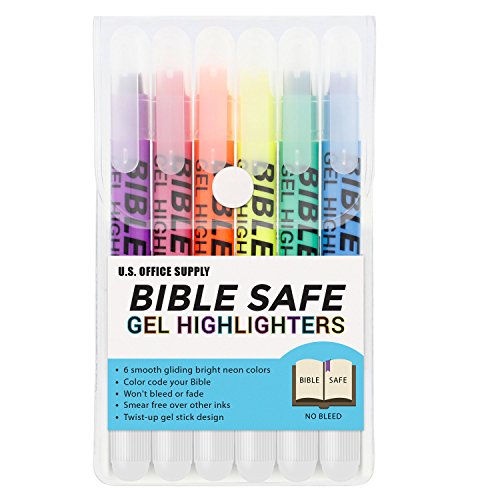
U.S. Office Supply Bible Safe Gel Highlighters, 6-Pack uses a twist-up gel stick rather than a liquid-ink marker, making its format the clearest distinction in this group. Six fluorescent colors—yellow, pink, purple, blue, green and orange—cover color-coded study notes. The maker describes these markers as bleed-proof and says they will not dry out if left uncapped. The glide-on stick suits readers who prefer a solid marker that needs no cap. Its gel format is less suited to anyone specifically seeking two different tip widths; the set offers a single stick style rather than a broad-and-fine dual tip.
Bottom line: Pick this set if you prefer a twist-up gel stick and fluorescent colors.
BLIEVE Pastel Highlighters and Gel Pens, 10-Piece

BLIEVE Pastel Highlighters and Gel Pens, 10-Piece is the only set here that combines highlighters with separate writing pens: it includes five pastel highlighters and five gel pens with 0.5 mm points. Its water-based highlighter ink is described as quick-drying and intended not to bleed through under proper use. The muted colors are suited to readers who want subdued marks rather than fluorescent emphasis, while the pens provide a separate tool for notes. The no-bleed result depends on pressure: the maker cautions that pressing very hard can cause bleed-through, so this set is a less reliable choice for forceful marking.
Bottom line: Choose this set for pastel highlighting paired with fine-point gel pens.
How to choose highlighters that don’t bleed through
Paper and marking pressure matter as much as the marker label when you want to avoid show-through. Standard copy paper is commonly 20 lb, while thin book and Bible pages can be substantially lighter; a marker that behaves well on copy paper may still show through on a delicate page. Use a light, single pass first, then check the reverse before making a second stroke. Chisel tips cover a line quickly, while fine tips give more control around small print. Gel sticks use a solid marking material instead of liquid ink, but can leave a thicker mark. For thin pages, test in a margin or an inconspicuous area before highlighting important text.
Marker types and tips for thin pages
Water-based markers, pigment-ink markers and gel sticks apply color in different ways, so no format guarantees the same result on every sheet. Liquid markers can saturate paper when strokes are slow or repeated; solid gel sticks avoid a liquid ink flow but lay down a waxy mark. Chisel tips work well for full lines, and fine points help keep color away from adjacent text. The sets here range from a dual-tip marker to a gel stick and a pastel highlighter-and-pen combination.
| Need | Format to consider | Marking habit |
|---|---|---|
| Wide lines and fine underlining | Dual-tip marker | Use the narrow tip near small print |
| Solid-stick application | Twist-up gel | Keep pressure even |
| Muted marks plus notes | Pastel set with pens | Use light strokes on thin paper |
Choose based on the page and the kind of mark you make most often, not just the ink color.
How to test for bleed-through safely
A short test in an unimportant margin is a better guide than the word “no-bleed” alone. Mark a small area using the pressure and stroke speed you plan to use, wait for the ink to dry, and inspect the reverse under the same lighting you use for reading. If the mark shows through, reduce pressure, avoid retracing the line, or switch to a lighter touch with a finer tip. Keep a scrap sheet behind loose pages during testing to protect the next sheet. Do not press hard to force a brighter color: repeated or forceful strokes can push more ink or marking material into thin paper.
Common mistakes when highlighting thin paper
Repeatedly coloring the same line is a common reason a page shows through even with a marker intended for thin paper. A single steady pass usually puts down less color than several slow passes. Let water-based ink dry before layering another color; wet layers can smear or blur small writing. Avoid assuming that paper weight alone predicts performance, because coatings, texture and ink absorption also affect how marks appear. For a book with especially thin pages, test a hidden spot first and use the narrowest practical tip. If the reverse must remain completely clear, place a barrier sheet behind the page and check after the test stroke.
Frequently Asked Questions
Can any highlighter guarantee no bleed-through on Bible paper?
No marker can guarantee the same result on every Bible page, because paper thickness and ink absorption vary. Test a light stroke in a margin and inspect the reverse before marking a passage.
How can I keep highlighter marks from showing through?
Use a single light pass and avoid retracing the same line. Thin paper is more vulnerable to saturation, so test with the pressure you intend to use before highlighting important text.
Do gel highlighters work differently from liquid markers?
Yes, gel highlighters apply a solid stick of marking material rather than flowing liquid ink. Their feel and mark differ, so check that the line does not obscure small print on your paper.
Should I wait before layering highlighter colors?
Yes, let water-based ink dry before adding a second color to reduce smearing. Drying time varies with how much ink the paper absorbs, so check a test mark first.
What highlighter tip works best around small text?
A fine tip gives more control near small print than a broad chisel tip. Use a light stroke on thin pages, since narrow marks can still show through if pressed or retraced.