
Holosun 510C Riser Mounts Compared by Fit and Height

The HOLOSUN Lower 1/3 CW Spacer 510C is the closest match for a Holosun 510C riser mount because it raises the sight’s quick-detach base for lower-third co-witness. Choose a generic Picatinny riser instead if you need a rail platform rather than a 510C-specific spacer.
A co-witness describes how the optic window aligns with backup iron sights; lower-third alignment leaves those sights in the lower part of the window.
We earn a commission if you buy through links on this page. As an Amazon Associate I earn from qualifying purchases. Products are compared on manufacturer specifications, not hands-on testing.
- Best overall: HOLOSUN 510C Lower 1/3 CW Spacer – Designed to raise the HS510C quick-detach base for lower-third co-witness.
- Best for a lightweight spacer: 510C Lower 1/3 CW Spacer Adapter – A compact 6061 aluminum spacer made to fit the Holosun 510C.
- Best for a Picatinny platform: UTG Super Slim 3-Slot Picatinny Riser – Offers three slots on a 0.75-inch-high generic Picatinny riser.
| Product | Best for | Fit or type | Height | Material | Shop |
|---|---|---|---|---|---|
| HOLOSUN 510C Lower 1/3 CW Spacer | Lower-third co-witness | 510C QD-base spacer | — | 6061-T6 aluminum | Check Price on Amazon |
| 510C Lower 1/3 CW Spacer Adapter | Lightweight 510C spacer | 510C spacer adapter | — | 6061 aluminum | Check Price on Amazon |
| UTG Super Slim 3-Slot Picatinny Riser | Three-slot rail riser | Picatinny rail riser | 0.75 in | 6061-T6 aluminum | Check Price on Amazon |
| HOLOSUN HS510C Red Dot Sight | Complete optic option | Optic with QD mount | 1.41 in dot height | — | Check Price on Amazon |
Holosun 510C Riser Mount Options
Compare the 510C-specific spacers with a general-purpose Picatinny riser and the optic itself.
HOLOSUN 510C Lower 1/3 CW Spacer

This 510C-specific spacer is made to raise the HS510C quick-detach mount base, unlike a general rail riser. It is constructed from 6061-T6 aluminum and is intended for a lower-third co-witness setup. That makes it the most direct choice for someone adjusting the height of this optic while retaining its QD base. Its 0.5 MOA-per-click adjustment refers to adjustment increments, not spacer height.
Bottom line: Choose this when you want a 510C-specific spacer for lower-third co-witness.
510C Lower 1/3 CW Spacer Adapter

This aluminum adapter is a lightweight alternative for a 510C spacer setup, with a weight of 0.02 pounds. It is precision-machined from 6061 aluminum and described as fitting the Holosun 510C, so it suits buyers seeking a compact spacer or mounting-plate style part rather than a multi-slot rail. The product name also calls it a lower-third co-witness spacer. The exact added height and mounting interface are not established by its specifications here; check those against your sight and rail before purchase, especially if matching a particular backup-sight picture.
Bottom line: Choose this if low weight and a 510C spacer format are priorities.
UTG Super Slim 3-Slot Picatinny Riser
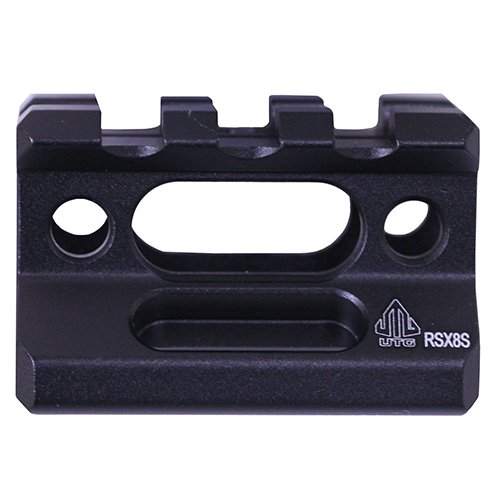
This UTG mount is a general-purpose Picatinny riser, not a 510C-specific spacer. It adds a 0.75-inch saddle height across three slots and measures 1.57 inches long, giving buyers a short rail platform for compatible optics or accessories. The maker says its locking Torx screws and integral square recoil stops are intended to hold zero. It is a fit for someone who needs a separate rail riser, but the specifications do not establish compatibility with the 510C QD base. Verify clamp clearance and rail-slot engagement before relying on it for that optic.
Bottom line: Choose this for a generic three-slot Picatinny riser, not as a confirmed 510C spacer.
HOLOSUN HS510C Red Dot Sight

This is the complete HS510C sight rather than a separate riser, so it is relevant if you still need the optic itself. It includes a quick-detach mount and a 1.41-inch dot height for co-witness alignment, plus a 2 MOA dot, 65 MOA circle, or combined reticle. The maker says Solar Failsafe can power operation when ambient light is available and Shake Awake activates the sight with motion. It does not replace a height-specific spacer when your iron-sight alignment needs to change; confirm the mount height works with your sight picture.
Bottom line: Choose this only if you need the optic, not just a riser.
How to choose a Holosun 510C riser mount
Start by deciding whether you need to raise the 510C’s quick-detach base or add a separate Picatinny rail platform. A 510C-specific spacer targets the optic’s existing base, while a generic riser depends on matching rail geometry and clamp clearance. Lower-third co-witness means the iron sights appear in the bottom portion of the optic window; absolute co-witness places the sight picture closer to the centerline. The correct position depends on the iron sights and the optic mount together, not the label alone. If you need under 0.5 inch of added height, do not assume the 0.75-inch UTG saddle height is suitable. Confirm the actual assembled height and interface before installation.
Co-witness height and sight alignment
Lower-third co-witness keeps the backup iron sights visible below the central aiming area, while absolute co-witness aligns them near the optic’s centerline. These are alignment outcomes, not universal spacer dimensions: the optic’s base, rail height and iron-sight height all affect the result. The HS510C entry gives a 1.41-inch dot height, but that number does not by itself specify the added height of a separate spacer. A practical decision rule is to match a spacer to your existing iron-sight picture; if the sight picture is already too high, adding height will not solve the mismatch. After changing a mount, confirm that the optic is secure and recheck zero at a safe, controlled range.
510C spacers versus Picatinny risers
A dedicated spacer is the direct route when the goal is raising the 510C quick-detach base; a generic riser creates an elevated rail section and requires a compatible clamp interface. Use this comparison to distinguish the two approaches before selecting a mounting part.
| Mount type | What it changes | Best fit condition |
|---|---|---|
| 510C spacer | Raises the 510C QD base | Base-specific height adjustment |
| Picatinny riser | Adds an elevated rail section | Separate rail platform needed |
Rail risers can add height and another interface that must remain clamped securely. A spacer intended for a specific optic base avoids assuming that any rail riser will mate correctly with the QD assembly. Confirm the interface, fastener engagement and clearance before use.
Safe installation and zero checks
Install firearm optics with the firearm unloaded and pointed in a safe direction, and verify the chamber and magazine well are clear before handling the mount. Screws that are loose can let an optic shift under recoil, while overtightening can damage threads or mounting parts; use the maker’s torque guidance for the particular fastener rather than guessing. Check that the mount sits fully on the rail and that recoil stops engage their slots, where applicable. After any height or mount change, confirm that the optic remains secure and re-zero at a controlled range. A changed sight height alters the sight picture and may change close-range point of impact, so confirm alignment rather than relying on the previous zero.
Frequently Asked Questions
What does lower-third co-witness mean on a red dot?
Lower-third co-witness places the backup iron sights in the lower portion of the optic window while leaving the center more open. The exact sight picture depends on the iron-sight height and the optic’s mount height together.
Will any Picatinny riser fit a Holosun 510C?
No; a generic riser must match the mounting interface and leave enough clearance for the 510C’s quick-detach base. Confirm fit and clamp engagement before mounting, rather than assuming slot count guarantees compatibility.
Does the 510C spacer include a specific rise height?
The spacer specifications here do not give an added height, so compare its assembled sight picture with your iron sights before purchase. A dot height for the optic is not the same as a spacer’s added height.
What should I check after changing an optic riser?
Check that the mount is seated, fasteners are secure to the applicable torque guidance, and the optic holds zero. Reconfirm the zero at a controlled range because a changed sight height can alter close-range point of impact.