
Hydrohealth Hydrogen Water Bottle: 4 Models Compared

The Hydrohealth hydrogen water bottle is the direct match here, with SPE/PEM technology and a maker-claimed output of up to 1,600 ppb; choose it if that output suits your needs. If you want a higher claimed concentration or a glass bottle, consider an alternative instead.
We earn a commission if you buy through links on this page. As an Amazon Associate I earn from qualifying purchases. Products are compared on manufacturer specifications, not hands-on testing.
- Best overall: Hydrohealth SPE/PEM Bottle – The named Hydrohealth model is the direct match and claims up to 1,600 ppb output.
- Best for glass: Fruaros Glass SPE/PEM Bottle – Its name identifies a glass bottle and the maker claims up to 6,000 ppb output.
- Best for higher claimed output: Clcepore 6.0 Bottle – The maker claims output up to 6,500 ppb.
| Product | Best for | Claimed output | Electrolysis technology | Shop |
|---|---|---|---|---|
| Hydrohealth SPE/PEM Bottle | Direct match | Up to 1,600 ppb | SPE/PEM, 5-layer | Check Price on Amazon |
| Fruaros Glass SPE/PEM Bottle | Glass bottle | Up to 6,000 ppb | SPE/PEM dual-chamber | Check Price on Amazon |
| Clcepore 6.0 Bottle | Highest output claim | Up to 6,500 ppb | Second-generation SPE | Check Price on Amazon |
| MSDQQTIY 5.0 Upgrade Bottle | Retention claim | Up to 6,000 ppb | SPE/PEM dual-chamber | Check Price on Amazon |
Hydrohealth hydrogen water bottle options
Compare the named model with other hydrogen water bottles by output claims, technology and material.
Hydrohealth SPE/PEM Bottle
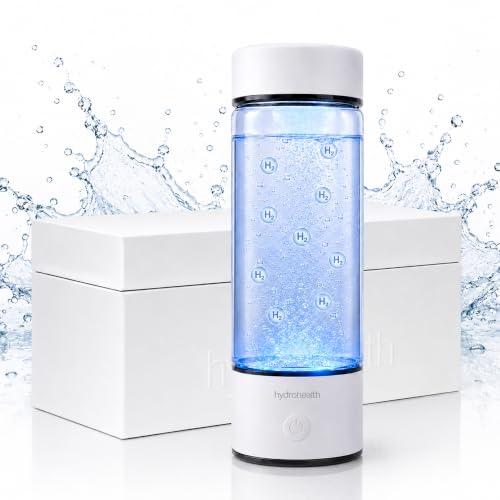
The Hydrohealth bottle is the direct match for the named product, with a maker-claimed output of up to 1,600 ppb. Its features describe a five-layer, platinum-plated titanium SPE/PEM filter and say the bottle is rechargeable and portable. The maker also says it removes chlorine and impurities; those claims do not establish that the water has a particular health effect. This option suits someone who wants the named model and its output. The main trade-off is the lower claimed concentration than the alternatives here, which matters if output claims are your deciding factor.
Bottom line: Choose this if you want the named Hydrohealth bottle and its 1,600 ppb claim.
Fruaros Glass SPE/PEM Bottle

The Fruaros-named bottle differs from the Hydrohealth model by identifying its vessel as glass and claiming output up to 6,000 ppb. Its maker says the dual-chamber SPE/PEM system runs for 5–10 minutes and expels chlorine and ozone; these are maker claims, not independent verification. Choose it if glass is important and you prefer its higher stated output. A higher ppb figure alone does not establish better hydration or health outcomes.
Bottom line: Choose this if you specifically want a glass vessel and accept the maker’s output claim.
Clcepore 6.0 Bottle

The Clcepore 6.0 bottle has the highest output in this group: its maker claims up to 6,500 ppb and identifies second-generation SPE technology. The features also claim long-lasting hydrogen retention, but give no retention duration to compare with the 24-hour claim on another option. This model suits buyers whose primary comparison is the maximum concentration claim. Output figures are claims and do not show how much hydrogen remains after the water is poured.
Bottom line: Choose this if the highest ppb figure is your priority.
MSDQQTIY 5.0 Upgrade Bottle

The MSDQQTIY bottle stands out for a maker-claimed 24-hour hydrogen lock, alongside output up to 6,000 ppb. Its maker identifies dual-chamber SPE/PEM technology and claims zero chlorine, ozone and heavy metals; these purity and retention statements are not independently established here. This option may suit someone who values the retention period more than the top ppb figure.
Bottom line: Choose this if the 24-hour retention claim matters more than maximum output.
How to compare hydrogen output claims
Compare the number as a claimed concentration, not as a measure of health benefit. These products use ppb; 1,000 ppb equals 1 part per million, or 1 mg/L, so a claim of 6,000 ppb converts to 6 mg/L. The conversion makes the units easier to read but does not verify the concentration. Hydrogen is a dissolved gas, and agitation, warmth and time after generation can reduce the amount remaining in water. If the maker does not provide a measurement method or retention test conditions, treat the maximum output as a claim rather than a guaranteed amount at drinking time. For a direct choice, prioritize the material or feature you need first, then compare ppb figures among models that fit.
SPE and PEM bottle designs
SPE means solid polymer electrolyte, while PEM refers to a proton-exchange membrane; these terms describe parts of an electrolysis system that separates hydrogen generation from other electrolysis products. Some bottle makers combine the labels and call the setup dual-chamber, but the terms alone do not prove that a product removes every unwanted substance. Check that the bottle’s cleaning and water-use instructions match your routine, especially if you plan to use anything other than ordinary drinking water. Avoid inferring safety or purity from a concentration claim. Electrolysis bottles also contain powered components, so keep charging ports and electrical contacts dry and stop using a unit if its casing, cable or seal is damaged.
Choosing by bottle material and portability
Material and carrying needs can matter as much as a concentration figure. Glass is specifically identified for one option; the other product names and features do not establish their vessel material, so do not assume they are glass or a particular plastic. Glass avoids some concerns about scratching plastic, but it can break if dropped and may weigh more than a comparable plastic vessel. If you carry a bottle in a packed bag, choose a design with a secure closure and use a protective sleeve for glass.
Using and caring for a hydrogen bottle
Follow the maker’s cleaning and charging instructions because electrolysis bottles combine a water vessel with electrical components. Keep the base, charging port and cable away from water during charging, and unplug a damaged or wet charger rather than trying to use it. Rinse and clean the vessel regularly, then let it dry fully; trapped moisture can encourage odors or residue. Do not assume that a claim about chlorine removal makes untreated or unsafe water drinkable. These products are for generating hydrogen-rich water, not for treating medical conditions, and hydrogen-water claims should not replace medical care or prescribed treatment. Check the seal and vessel for cracks before each use, especially after carrying it in luggage or a gym bag.
Frequently Asked Questions
What does 1,600 ppb mean in hydrogen water?
A concentration of 1,600 ppb is equivalent to 1.6 mg/L. It is a concentration claim, not a measure of a health effect or a guarantee of the amount remaining when you drink.
Does hydrogen water stay infused all day?
Dissolved hydrogen can escape over time, especially after pouring or agitation. A retention claim such as 24 hours depends on conditions, so look for the maker’s testing conditions before treating it as a drinking-time concentration.
Can a hydrogen water bottle remove chlorine?
Some bottle makers claim their electrolysis systems remove chlorine, but that does not make the bottle a water purifier. Use water that is already safe to drink, and do not rely on a hydrogen bottle to make questionable water safe.
Is a glass hydrogen bottle safer than plastic?
Material alone does not establish overall safety; glass can break on impact, while plastic type and care instructions matter for plastic vessels. Verify the actual vessel material and follow its cleaning and handling guidance.
Can I use a hydrogen bottle to treat a health condition?
No bottle should replace medical advice or prescribed treatment. Hydrogen water product claims do not establish that it treats, prevents or cures disease; ask a qualified clinician about health concerns.