
Mini Greenhouses for Seedlings: 3 Options Compared

For most seedling setups, the Ohuhu portable greenhouse is the most versatile choice because its 36 × 36 × 42-inch enclosure fits a range of trays and pots. Choose a shelf-style model instead if you need multiple levels; choose the starter tray if you want an enclosed germination station with built-in grow lights.
We earn a commission if you buy through links on this page. As an Amazon Associate I earn from qualifying purchases. Products are compared on manufacturer specifications, not hands-on testing.
- Best overall: Ohuhu 36 × 36 × 42-Inch Greenhouse – Its 36 × 36 × 42-inch enclosure offers room for assorted seedling trays and pots.
- Best for four shelves: TianC Beauty 4-Tier Mini Greenhouse – Four tiers each support up to 25 pounds.
| Product | Best for | Dimensions (L × W × H) | Shelves or cells | Cover or frame | Shop |
|---|---|---|---|---|---|
| Ohuhu 36 × 36 × 42-Inch Greenhouse | Flexible tray setup | 36 × 36 × 42 in | — | PVC cover; metal frame | Check Price on Amazon |
| TianC Beauty 4-Tier Mini Greenhouse | Multi-level growing | 27.5 × 19.5 × 63.8 in | 4 shelves | 150 g/m² PE cover; 16 mm steel | Check Price on Amazon |
| Bamworld 3-Tier Greenhouse with Grow Light | Timed shelf lighting | 23 in wide; other dimensions — | 3 shelves | Eucalyptus wood; PE cover | Check Price on Amazon |
Mini Greenhouses for Seedlings
Compare the formats by footprint, growing space, and the features that help manage early growth.
Ohuhu 36 × 36 × 42-Inch Greenhouse
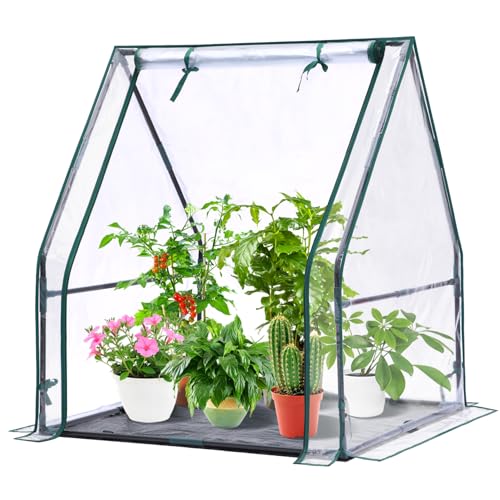
The Ohuhu model is the only option here with a walk-in-style 36 × 36 × 42-inch footprint, so it suits growers who want to arrange different trays or pots inside one enclosure. Its clear, tear-resistant PVC cover and reinforced metal frame create a portable structure for indoor or outdoor use, and a removable waterproof mat is included. The roll-up door makes access easier while tending seedlings. The larger footprint takes more floor space than a tabletop tray or narrow shelf greenhouse, so measure the intended location before choosing it.
Bottom line: Pick this if you want one portable enclosure with room for varied tray and pot sizes.
TianC Beauty 4-Tier Mini Greenhouse

The TianC Beauty greenhouse separates seedlings across four shelves, making it a better fit than a single enclosure when vertical growing space matters. Its powder-coated 16 mm steel frame supports up to 25 pounds per tier, and the 150 g/m² PE cover has a zipper design. It measures 27.5 × 19.5 × 63.8 inches, so check ceiling height and floor footprint before setting it up. The shelves suit trays and pots, but tier spacing is not provided; taller plants may outgrow the available space as they develop.
Bottom line: Choose this for several levels of trays or pots and a tall, narrow footprint.
Bamworld 3-Tier Greenhouse with Grow Light

The Bamworld combines a three-tier plant stand with adjustable grow-light controls, unlike the other shelf greenhouse here, which emphasizes its steel frame and cover. Each 23-inch-wide shelf has 17 inches of vertical spacing and supports up to 45 pounds. The built-in light offers 9 brightness levels and timer settings of 3, 6, or 12 hours. Its eucalyptus wood frame and PE cover make it a fit for growers who want shelving and lighting in one structure. The dimensions do not establish its full footprint, so measure the space where it will stand.
Bottom line: Pick this if built-in timed lighting and high-capacity shelves are your priorities.
How to Choose a Mini Greenhouse for Seedlings
Choose by the space seedlings need at each stage: cell trays use little room, while potted seedlings need wider shelves or an enclosure. A useful rule is to leave about 2 inches of clearance above the tallest seedling so foliage does not press against a shelf or cover. Shelving gives more growing area per floor footprint, but check each tier’s load limit and vertical clearance. A covered enclosure offers room to rearrange trays, while a propagator tray keeps humidity close to newly sown seeds. Grow lights are useful when a bright, unobstructed window is unavailable; position and duration should follow the light maker’s guidance for the crop and growth stage.
Managing Humidity and Ventilation
Seedlings need consistently moist, not waterlogged, growing medium; saturated cells restrict oxygen around roots and encourage damping-off disease. Keep domes or covers ventilated as seedlings emerge, then increase airflow rather than leaving young plants in stagnant, very humid air. Damping-off can collapse seedlings at the soil line, and overly wet conditions are a common contributor. Water from below when practical, then drain excess rather than leaving trays standing in water. Clear covers make it easier to see condensation and growth, but condensation alone is not a reliable measure of moisture in the root zone.
Hardening Off Seedlings Before Moving Outdoors
Harden off indoor-grown seedlings over about 7 to 10 days before transplanting outdoors. Start with 1 to 2 hours in a sheltered, shaded spot, then gradually add outdoor time and sunlight each day; bring tender plants inside if nights are cold or conditions turn harsh. Wind and direct sun can stress indoor-grown leaves quickly, so avoid moving seedlings straight from a protected enclosure into a full day outdoors. Check crop-specific cold tolerance before leaving plants outside overnight. A greenhouse cover protects seedlings from some exposure but does not guarantee safe temperatures during frost or strong heat.
Mini Greenhouse Formats Compared
The right format depends on whether you need cells, shelves, or an open enclosure. Use this guide to match the structure to the growing stage and available space.
| Format | Useful for | Check before choosing |
|---|---|---|
| Cell starter tray | Germinating many seeds in small cells | Cell size and tray dimensions |
| Tiered shelf greenhouse | Separating trays and pots vertically | Shelf spacing, load capacity, and height |
| Portable enclosure | Arranging mixed trays or pots under one cover | Footprint, cover access, and ventilation |
Frequently Asked Questions
How long should seedlings stay under a humidity dome?
Remove or open the dome as seedlings emerge rather than keeping young plants sealed in high humidity. Increase ventilation gradually, especially when condensation persists or the growing medium stays wet.
How much light do indoor seedlings need each day?
Many vegetable seedlings grow under roughly 12 to 16 hours of light daily, depending on crop and light intensity. Use a timer and keep lights close enough to prevent leggy growth without overheating leaves.
When should seedlings be moved into larger pots?
Pot up when roots fill the cell or begin emerging through drainage holes, or when several true leaves have formed and growth is crowded. Move each seedling into a pot with drainage and fresh, moist growing medium.
Can a mini greenhouse stay outside in frost?
A lightweight mini greenhouse should not be assumed to protect seedlings from freezing; many covers provide only limited temperature buffering. Bring tender seedlings into a frost-free space when overnight temperatures approach the crop’s cold limit.
Why are my seedlings tall and weak indoors?
Leggy seedlings usually need stronger light or closer light placement, and crowded plants may also stretch. Improve light exposure and provide gentle airflow; keep lights at a distance that avoids leaf heat stress.