
Innovative Headlight Repair Polish: 4 Options Compared

Bonseor Headlight Repair Polish is the closest match for innovative headlight repair polish, with a wipe-on, rinse-free formula for cloudy or yellowed lenses. Choose teqnizo Headlamp Restoration Fluid Kit or Three-Step Headlight Restoration Kit instead if you want a restoration kit, and confirm lens compatibility before ordering; polish is not a fix for moisture inside a headlight or a cracked lens.
We earn a commission if you buy through links on this page. As an Amazon Associate I earn from qualifying purchases. Products are compared on manufacturer specifications, not hands-on testing.
- Best overall: Bonseor Headlight Repair Polish – A wipe-on, rinse-free repair fluid is the most direct match for the requested polish.
- Best for spray application: XIRUJNFD Headlight Repair Polish, 50 mL – The maker describes a spray application that takes about two minutes.
- Best for mixed lens materials: teqnizo Headlamp Restoration Fluid Kit – The maker says the kit works on both plastic and glass lenses.
- Best for three-step use: Three-Step Headlight Restoration Kit – Its described process is spray, polish and wipe, with UV inhibitors.
| Product | Best for | Application | Lens compatibility | Claimed process | Shop |
|---|---|---|---|---|---|
| Bonseor Headlight Repair Polish | Wipe-on polish | Wipe-on fluid | — | Rinse-free | Check Price on Amazon |
| XIRUJNFD Headlight Repair Polish, 50 mL | Spray application | Spray | — | About 2 minutes, maker claim | Check Price on Amazon |
| teqnizo Headlamp Restoration Fluid Kit | Plastic and glass | Fluid kit | Plastic and glass, maker claim | Minutes, maker claim | Check Price on Amazon |
| Three-Step Headlight Restoration Kit | UV-inhibitor formula | Spray, polish, wipe | Plastic lenses, maker claim | Three steps | Check Price on Amazon |
Innovative headlight repair polish and restoration kits
Compare the application style and compatibility claims to find a product suited to the lens and haze you need to address.
Bonseor Headlight Repair Polish

Bonseor Headlight Repair Polish is the direct polish-style option here: its maker says the fluid wipes onto a cloudy or yellowed headlight lens without rinsing. The 30 mL size appears in the details, while the product name gives conflicting package-size wording, so check the amount and piece count before ordering. The maker also claims hydrophobic protection, but does not give a protection duration in the specifications. This format may suit someone who wants a simple wipe-on application; it is less suited to a buyer seeking a multi-step sanding or polishing kit.
Bottom line: Pick it for a rinse-free wipe-on polish; verify the package quantity first.
XIRUJNFD Headlight Repair Polish, 50 mL
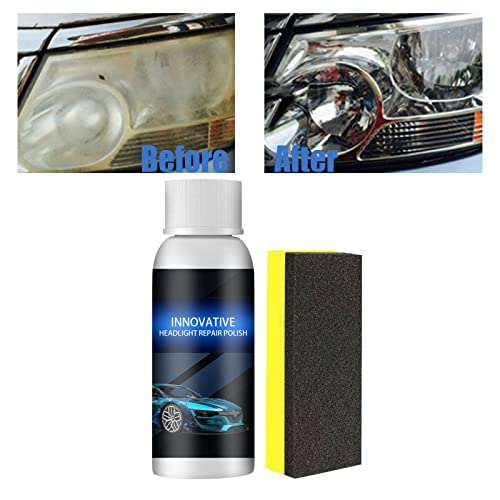
XIRUJNFD Headlight Repair Polish, 50 mL stands apart from the wipe-on fluid because its maker describes a spray application and says the process takes about two minutes. The maker claims it addresses oxidation, dirt and haze and resists abrasion, but gives no supported duration for those effects. This is a fit for buyers prioritizing a quick spray process, not for anyone who needs clearly specified lens-material compatibility.
Bottom line: Choose it if you prefer a spray process and have confirmed the lens material is suitable.
teqnizo Headlamp Restoration Fluid Kit

teqnizo Headlamp Restoration Fluid Kit is a broader restoration fluid kit rather than a clearly identified standalone polish. Its maker says it can be used on plastic and glass lenses and claims it removes yellowing and oxidation in minutes. That material range makes it a potential fit when a vehicle has different lens materials, but compatibility claims do not establish that every lens coating or condition is suitable. The package is described as one set, with no amount given in the specifications. Choose it for its material breadth, and check the actual lens material and condition before starting.
Bottom line: Choose it when the maker-claimed plastic-and-glass compatibility matches your lens.
Three-Step Headlight Restoration Kit

Three-Step Headlight Restoration Kit differs from the fluid options by spelling out a three-step routine: spray, polish and wipe. Its maker says the formula includes UV inhibitors and is for plastic headlight lenses, taillights, fog lights and directional lights. That makes it a broader light-lens kit, but its compatibility is limited to plastic, so it is not the clear choice for glass. Pick this kit if you want an explicit sequence and UV-inhibitor claim, and verify that the specific lens is plastic.
Bottom line: Pick it for an explicit three-step kit intended for plastic light lenses.
How to choose headlight repair polish
Choose by lens material, the kind of haze and the application you can do carefully. Most modern headlight covers are polycarbonate plastic; a product intended for glass or plastic should not automatically be assumed safe for every coating or aftermarket lens. Surface oxidation and fine scratches may respond to restoration, while cracks, deep pitting or moisture inside the housing call for a different repair. If haze remains after the outside is clean and dry, do not keep polishing blindly: investigate internal moisture or lens damage. For an easy decision rule, use a spray or wipe-on fluid only when the lens is intact and the product explicitly fits its material; otherwise choose a kit with a compatible process or seek a repair option suited to the damage.
Headlight lens material and condition
Plastic lenses are common, and prolonged ultraviolet exposure can oxidize their outer surface, producing a dull or yellowed appearance. Glass lenses do not oxidize in the same way, so a polish aimed at oxidized plastic may not address their problem. Check whether the haze is on the exterior by cleaning and drying a small area first; condensation or cloudiness inside the housing points to moisture or a seal issue, not surface polish. Deep chips and cracks can scatter light even after cleaning. Avoid abrasive work on a lens unless the chosen product’s process calls for it, and protect nearby paint from polishing residue. The practical boundary is simple: exterior film may be restorable, but internal fog and structural damage need diagnosis rather than more rubbing.
Polish, spray and multi-step restoration kits
Application formats make different demands: a wipe-on fluid emphasizes simple application, a spray emphasizes coverage, and a multi-step kit may add a separate polishing stage. A restoration process that abrades oxidized plastic also removes some of the damaged surface; that is why a compatible protective finish matters after abrasive restoration. UV exposure drives renewed oxidation, so a maintained UV-resistant coating helps preserve clarity longer than polishing alone. The comparison below maps the product format to the buyer’s priority; it does not imply that one formula fits every lens or condition.
| Need | Format to consider | Check first |
|---|---|---|
| Fewer application steps | Wipe-on or spray fluid | Lens material and surface condition |
| Defined polishing sequence | Multi-step restoration kit | Whether the process and finish suit the lens |
| Haze inside the housing | Neither polish nor exterior kit | Moisture or seal problem |
Safe use and common restoration mistakes
Work on a cool, dry lens in a ventilated area, and keep polish off painted trim unless the product says it is safe there. Headlight restoration compounds can irritate skin or eyes, so use the protective equipment and handling precautions on the product packaging. Do not polish hot lenses or apply a coating before the surface is clean and dry; contamination can be trapped beneath the finish. A common mistake is treating every cloudy lamp as exterior oxidation: internal condensation, cracks and severely pitted lenses will not be corrected by surface polish. Another is skipping the protective finish after abrasive restoration, which can leave newly exposed plastic vulnerable to UV-related haze. Stop if the lens surface is damaged or the process produces uneven clarity, since clear-looking plastic alone does not guarantee a properly aimed beam.
Frequently Asked Questions
Can headlight polish fix fog inside the housing?
No, exterior polish cannot remove moisture trapped inside a sealed headlight housing. Persistent condensation or internal fog calls for checking the housing, vents and seals rather than repeating an exterior treatment.
How can I tell if headlight haze is on the outside?
Clean and dry a small exterior area; a change in that patch points to surface contamination or oxidation. Haze that remains visible inside the lens suggests internal moisture or damage instead.
Do headlight restoration kits work on glass lenses?
Some products claim glass compatibility, but many restoration approaches target plastic lenses. Confirm the specific lens material and the product’s compatibility before applying anything.
Why does headlight haze come back after polishing?
UV exposure can oxidize exposed plastic again, especially when restoration removes the damaged outer layer without leaving a suitable protective finish. A UV-resistant coating and careful maintenance help slow recurrence.
Should I polish a cracked headlight lens?
No, polish does not repair cracks or restore the structural integrity of a lens. Replace or repair a cracked lens appropriately because damage can affect light output and allow water into the housing.