
Insoles for Cowboy Boots: 4 Fits Compared

For ARIAT wide square toe boots, ARIAT ATS Wide Square Toe Gel Insole is the named product’s direct match, with a shaped toe and heel-and-forefoot gel pads; choose ARIAT ATS Round Toe Gel Insole instead for round toe boots. Cowboy-boot insoles are footbeds that replace or supplement the boot’s underfoot cushioning, but a mismatched toe shape can leave gaps.
Choose Endoto Square Toe Replacement Insole if you want a square toe replacement compatible with Ariat footwear, or ARIAT Power Support Wide Square Toe Insole for rebound foam and molded support in a wide square toe boot.
We earn a commission if you buy through links on this page. As an Amazon Associate I earn from qualifying purchases. Products are compared on manufacturer specifications, not hands-on testing.
- Best overall: ARIAT ATS Wide Square Toe Gel Insole – Its wide square toe shape and dual gel pads match the named boot style.
- Best for round toes: ARIAT ATS Round Toe Gel Insole – The contoured footbed is made for round toe and R-toe boots.
- Best for rebound foam: ARIAT Power Support Wide Square Toe Insole – Its polyurethane cushioning is designed to spring back rather than pack flat.
| Product | Best for | Toe fit | Cushioning | Support | Shop |
|---|---|---|---|---|---|
| ARIAT ATS Wide Square Toe Gel Insole | Wide square toes | Wide square toe | Heel and forefoot gel | Molded arch, heel cradle | Check Price on Amazon |
| ARIAT Power Support Wide Square Toe Insole | Rebound cushioning | Wide square toe | Polyurethane rebound foam | Molded arch, heel cradle | Check Price on Amazon |
| Endoto Square Toe Replacement Insole | Ariat replacement | Square toe | Lightweight foam | Molded foam arch support | Check Price on Amazon |
| ARIAT ATS Round Toe Gel Insole | Round toe boots | Round toe / R-toe | Heel and forefoot gel | Arch support, ATS platform | Check Price on Amazon |
Insoles for Cowboy Boots
Match the insert’s toe shape to your boot first, then compare cushioning and support.
ARIAT ATS Wide Square Toe Gel Insole

For a wide square toe boot with separate cushioning at the heel and forefoot, this footbed pairs dual gel pads with ARIAT’s ATS platform. Its molded arch and heel cradle are intended to steady the foot, while the breathable top adds another comfort feature. The size run is men’s US 7–14 D; the wide square shape describes the toe box, not a wider shoe width. A printed cut guide allows trimming down for other footwear, but trimming cannot make a narrow toe shape fit a wider boot cleanly.
Bottom line: Choose this when your boot has a wide square toe and you want gel at both impact points.
ARIAT Power Support Wide Square Toe Insole

Unlike the gel-padded options, this wide square toe footbed uses rebound polyurethane foam for cushioning. Its molded support cradle is shaped around the arch and heel, and its moisture-wicking liner is intended to move sweat away from the foot. It is pre-shaped to sit flush in wide square toe boots and does not require trimming for that fit. The tradeoff is that it is not the round toe choice, so buyers with a rounded boot should match the toe profile before choosing based on cushioning.
Bottom line: Pick this for a wide square boot when rebound foam matters more than gel pads.
Endoto Square Toe Replacement Insole
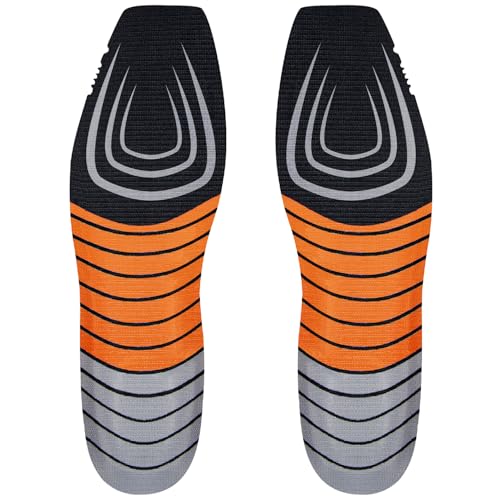
This replacement footbed stands out for its square toe shape and stated compatibility with Ariat shoes. Its layered construction combines a moisture-wicking liner, lightweight cushioning foam, and a molded foam base with arch support. The size is men’s 10.5 D, so it is most relevant to a buyer seeking that size rather than a broad size range. Compatibility is useful, but confirm the boot’s exact toe profile and size before ordering; a square toe insert and a wide square toe insert are not automatically interchangeable.
Bottom line: Choose this if you need a men’s 10.5 D square toe replacement for compatible Ariat footwear.
ARIAT ATS Round Toe Gel Insole

For rounded western boots, this ATS footbed uses a round toe contour rather than the wide square shape of the other ARIAT options. TPR gel pads sit at the heel and ball of the foot, while the ATS platform supports the arch and is intended to stabilize the foot on uneven ground. Its perforated, moisture-wicking cover is designed to promote airflow. The key limitation is fit: its rounded contour may leave space at the sides of a wide square toe box, so choose it for round toe or R-toe boots.
Bottom line: Pick this when your cowboy boots have a round toe and you want gel cushioning.
How to choose insoles for cowboy boots
Start with toe shape, then decide whether cushioning or arch structure is the priority. A square toe insert is shaped differently from a round toe insert; choose the profile that follows the boot’s toe box rather than assuming any full-length footbed will fit. Next, look at the cushioning construction: gel pads concentrate cushioning at specific impact points, while foam runs across more of the footbed. For longer standing shifts, consider whether you want a molded arch and heel cradle as well as cushioning. If you are replacing a footbed, remove the existing insert first rather than stacking footbeds, which can crowd the foot and raise the heel. A trim-to-fit guide can shorten an insert, but cannot change its molded toe shape.
Square toe and round toe fit
Toe profile determines whether an insole’s front edge follows the boot’s interior shape. Cowboy boots commonly use rounded, square, and broad square toe shapes; product terminology is not perfectly uniform, so compare the insert’s named profile with the boot’s actual toe. An insert that is too narrow can leave unsupported space near the sides, while an oversized front can bunch or fold. Replace the old footbed with the new one and check that it lies flat from heel to toe. The boot should hold the heel in place and leave room for the toes to move without pressing against the front. If you cannot identify the boot’s toe profile, verify the fit before ordering.
Gel pads versus foam cushioning
Gel and foam differ in where they cushion and how the footbed is built. Gel inserts often place pads beneath the heel and ball of the foot, two areas that take impact during walking; foam can provide a continuous cushioning layer. Rebound polyurethane is designed to spring back, while molded foam can combine cushioning with a shaped support base. These constructions do not establish how much arch support an individual foot needs. For a simple need-to-choice comparison, use the boot’s toe shape first, then the cushioning type:
| Need | Feature to prioritize |
|---|---|
| Heel and forefoot impact cushioning | Footbed with pads at both locations |
| Wide square toe shape | Wide square molded profile |
| Round toe boot fit | Round toe or R-toe contour |
| Foam that springs back | Polyurethane rebound foam |
Replacing and fitting a boot footbed
A replacement insole should sit flat in the boot without folding at the toe or lifting at the heel. Remove the existing footbed if the boot has one, then place the replacement into the empty boot and check the edges. Trimming is appropriate only when the insert is designed to be trimmed and the cut guide shows where to shorten it; cut gradually and preserve the toe profile. Do not stack a replacement on top of a full existing footbed, because extra thickness can reduce internal room and change heel position. After fitting, walk indoors briefly and check for toe pressure, heel slip, or a raised edge before wearing the boots for a long shift.
Frequently Asked Questions
Can I trim insoles for cowboy boots?
Some insoles include a cut guide for reducing their length, but trimming only adjusts size and does not reshape the toe profile. Cut a little at a time and test the footbed flat in the boot.
Should cowboy boot insoles match the toe shape?
Yes, matching the insert profile to the boot’s toe shape helps the front sit without gaps or bunching. Square, wide square, and round toe shapes are distinct profiles, so check which one your boot uses.
Should I wear two insoles in cowboy boots?
Usually, replace a removable footbed rather than stacking a second full insole on top. The extra thickness can crowd the toes and raise the heel, affecting boot fit.
How do I know if a boot insole fits?
A well-seated insole lies flat from heel to toe without folded edges or a lifted heel. Check for toe pressure and heel movement during a short indoor walk before a full day of wear.