
INZECTO Mosquito Trap Options Compared by Use

INZECTO Mosquito Trap, 4-Pack is the simplest INZECTO mosquito trap choice in this group, while INZECTO Patented Trap, Case of 12 adds a 1,500-square-foot coverage claim and dimensions. These water-activated traps target mosquito larvae; choose a different type if you want a light-based device that catches flying insects.
We earn a commission if you buy through links on this page. As an Amazon Associate I earn from qualifying purchases. Products are compared on manufacturer specifications, not hands-on testing.
- Best overall: INZECTO Mosquito Trap, 4-Pack – A water-activated INZECTO trap for buyers seeking a straightforward outdoor larval trap.
- Best for stated coverage: INZECTO Patented Trap, Case of 12 – Its maker says the trap offers 1,500 square feet of outdoor coverage.
- Best for multiple flying insects: Dynatrap DT1130SR, 1/2-Acre Trap – The Dynatrap is described for mosquitoes, flies, wasps, gnats, and other flying insects.
| Product | Best for | Trap method | Coverage | Dimensions (in.) | Shop |
|---|---|---|---|---|---|
| INZECTO Mosquito Trap, 4-Pack | Water-activated setup | Water-activated larval trap | — | — | Check Price on Amazon |
| INZECTO Patented Trap, Case of 12 | Coverage-conscious yards | Water-activated larval trap | 1,500 sq. ft. claimed | 9.0 × 4.7 × 4.9 | Check Price on Amazon |
| Dynatrap DT1130SR, 1/2-Acre Trap | Flying-insect capture | Lamp and fan capture | 1/2 acre in model name | 11.21 × 8.48 × 8.48 | Check Price on Amazon |
| LUOJIBIE 4200V Bug Zapper | Electric-grid zapping | UV/LED electric grid | — | 12.0 × 5.75 × 5.75 | Check Price on Amazon |
| GOOTOP 4200V Bug Zapper | Hanging electric zapper | Light and electric grid | — | — | Check Price on Amazon |
INZECTO mosquito traps and alternatives
Start with the trap method: water-activated larval traps and light-based devices serve different mosquito-control goals.
INZECTO Mosquito Trap, 4-Pack
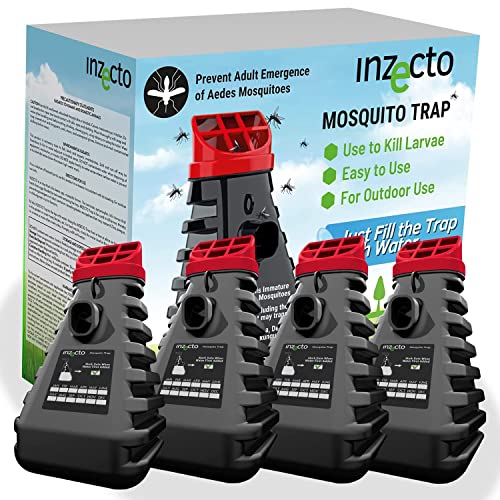
INZECTO Mosquito Trap, 4-Pack is the simpler of the two INZECTO options here: a four-trap pack activated by water. Its product name says it attracts mosquitoes and kills larvae, making it a fit for someone targeting breeding sites rather than trying to zap adult insects in flight. The pack count is useful when you want more than one placement outdoors. The facts do not identify a coverage area, so buyers choosing by yard size should confirm the intended coverage before ordering.
Bottom line: Choose this if a water-activated larval trap and four-unit pack match your outdoor setup.
INZECTO Patented Trap, Case of 12

INZECTO Patented Trap, Case of 12 stands apart with a maker-claimed 1,500-square-foot outdoor coverage area and a case of 12 traps. The maker says it uses a leaf-infusion mixture in stagnant water to lure mosquitoes, then uses active ingredients to help prevent adult mosquitoes from emerging. At 9.0 by 4.7 by 4.9 inches, it has a defined footprint for placement planning. The coverage claim is the deciding factor, but it should not be treated as a guarantee for every yard layout or mosquito pressure.
Bottom line: Pick this when the coverage area and 12-trap case suit your placement plan.
Dynatrap DT1130SR, 1/2-Acre Trap

Dynatrap DT1130SR, 1/2-Acre Trap differs from the INZECTO water traps by targeting flying insects with a lamp and fan rather than larvae in water. Its name gives a half-acre designation, and its uses include mosquitoes, flies, wasps, and gnats. A catch basket empties with a button, and the maker says its LED bulb lasts six times longer than regular fluorescent bulbs. This is the relevant alternative if your goal is capturing multiple kinds of flying insects; it is not a water-activated larval trap.
Bottom line: Choose this for a lamp-and-fan device aimed at several flying insect types.
LUOJIBIE 4200V Bug Zapper

LUOJIBIE 4200V Bug Zapper is an electric-grid zapper, not an INZECTO-style water trap: its maker describes a blue-violet UV light and 4,200-volt zap. It is presented for indoor and outdoor placements including patios, garages, and kitchens, so it suits someone looking for a plug-in-style insect zapping approach across spaces. Its dimensions are 12.0 by 5.75 by 5.75 inches. Unlike a larval trap, this approach targets insects that reach the light and grid, rather than mosquito development in standing water.
Bottom line: Pick this if you want an electric light-and-grid device for indoor or outdoor areas.
GOOTOP 4200V Bug Zapper
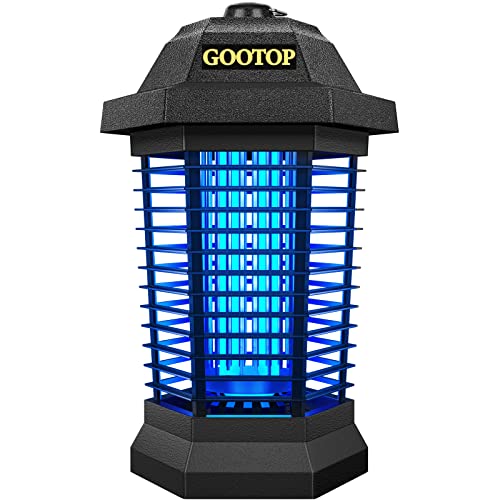
GOOTOP 4200V Bug Zapper uses a bulb light to attract flying insects to a high-voltage grid, so it serves a different purpose from the water-activated INZECTO traps. The maker says it starts working when plugged in and is light enough to hang; it also describes a replaceable bulb and cleaning. That combination may suit buyers who want a hanging electric device and are willing to maintain a bulb and grid. The dimensions are not reliable for planning a hanging location, so check the physical size before choosing a spot.
Bottom line: Choose this for a hanging, plug-in electric zapper with a replaceable bulb.
How water-activated mosquito traps work
Water-based larval traps aim at the immature mosquito stages, not just flying adults. A mosquito’s life cycle has four stages—egg, larva, pupa, and adult—and larvae develop in water, so removing or treating standing water can interrupt development before emergence. A trap using stagnant water as a lure needs a deliberate placement and maintenance plan; rain or accidental tipping can alter the water level. For ordinary yard cleanup, empty containers that collect water at least weekly, since that prevents many small water-holding sites from remaining available for mosquito development. Pick a larval trap when you can manage a water-based placement; choose a different device if your priority is catching adult insects in flight.
Choosing a mosquito trap by target
Choose by life stage and capture method: water-activated traps focus on larvae, while light-and-grid or lamp-and-fan devices target flying insects. Adult mosquitoes are most active around dawn and dusk, though species differ, and a device’s placement affects what reaches it. A UV zapper can attract non-target insects as well as pests, so it is not a substitute for removing standing water near the home. The table separates the approaches in this group by intended target; it does not imply that one type replaces the other. If your concern is a breeding area, start with water management and consider a larval trap; for mixed flying insects, consider a device designed to capture adults.
| Approach | Target | Deciding factor |
|---|---|---|
| Water-activated trap | Mosquito larvae | Manage a water-based placement |
| Lamp and fan | Flying insects | Capture multiple insect types |
| UV light and grid | Flying insects | Use an electric zapping method |
Where to place outdoor mosquito traps
Place a mosquito trap where it can operate without becoming a hazard or nuisance. Standing-water sites matter because mosquitoes lay eggs in or near water, but traps should not be positioned where children or pets can tip, spill, or reach the contents. Light-based traps may also draw insects toward a sitting area, so avoid placing one beside the spot where people gather. Keep water-holding containers, clogged gutters, and saucers in mind: even a small overlooked water source can support larvae. For a yard with distinct zones, position any trap according to its target and coverage claim rather than assuming one unit protects every corner.
Maintenance and common mosquito-control mistakes
Weekly water checks are a useful baseline for outdoor mosquito prevention because many common mosquitoes can complete immature development in about a week or longer depending on temperature and species. Empty or refresh containers that collect rain, clear debris from gutters, and avoid leaving buckets or toys full of water. A frequent mistake is relying on a trap while leaving other breeding sites untouched; another is assuming a coverage area guarantees control under all conditions. Electric units also require attention to the collection area and bulb where applicable, while water traps require checking their water condition. Use a trap as one part of yard management, not as a reason to ignore standing water.
Frequently Asked Questions
Do water-based mosquito traps catch adult mosquitoes?
Water-based larval traps primarily target development before adulthood rather than capturing adult mosquitoes in flight. Mosquitoes pass through egg, larva, pupa, and adult stages, with the larval and pupal stages occurring in water.
How often should I check standing water outside?
Check outdoor containers at least once a week and empty water that has collected in them. Warm conditions can speed mosquito development, so containers that remain wet for a week or more deserve particular attention.
Where should I place a mosquito trap in a yard?
Place a trap near the target area but away from people gathering, and keep water-based traps beyond children’s and pets’ reach. Adult mosquito activity often increases around dawn and dusk, though activity and preferred locations vary by species.
Can a bug zapper replace a larval mosquito trap?
No, the devices target different life stages: water traps focus on larvae, while electric zappers target insects that reach the light and grid. Removing standing water weekly addresses potential breeding sites that an adult zapper does not remove.
Why do mosquitoes still appear when I use a trap?
A trap does not eliminate every nearby breeding site or prevent mosquitoes from entering from elsewhere. Check for standing water in items such as buckets, plant saucers, and clogged gutters, and remember that trap coverage claims do not guarantee uniform results in every yard.