
Jewelry Box Liner Fabric: 3 Peel-and-Stick Options

For most jewelry-box lining projects, Self-Adhesive Velvet Flock Roll is the strongest fit because its 17.7-by-117-inch roll offers the most coverage. Choose Mesheshe Black Adhesive Felt Sheets instead for smaller cut-to-shape jobs using sheets, or CHIHUT Green Velvet Flocking Roll if you want a green velvet finish.
Peel-and-stick liner is fabric or flocking attached to an adhesive backing, so it can be cut to fit a smooth surface without separate glue.
We earn a commission if you buy through links on this page. As an Amazon Associate I earn from qualifying purchases. Products are compared on manufacturer specifications, not hands-on testing.
- Best overall: Self-Adhesive Velvet Flock Roll – The 17.7-by-117-inch roll provides the most listed coverage and a soft velvet surface.
- Best for green interiors: CHIHUT Green Velvet Flocking Roll – Its 12-by-100-inch roll is green and can be repositioned, according to the maker.
- Best for small projects: Mesheshe Black Adhesive Felt Sheets – Ten A4-size black felt sheets are easier to manage for small or varied shapes.
| Product | Best for | Format | Dimensions | Color | Shop |
|---|---|---|---|---|---|
| Self-Adhesive Velvet Flock Roll | Large box interiors | Roll | 17.7 × 117 in | Black | Check Price on Amazon |
| CHIHUT Green Velvet Flocking Roll | Green velvet lining | Roll | 12 × 100 in | Green | Check Price on Amazon |
| Mesheshe Black Adhesive Felt Sheets | Small felt projects | 10 sheets | 8.3 × 11.8 in each | Black | Check Price on Amazon |
Jewelry Box Liner Fabric Options
Compare the available felt sheets and velvet rolls by format, coverage and color before choosing a liner.
Self-Adhesive Velvet Flock Roll

For larger lining jobs, Self-Adhesive Velvet Flock Roll provides a 17.7-by-117-inch black velvet flock roll rather than separate sheets. The maker describes its velvet as thicker and says the roll format avoids creases during use. The backing peels away for application, and the fabric can be cut to shape for a jewelry box or display background. It suits projects with broad, smooth surfaces and a preference for black velvet. The long roll may be awkward to handle for a single small compartment, so measure the area first and plan how to keep the unused length clean.
Bottom line: Choose this roll when your project needs broad black velvet coverage.
CHIHUT Green Velvet Flocking Roll

CHIHUT Green Velvet Flocking Roll is the green option among these liners, supplied as a 12-by-100-inch self-adhesive velvet roll. The maker says the material is thickened, cuttable and repositionable, and claims it can be removed without residue. That combination suits someone lining a jewelry box who wants a green surface and the flexibility to adjust placement during application. Its 12-inch width is narrower than Self-Adhesive Velvet Flock Roll, which can mean more seams on a wide continuous interior. Check the usable width of each compartment before cutting so the pieces fit the surfaces you intend to cover.
Bottom line: Pick this roll if green velvet is the deciding color and a 12-inch width fits.
Mesheshe Black Adhesive Felt Sheets
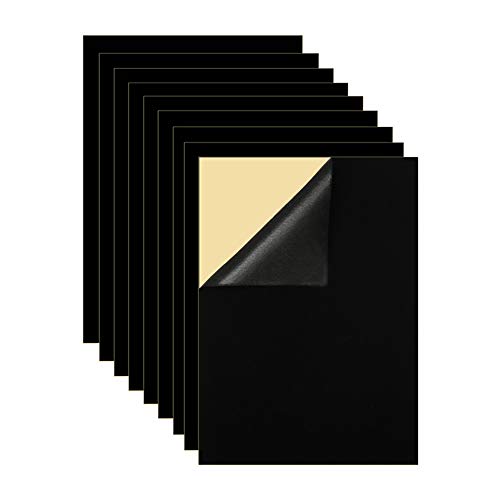
Unlike the continuous rolls, Mesheshe Black Adhesive Felt Sheets comes as ten black A4-size adhesive felt sheets, each about 8.3 by 11.8 inches. The sheet format is practical for small compartments, craft shapes or projects where manageable pieces matter more than a long uninterrupted length. The maker says the adhesive is strong and recommends a clean, smooth surface without particles or bumps. Felt gives a different finish from the velvet flock on Self-Adhesive Velvet Flock Roll and CHIHUT Green Velvet Flocking Roll. For a large jewelry box, the individual-sheet size can require several joins; consider seam placement before cutting.
Bottom line: Choose these sheets for small compartments or cut-to-shape felt work.
How to choose jewelry box liner fabric
Choose by surface area, texture and whether you want sheets or a continuous roll. Measure the bottom and each side separately; a rectangular base needs length × width, while side panels add their own area. Add about 10% to your measured area as a practical cutting allowance for trimming and mistakes. Rolls reduce the number of joins across long surfaces, while individual sheets are easier to handle for small sections. For a single compartment under 8 inches across, an A4 sheet can cover the base without needing a full-width roll; larger interiors are usually easier to lay out from a roll. Smooth, flat surfaces matter because adhesive liners can show bumps beneath the fabric.
Measure and cut a jewelry box liner
Measure the interior at the surface that will receive the liner, not the outside dimensions of the box. For a simple rectangular compartment, record the base length and width in inches, then measure each wall panel if you plan to cover the sides. Cut pieces slightly oversize and trim the edges after positioning; a metal ruler and sharp craft knife help make straight cuts. Test-fit the dry cut before peeling the backing, because adhesive contact can make repositioning harder. Avoid stretching the fabric as you apply it, since tension can shift an edge or distort a cut. Confirm the liner width against narrow dividers before committing a long strip.
Felt sheets versus velvet rolls
Felt sheets suit compact, segmented work; velvet rolls make it easier to cover a longer uninterrupted surface. The finish also differs: the choices include black felt, black velvet flock and green velvet flock, so color and texture may decide the match with a box interior. Use this quick guide to connect project needs with format.
| Project need | Useful format | Why |
|---|---|---|
| Several small sections | Sheets | Separate pieces are easier to position |
| Long continuous panel | Roll | Fewer joins across the length |
| Color-specific finish | Choose by color | Available colors differ |
For a visible interior, align the pile direction consistently across adjoining pieces so the surface appears more even.
Apply adhesive liner without wrinkles
Apply peel-and-stick liner to a clean, dry, smooth surface; dust and raised particles can telegraph through thin fabric and interfere with contact. Work from one edge, exposing a short section of backing at a time and smoothing outward to push air toward the free edge. A plastic card wrapped in a soft cloth can help press the material without scratching the surface. Keep the fabric lightly supported rather than pulling it taut, and pause to correct alignment before pressing down firmly. Adhesive strength can vary with the surface finish and temperature, so test a small hidden area first if removability matters.
Frequently Asked Questions
How much liner fabric should I measure for a jewelry box?
Measure each interior surface in inches and add the areas together; for example, a 10-by-6-inch base uses 60 square inches before side panels. Add roughly 10% for trimming, and account for each divider separately.
Can peel-and-stick liner cover a divided jewelry box?
Yes, but measure each compartment and divider face separately because narrow sections may need individual cuts. Check that a single sheet or the roll width can span each surface before removing the backing.
How do I prevent wrinkles in velvet box liner?
Expose only a few inches of backing at a time and smooth from the center toward the edges. Do not stretch the fabric, because tension can shift the cut or pull an edge out of alignment.
Will adhesive liner come off without damaging a jewelry box?
Removal depends on the box’s surface finish and the adhesive, so test a hidden area before lining visible panels. A maker claims CHIHUT Green Velvet Flocking Roll removes without residue, but that claim does not establish compatibility with every finish.
Should jewelry box liner cover the side walls too?
Cover walls when they are part of the visible interior or can contact jewelry; measure each wall as a separate rectangle. If a divider is under 1 inch wide, test-fit a small strip before cutting a longer piece.