
Kalmbach Chicken Feed: 3 Layer Options Compared

For laying hens, Kalmbach Hi Omegga Layer Pellets, 17% is the clearest fit because it is a 17% protein layer pellet with an omega-fatty-acid supplement. Choose Kalmbach Full Plume Mini Pellet or Kalmbach Layer Crumbles, 25 lb if feathering-focused feed or crumble texture matters more; these options are also labeled for chickens.
Layer feed is formulated for hens producing eggs, while chick starter and grower feeds serve birds at different life stages.
We earn a commission if you buy through links on this page. As an Amazon Associate I earn from qualifying purchases. Products are compared on manufacturer specifications, not hands-on testing.
- Best overall: Kalmbach Hi Omegga Layer Pellets, 17% – A 17% protein layer pellet with an omega-fatty-acid supplement.
- Best for feathering focus: Kalmbach Full Plume Mini Pellet – Mini pellets are positioned around feathering and include calcium and vitamins A and E.
- Best for crumble texture: Kalmbach Layer Crumbles, 25 lb – Layer crumbles come in a 25-pound bag and include added vitamins and minerals.
| Product | Best for | Feed form | Bag size | Shop |
|---|---|---|---|---|
| Kalmbach Hi Omegga Layer Pellets, 17% | Omega-focused layers | Pellets | 50 lb | Check Price on Amazon |
| Kalmbach Full Plume Mini Pellet | Feathering focus | Mini pellets | 50 lb | Check Price on Amazon |
| Kalmbach Layer Crumbles, 25 lb | Crumble preference | Crumbles | 25 lb | Check Price on Amazon |
Kalmbach Chicken Feed Options
Compare these Kalmbach chicken feeds by purpose, texture, and bag size.
Kalmbach Hi Omegga Layer Pellets, 17%

For a layer pellet with an omega-fatty-acid supplement, Kalmbach Hi Omegga Layer Pellets, 17% stands apart from the feathering-focused mini pellets and the crumble option. The 50-pound bag contains a 17% protein feed. Kalmbach says OmEGGa supports production of eggs high in omega fatty acids, while Yolk Proud promotes vibrant yolks; the formula also includes calcium and amino acids for shell support. This choice suits keepers of actively laying hens who want a pellet format and those added features. Its limitation is the pellet form, which may not suit birds or keepers who prefer crumbles.
Bottom line: Choose this if your laying hens do well with pellets and the omega-focused formula is your priority.
Kalmbach Full Plume Mini Pellet

For a mini-pellet format with a feathering focus, Kalmbach Full Plume Mini Pellet differs from the omega-oriented layer pellets and layer crumbles. Its 50-pound bag is described as all-natural, and the formula includes calcium, vitamins A and E, and essential amino acids. Kalmbach says those nutrients support egg-shell quality, reproduction, health, and immunity. The feed suits chicken keepers who want mini pellets and prioritize the features named in its formulation.
Bottom line: Pick this for a mini-pellet texture and a feathering-centered formulation.
Kalmbach Layer Crumbles, 25 lb
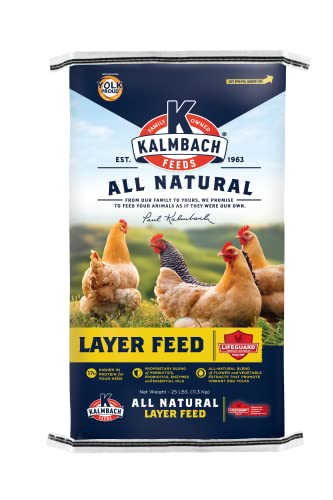
For keepers who want crumbles in a smaller bag, Kalmbach Layer Crumbles, 25 lb is the 25-pound layer-feed option, unlike the two 50-pound pellet bags. The maker identifies high-quality grains and proteins, added vitamins and minerals, and an antibiotic-free formula. That makes it a straightforward format choice for chicken keepers seeking a layer crumble rather than pellets. Crumbles can also create more fines as birds sort or feed is handled.
Bottom line: Choose this if you want layer feed in crumble form and a 25-pound bag.
How to choose chicken feed for laying hens
Choose a complete layer ration for actively laying hens, then compare its guaranteed analysis with your flock’s needs. Layer feeds commonly provide about 16% protein and roughly 3.5% to 4.5% calcium; age, production, and the rest of the diet affect the right choice. If a feed label’s calcium level is substantially below that typical layer range, do not assume it is a full layer ration. A feed’s form matters too: pellets stay uniform in the feeder, while crumbles are easier for smaller birds to eat but can produce fines. Select based on the birds’ life stage and eating habits, not on a single advertised nutrient or feature.
When layer feed fits a flock
Layer feed is intended for hens that have begun laying, not chicks or growing pullets. Many pullets start laying around 18 to 20 weeks, but breed and management can shift that timing; transition when birds are close to laying rather than feeding layer rations to young chicks. Layer diets contain more calcium than starter or grower formulas, and excess calcium is not appropriate for every age group. For mixed-age flocks, use a suitable all-flock ration and offer oyster shell separately to laying hens, so non-layers are not forced to eat a high-calcium feed. Keep clean water available at all times because feed intake and egg production depend on access to water.
Pellets and crumbles compared
Pellets and crumbles can both deliver a complete ration, but the physical form changes how birds handle the feed. Pellets are compressed feed pieces; crumbles are pellets broken into smaller pieces. Use this quick choice guide to match format and flock needs.
| Need | Format to consider | Why it may fit |
|---|---|---|
| Less sorting in the feeder | Pellets | Uniform pieces make ingredient selection harder. |
| Smaller pieces for eating | Crumbles | Broken pieces are easier for small birds to pick up. |
| Different ages or species together | All-flock ration | Pair with separate calcium for laying hens. |
With chicks under 18 weeks, choose age-appropriate starter or grower feed rather than layer feed. Feed transitions are often easier over 7 to 10 days, gradually blending the new ration with the old.
How to store chicken feed safely
Store chicken feed in a dry, sealed, rodent-resistant container, and keep it off damp floors. Moisture can encourage mold, while rodents contaminate feed and spread waste. Buy a quantity the flock can use while it remains fresh; whole grains and complete feed can lose quality over time, especially in heat or humidity. Clean feeders regularly and discard wet or moldy feed instead of mixing it into fresh feed. Keep feed separate from pesticides, fuels, and cleaning chemicals. Never feed visibly moldy grain: some molds can produce toxins that are dangerous to poultry.
Frequently Asked Questions
When should pullets switch to layer feed?
Many pullets begin laying around 18 to 20 weeks, but breed and management affect timing. Move to layer feed near the start of laying, not during the chick starter or early grower stage.
Do laying hens need extra calcium?
Layer feed commonly supplies roughly 3.5% to 4.5% calcium. For a mixed-age flock on all-flock feed, offer oyster shell separately so laying hens can take extra calcium without making young birds eat a layer ration.
Are pellets better than crumbles for chickens?
Neither form is universally better: pellets are uniform, while crumbles have smaller pieces. Choose crumbles if birds have trouble picking up pellets, and avoid leaving excessive fines in the feeder.
How quickly should chicken feed be changed?
A gradual transition over about 7 to 10 days can help reduce abrupt diet changes. Increase the share of the new feed in stages while watching that birds continue eating and drinking.
How should chicken feed be stored?
Keep feed sealed, dry, and protected from rodents, ideally in a clean container off the floor. Discard damp or moldy feed rather than blending it into fresh feed.