
Kalorik Home HUVI Robot Vacuum R1: Features Compared

The Kalorik HUVI Robot Vacuum R1 suits shoppers prioritizing a HEPA 13 filter, UVC light inside the dustbin, and bipolar ionization. Choose another model if you need features such as mopping, mapping, or a suction rating.
Robot vacuums clean floors autonomously, but their navigation, filtration, and floor-care features differ. Check the clearance beneath furniture before choosing by height.
We earn a commission if you buy through links on this page. As an Amazon Associate I earn from qualifying purchases. Products are compared on manufacturer specifications, not hands-on testing.
- Best overall: Kalorik HUVI Robot Vacuum R1 – Its HEPA 13 filter and dustbin UVC light set it apart for shoppers focused on filtration features.
- Best for mapping: VONKO Vacuum and Mop – LiDAR navigation and smart mapping make it the map-focused alternative.
- Best for mopping: Livvi G100 Vacuum and Mop – It combines vacuuming with a water tank and mop function.
| Product | Best for | Mop function | Height | Shop |
|---|---|---|---|---|
| Kalorik HUVI Robot Vacuum R1 | Filtration features | No mop feature given | 3 in | Check Price on Amazon |
| Lefant M210 | Low furniture | No mop feature given | 2.8 in | Check Price on Amazon |
| VONKO Vacuum and Mop | Mapped cleaning | Yes | 3.86 in | Check Price on Amazon |
| Livvi G100 Vacuum and Mop | Hard-floor mopping | Yes | 2.9 in | Check Price on Amazon |
| Lefant M330 Pro | Multi-floor mapping | Yes | — | Check Price on Amazon |
Kalorik Home HUVI Robot Vacuum R1 and Alternatives
Compare the filtration, mapping, mop functions, and listed heights that distinguish these robot vacuums.
Kalorik HUVI Robot Vacuum R1

The Kalorik HUVI R1 is the only model here with a HEPA 13 filter, UVC light inside the dustbin, and bipolar ionization among its features. Its 3-inch height can help buyers assess whether it fits beneath furniture; measure the lowest clearance, including any trim or support bars. The product describes the filter as medical-grade and the UVC and ionization as air-cleaning features. Those claims do not establish a particular level of whole-room air cleaning, and the features do not identify mapping or mopping functions. Choose it for the filtration-related features, not for a confirmed mop or mapping system.
Bottom line: Pick this if the HEPA 13 filter and dustbin UVC feature are your priorities.
Lefant M210
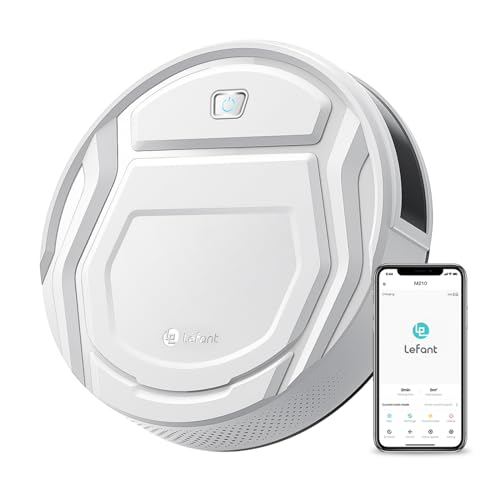
The Lefant M210 is the shortest model with a height here, at about 2.8 inches, and its 11-inch diameter is also given. The brand describes a brushless suction port and positions the model for pet-hair cleaning; its name specifies up to 120 minutes of runtime. That makes it an alternative for shoppers who need a low-profile vacuum rather than the HUVI R1’s filtration features. Height alone does not guarantee under-furniture access: measure the opening at its narrowest point and leave a little extra space for clearance.
Bottom line: Choose this when its compact height and stated runtime matter more than filtration features.
VONKO Vacuum and Mop

The VONKO combines vacuuming and mopping with LiDAR navigation and smart mapping, features that distinguish it from the HUVI R1’s filtration-focused specifications. Its name gives a suction rating of up to 8,000 Pa, and its maker says mapping supports up to five floors. At 3.86 inches tall, it needs more vertical clearance than the 3-inch HUVI R1, so measure under furniture before choosing it for low spaces. Buyers prioritizing a filter specification should weigh that gap against the mapping and mop functions.
Bottom line: Choose this for LiDAR mapping and a combined vacuum-and-mop design.
Livvi G100 Vacuum and Mop

The Livvi G100 stands out for its 2-in-1 design: it has a 300-milliliter dustbin and a 290-milliliter water tank, plus four cleaning modes. Its maker gives up to 3,500 Pa of suction and names laminate, tile, granite, and hardwood as suitable floors. At 2.9 inches tall, it is slightly shorter than the HUVI R1, but measure furniture clearance rather than relying on the height alone.
Bottom line: Pick this for a mop function, water tank, and hard-floor use.
Lefant M330 Pro

The Lefant M330 Pro offers dToF navigation, multi-floor mapping, and a 450-milliliter visible dustbin, making it a mapping-focused alternative to the HUVI R1. Its maker says the sensor scans up to 15 meters and calls out obstacle detection; the name also specifies up to 150 minutes of runtime. The dimensional fields conflict, so do not use them to judge furniture clearance; confirm its height before choosing it for a low-clearance space.
Bottom line: Choose this for multi-floor mapping and its visible dustbin.
How to choose a robot vacuum
Choose by the feature that solves your main cleaning constraint: clearance, floor type, navigation, or filtration. A robot’s height must be lower than the narrowest opening under furniture; a practical rule is to allow at least 0.25 inch of extra clearance rather than buying to an exact fit. For a mix of rugs and hard floors, confirm that the model supports the surfaces and transitions in your home. A mop function is for hard floors, not carpet, and mopping should not be treated as a substitute for vacuuming embedded debris. Navigation features such as LiDAR or dToF can map routes, while a suction figure alone does not tell you how well a robot handles every floor.
Robot vacuum height and furniture clearance
Measure the lowest point beneath each bed, sofa, or cabinet before comparing robot height. Robot vacuum bodies commonly fall around 3 to 4 inches tall, but furniture supports and low crossbars can reduce usable clearance below the apparent opening. Use the robot’s full height, not just the top of its main housing, and leave a small margin so it does not scrape or wedge. A 2.8-inch robot will not fit an opening that measures 2.7 inches, regardless of its other features. For the M330 Pro, the dimensions conflict, so confirm its height before selecting it for a tight space.
Robot vacuum filtration and UVC features
HEPA H13 is a filter classification commonly associated with at least 99.95% efficiency at the most penetrating particle size under the EN 1822 test method. A filter grade applies to the filter, not automatically to whole-room air cleaning or sealed performance of the complete vacuum. Replaceable filters and dust bins need routine maintenance: check the filter about monthly and clean or replace it according to the manufacturer’s schedule and how dusty the home is. UVC can harm eyes and skin with direct exposure, so a light located inside a dustbin should remain enclosed during operation and servicing. Ionization claims are separate from a measured particle-removal rating.
Robot vacuum mopping and floor types
Robot mops typically use a water reservoir and damp pad, so they are best suited to sealed hard flooring rather than carpet. Remove rugs or set no-mop zones where the robot might wet textiles, and avoid leaving standing water on wood or other moisture-sensitive floors. A tank’s milliliter capacity describes water volume, not how many square feet it can mop; pad type, flow setting, and floor texture all affect coverage. A combo model can save a separate cleaning step, but it still needs the pad rinsed and the tank emptied after use to avoid stale water and residue.
Frequently Asked Questions
How much clearance does a robot vacuum need?
Leave at least 0.25 inch above the robot’s full height as a practical clearance margin. Measure under the lowest crossbar or trim, not just the open edge of the furniture.
What does a HEPA H13 filter mean?
HEPA H13 is commonly rated at least 99.95% efficient at the most penetrating particle size under EN 1822. That filter rating does not by itself establish whole-vacuum sealing or whole-room air-cleaning performance.
Can a robot mop clean carpet?
No, a water-based mop pad is intended for hard floors, not carpet. Remove rugs or use a no-mop boundary where available to keep them dry.
How often should robot vacuum filters be cleaned?
Inspect a robot vacuum filter about once a month as a practical starting point. Homes with pets, dust, or frequent cleaning may need more frequent attention, while the maker’s care schedule should guide replacement.
Is UVC light safe in a robot vacuum?
Direct UVC exposure can injure eyes and skin, so keep the light enclosed and do not look at or handle it while energized. A dustbin-mounted feature should not be treated as proof of whole-room air disinfection.