
KBS Large 17-in-1 Bread Machine: Models Compared

For a KBS large 17-in-1 bread machine, KBS Pro 17-in-1 2.2-Lb Bread Maker is the closest match because it combines 17 automatic programs with a 2.2-pound capacity. Choose KBS Premium 17-in-1 Convection Bread Maker instead if you want the matching 17-program model with its three loaf sizes; the 19- and 20-menu machines are related alternatives, not exact matches.
We earn a commission if you buy through links on this page. As an Amazon Associate I earn from qualifying purchases. Products are compared on manufacturer specifications, not hands-on testing.
- Best overall: KBS Pro 17-in-1 2.2-Lb Bread Maker – It matches the 17-program search and pairs that menu set with a 2.2-pound capacity.
- Best for loaf-size choice: KBS Premium 17-in-1 Convection Bread Maker – It lists three loaf sizes alongside 17 programs and a 2.2-pound maximum capacity.
- Best for custom cycles: KBS 20-in-1 Programmable Bread Maker – Its 20 menus include a customizable program for adjusting each stage.
| Product | Best for | Menu count | Dimensions (H × W × L) | Shop |
|---|---|---|---|---|
| KBS Pro 17-in-1 2.2-Lb Bread Maker | 17-menu match | 17 programs | 11.8 × 8.6 × 13.7 in | Check Price on Amazon |
| KBS Premium 17-in-1 Convection Bread Maker | Loaf-size choice | 17 programs | 11.8 × 8.6 × 13.7 in | Check Price on Amazon |
| KBS 20-in-1 Programmable Bread Maker | Custom cycles | 20 menus | 11 × 13.5 × 8.4 in | Check Price on Amazon |
| KBS 19-in-1 Bread Maker | Extra programs | 19 programs | 11 × 13.4 × 8 in | Check Price on Amazon |
KBS Large 17-in-1 Bread Machines
Compare the closest 17-program matches with related KBS machines that offer different menu counts.
KBS Pro 17-in-1 2.2-Lb Bread Maker

Among these KBS machines, this model is the direct 17-program match, with a ceramic pan, automatic nut dispenser and touch panel. Its programs include gluten-free, sourdough, French, whole wheat, multigrain, cake, jam and yogurt; a custom setting allows adjustments to baking time and temperature. The machine offers three crust colors and a 15-hour timer, with a recipe book listing 53 recipes. Choose it for the requested menu count and capacity. The limitation is that its 2.2-pound maximum may be more loaf than a small household wants at once.
Bottom line: Pick this if the 17-program menu and 2.2-pound capacity are your main criteria.
KBS Premium 17-in-1 Convection Bread Maker

Unlike the other 17-program match, this Premium version specifically lists three loaf sizes, which gives buyers a choice below its 2.2-pound maximum. It has dual heaters, 360-degree convection, a ceramic pan, a nut dispenser and a touch panel. KBS says its temperature controls provide a 100°F rise and that baking can take under 90 minutes; those are maker claims, not a promise for every recipe or cycle. The 15-hour timer and three crust colors suit planned baking. Its footprint is the same as the Pro model, so it does not solve a tight-counter-space problem.
Bottom line: Choose this if choosing among three loaf sizes matters more than a smaller footprint.
KBS 20-in-1 Programmable Bread Maker
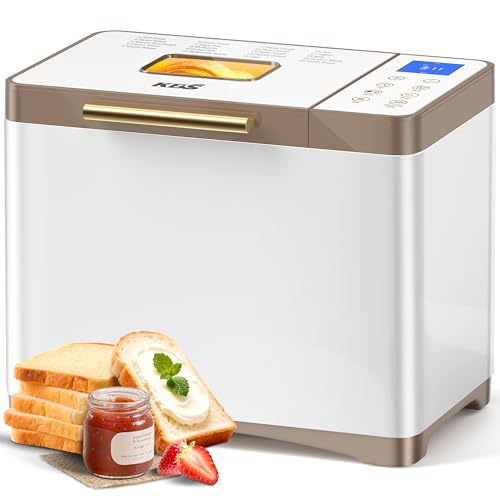
This machine differs from the 17-in-1 models with 20 menus and a custom program that can adjust the time for each baking stage. Its program examples include Polish bread, French bread, gluten-free bread, dough and yogurt. The machine has a 650-watt rating, a ceramic nonstick pan, a stainless-steel paddle and a 15-hour delay timer. Choose it if fine control over the sequence matters more than matching a 17-menu count. The tradeoff is the menu mismatch, and its dimensions are oriented differently from the other models, so compare each measurement against your available counter space.
Bottom line: Choose this when stage-by-stage customization outweighs the 17-menu requirement.
KBS 19-in-1 Bread Maker
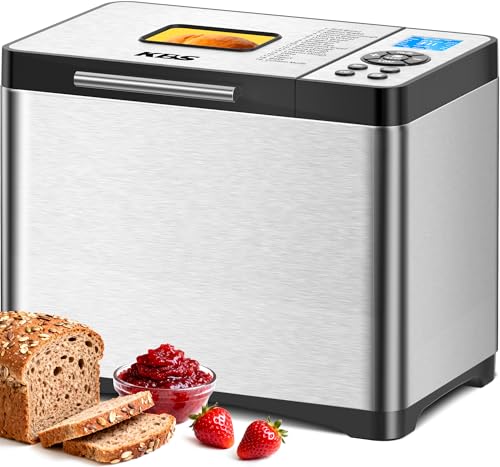
This related model adds two programs beyond the requested 17 and lists gluten-free, sourdough, basic bread, French, dough, yogurt and jam settings. Its 2.2-pound capacity, three loaf sizes, three crust colors and 15-hour timer make it a flexible alternative for households that want more menu options. It also supports switching between U.S. and metric measurements and comes with 53 recipes. The main limitation is that its 19-program count does not match the search; choose it only if those extra programs are more useful than an exact menu match.
Bottom line: Pick this if a broader menu and measurement-unit switching are priorities.
How to choose a bread machine menu
Choose programs for the doughs and recipes you make, not the highest menu count. Bread machines commonly separate basic, whole-wheat, French, gluten-free, dough and sweet cycles because ingredients and rise schedules differ; a dough cycle mixes and rises without baking. A custom setting can offer finer control, but it takes recipe testing to determine useful stage times. The included recipes are a sensible starting point because machine pan shape, cycle timing and flour measurement affect results. For the search’s exact 17-program target, prioritize the two 17-menu options; select a 19- or 20-menu alternative only when its added functions are worth the mismatch.
Capacity, loaf sizes and counter fit
A 2-pound loaf is a common bread-machine size, while larger machines may handle about 2.5 pounds; select capacity based on how quickly your household eats bread. A larger loaf generally needs a longer baking cycle and more ingredients, so do not scale a recipe beyond the machine’s maximum. Measure counter width, depth and overhead clearance before choosing: leave room to open the lid and reach the controls, and avoid placing the machine beneath low cabinets while it vents. These four machines list a 2.2-pound maximum. A capacity label does not by itself confirm the loaf sizes supported, so verify that fit before ordering if a smaller loaf is essential.
What bread-machine cycle times mean
Cycle length changes with program, loaf size and crust setting, so a timer should not be read as a universal bake time. Basic cycles often take roughly 3 to 4 hours, while rapid cycles may finish in about 1 to 2 hours; whole-grain or specialty recipes can take longer. Delay timers postpone the start rather than shorten the cycle, and perishable ingredients such as milk or eggs should not sit unrefrigerated in the pan during a long delay. Add-ins such as nuts or dried fruit belong at the machine’s signal when the recipe calls for it, which helps avoid chopping them during kneading. Use cycle-specific recipes rather than assuming every dough works on the basic program.
Bread-machine ingredients and safe handling
Weighing flour is more reliable than scooping: a cup of all-purpose flour is commonly about 120 grams, but packing can change the amount substantially. Follow the recipe’s ingredient order and yeast type, since bread machines rely on predictable contact and timing; rapid-rise yeast may behave differently from active dry yeast in a given recipe. Keep salt and yeast separated until mixing begins when a recipe directs it, because salt can slow yeast activity. The baking pan and paddle become hot during operation, so use oven mitts and let the pan cool before removing bread or cleaning it. Wait until the pan is cool before soaking or washing to protect its coating.
| Need | Selection rule |
|---|---|
| Match the search | Choose a 17-program model |
| More menu options | Consider 19 or 20 programs |
| Smaller loaves | Confirm supported loaf sizes |
| Limited counter space | Measure width, depth and lid clearance |
Frequently Asked Questions
How long does a bread machine take to bake bread?
A basic bread-machine cycle commonly takes about 3 to 4 hours, while rapid cycles may take roughly 1 to 2 hours. Whole-grain recipes, loaf size and crust setting can extend the time.
Can I leave milk in a bread machine overnight?
Avoid leaving milk or eggs in the pan for an overnight delay because they are perishable and may remain unrefrigerated for hours. Use a recipe designed for delayed baking with shelf-stable ingredients instead.
How much flour goes into a 2-pound bread machine loaf?
Many 2-pound bread-machine recipes use roughly 3 to 4 cups of flour, but ingredient ratios depend on the recipe and flour type. Weighing flour is more consistent; a cup of all-purpose flour is commonly about 120 grams.
When should I add nuts to bread-machine dough?
Add nuts at the machine’s add-in signal when the recipe calls for one, often after initial kneading. That timing helps keep nuts from being broken up during the full kneading cycle.
Do bread machines work with gluten-free flour?
A gluten-free cycle can accommodate recipes formulated for bread machines, but ordinary wheat-bread recipes cannot be swapped directly for gluten-free flour. Use a gluten-free recipe with its flour blend and cycle.