
KILZ Decorative Concrete Coating: Types Compared

For a stone-like, slip-resistant finish on horizontal concrete, KILZ Decorative Slip-Resistant Coating is the closest match because it is designed for indoor and outdoor floors such as patios and pool decks. Choose KILZ 1-Part Epoxy Concrete Floor Paint instead for a smooth satin epoxy-acrylic finish, or Hensire Exterior Masonry Paint for vertical exterior masonry walls.
Rust-Oleum Slate Concrete Coating is a related concrete coating, but the product facts do not establish its intended surface or finish, so compare it only after confirming it suits your project.
We earn a commission if you buy through links on this page. As an Amazon Associate I earn from qualifying purchases. Products are compared on manufacturer specifications, not hands-on testing.
- Best overall: KILZ Decorative Slip-Resistant Coating – Its speckled texture and stated slip resistance fit the decorative concrete-coating search.
- Best for garage floors: KILZ 1-Part Epoxy Concrete Floor Paint – It is an epoxy-acrylic coating intended for horizontal garage floors.
- Best for exterior walls: Hensire Exterior Masonry Paint – Its self-priming matte formula is designed for properly prepared vertical masonry.
| Product | Best for | Intended surface | Finish | Container size | Shop |
|---|---|---|---|---|---|
| KILZ Decorative Slip-Resistant Coating | Textured concrete | Horizontal concrete and masonry | Stone-like speckled texture | 1 gallon | Check Price on Amazon |
| KILZ 1-Part Epoxy Concrete Floor Paint | Satin floor finish | Horizontal concrete and masonry | Satin | 1 gallon | Check Price on Amazon |
| Hensire Exterior Masonry Paint | Vertical masonry | Exterior vertical masonry | Matte | 35 fluid ounces | Check Price on Amazon |
| Rust-Oleum Slate Concrete Coating | Slate coating option | Concrete coating | — | 1 gallon | Check Price on Amazon |
KILZ Decorative Concrete Coating and Alternatives
Match the coating to the surface first, then choose the finish and application area that fit the project.
KILZ Decorative Slip-Resistant Coating

KILZ Decorative Slip-Resistant Coating stands apart with a stone-like, speckled texture and a slip-resistant finish for horizontal concrete and masonry. The 1-gallon coating is intended for indoor and outdoor areas such as patios, walkways, driveways, garages, porches, and pool decks. KILZ says the coating helps fill hairline cracks and resist hot-tire pickup, peeling, weathering, household chemicals, and UV damage. Choose it when texture and decorative appearance matter alongside protection. Its intended use is horizontal surfaces, so it is not the choice for a vertical masonry wall.
Bottom line: Choose this for horizontal concrete where a textured decorative finish is the priority.
KILZ 1-Part Epoxy Concrete Floor Paint

KILZ 1-Part Epoxy Concrete Floor Paint is the floor-focused alternative for buyers who want a satin rather than textured stone-like appearance. Its water-based, low-VOC epoxy-acrylic formula is intended for properly prepared porous concrete, masonry, stone, and brick on interior or exterior horizontal surfaces. KILZ says it resists hot-tire pickup, scuffing, cracking, peeling, and fading. It fits garages, basements, porches, driveways, and pool decks, but it is not for vertical surfaces, hydrostatic pressure, forklift traffic, or nonresidential use. Pick it when a smooth floor coating matters more than decorative texture.
Bottom line: Choose this for residential horizontal floors where satin epoxy-acrylic suits the finish.
Hensire Exterior Masonry Paint

Hensire Exterior Masonry Paint serves a different purpose from a concrete floor coating: it is exterior paint for vertical masonry such as concrete, cement, brick, stone, and stucco walls. The 35-fluid-ounce, water-based paint has a matte finish and low odor, and its self-priming application is intended for properly prepared masonry. The maker says the coating is weather-resistant and water-repellent. It suits a facade or garden wall refresh, not a patio or garage floor. Choose it when the project is a vertical exterior wall and a matte appearance is preferred over a textured floor finish.
Bottom line: Choose this for properly prepared outdoor masonry walls, not horizontal floors.
Rust-Oleum Slate Concrete Coating
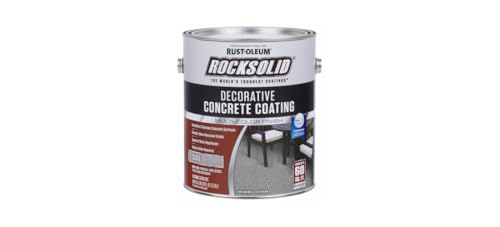
Rust-Oleum Slate Concrete Coating is a gallon-size slate concrete coating, making it the closest related alternative by product category and container size. Its name does not identify a texture, surface orientation, or performance feature, so those should not be assumed from the word “slate.” Before selecting it, confirm that the specific coating is appropriate for the project’s concrete surface and whether it is intended for indoor or outdoor use. That distinction matters: a coating made for floors is not automatically suitable for walls or every exterior exposure. It may suit a buyer comparing slate-colored concrete products who can verify the needed application.
Bottom line: Consider this only after confirming its surface suitability and finish for the project.
Choose a coating by surface and finish
Start with the surface orientation: floor coatings and wall paints are not interchangeable. A horizontal coating may target abrasion and hot-tire pickup, while exterior wall paint is formulated for vertical masonry exposure. Textured finishes can add grip and disguise minor surface variation; satin and matte coatings provide smoother appearances. For a decorative concrete area that needs traction, look for an explicit slip-resistance claim, not merely a color name. For garage floors, confirm the coating is intended for vehicle traffic and check whether it excludes heavy equipment. The category and limitations matter more than the word “concrete” on a container.
Concrete coatings generally need clean, sound, properly prepared surfaces; coatings can fail when dust, oil, loose material, or moisture interferes with bonding. A coating’s suitability for porous concrete does not mean every sealed or contaminated slab is ready to coat.
Prepare concrete before coating
Preparation is a major factor in adhesion: remove oil and dirt, clear loose paint, and repair unsound areas before applying a coating. Concrete should be clean and dry, and new concrete commonly needs at least 28 days to cure before coating. A moisture check helps screen for damp slabs; taped plastic left overnight can reveal condensation or darkening, though it is not a replacement for a formal moisture test. Avoid coating over active water intrusion or a slab with hydrostatic pressure unless the product explicitly allows it.
Hairline-crack filling is not the same as structural repair. Cracks that widen, shift, or admit water need assessment before a decorative coating is applied. For floors, also plan the work so the surface remains unused during the required drying and curing period; surface-dry time is not the same as readiness for vehicle traffic.
Compare concrete coating types
Decorative coatings, epoxy-acrylic floor paints, and masonry paints address different surfaces and finishes. Use this guide to screen by project type before comparing specific product claims.
| Project need | Coating type | Key check |
|---|---|---|
| Textured patio or pool deck | Decorative concrete coating | Horizontal use and stated slip resistance |
| Residential garage floor | Floor coating or epoxy-acrylic paint | Vehicle suitability and traffic exclusions |
| Exterior masonry wall | Masonry wall paint | Vertical-use suitability and surface preparation |
Texture can improve footing, but no coating makes a wet surface slip-proof. Pool decks and walkways need regular cleaning because algae, soap, and fine dirt can reduce traction regardless of finish.
Apply and maintain a coated surface
Follow the product’s specified application conditions and cure time; temperature, humidity, and airflow affect drying. Apply only when the concrete is dry and the forecast allows the coating to cure without rain or dew exposure. For a garage floor, do not return a vehicle simply because the coating feels dry to the touch: full cure may take several days and the manufacturer’s schedule is decisive.
Keep coated concrete clean with a mild cleaner and a nonabrasive brush rather than harsh solvents unless the coating permits them. Inspect high-traffic zones, tire paths, and pool edges for peeling or wear, and address small failures before water gets beneath the film. Never cover a loose or peeling layer with another coat; remove unstable material and restore a sound surface first.
Frequently Asked Questions
How long should new concrete cure before coating?
New concrete commonly needs at least 28 days to cure before most coatings are applied. Cool weather, high moisture, or the coating maker’s requirements can call for a longer wait.
Can decorative concrete coating go on a garage floor?
A coating can go on a garage floor only when it is intended for horizontal concrete and suitable for vehicle traffic. Check traffic limits and cure time; surface-dry is not the same as ready for tires.
Does a textured concrete coating prevent slips?
A textured, slip-resistant coating can improve footing, but it cannot guarantee a slip-free surface. Water, algae, soap, and fine dirt can still make patios and pool decks slick.
How can I check whether a concrete slab is damp?
Tape a square of plastic tightly to the slab and check beneath it after about 24 hours for condensation or darkened concrete. That screen can flag moisture but does not replace a formal moisture test when a coating requires one.
Can a concrete coating cover cracks?
Some decorative coatings can help fill hairline cracks, but they are not structural crack repairs. Cracks that move, widen, or allow water through should be assessed and repaired before coating.