
Klipsch CDT-5650-C II: Fit and Features Compared

The Klipsch CDT-5650-C II is the closest match for buyers seeking that specific in-ceiling model, with horn-loaded technology and treble and midbass attenuation switches. Choose a different model if you need the 8-inch woofer or a pivoting woofer instead.
In-ceiling speakers mount in a ceiling cavity, so fit and safe clearance matter as much as the speaker features.
We earn a commission if you buy through links on this page. As an Amazon Associate I earn from qualifying purchases. Products are compared on manufacturer specifications, not hands-on testing.
- Best overall: Klipsch CDT-5650-C II – This is the named CDT-5650-C II model, with horn-loaded technology and treble and midbass switches.
- Best for 8-inch woofer: Klipsch CDT-5800-C II Pair – Its features name an 8-inch Cerametallic woofer.
- Best for pivoting woofer: Klipsch CDT-3650-C II – Its features include a 6.5-inch pivoting IMG woofer.
| Product | Best for | Woofer | Tweeter | Controls | Shop |
|---|---|---|---|---|---|
| Klipsch CDT-5650-C II | Named model | — | — | Treble and midbass switches | Check Price on Amazon |
| Klipsch CDT-5800-C II Pair | 8-inch woofer | 8-inch Cerametallic | 1-inch titanium | Treble and midbass switches | Check Price on Amazon |
| Klipsch CDT-3650-C II | Pivoting woofer | 6.5-inch IMG | 1-inch aluminum | Treble attenuation switch | Check Price on Amazon |
| Klipsch CDT-5800-C II Single | Single speaker | — | — | Treble and midbass switches | Check Price on Amazon |
Klipsch CDT-5650-C II in-ceiling speakers
Compare the named model with related Klipsch ceiling speakers by driver features and available controls.
Klipsch CDT-5650-C II

The CDT-5650-C II is the named model, distinguished here by horn-loaded technology and switches for treble and midbass attenuation. Its slim magnetic grille is designed to sit close to the ceiling, while the switch controls let an installer adjust output at the speaker. The product name identifies a pair, though its physical dimensions are given as 8 inches in each direction and should not be treated as a confirmed cutout size. This is the direct choice for someone specifically seeking a CDT-5650-C II; buyers who need a woofer size or material should compare the driver-specific alternatives.
Bottom line: Pick this if the CDT-5650-C II model is your priority.
Klipsch CDT-5800-C II Pair

The CDT-5800-C II is the alternative with the clearest driver specification: an 8-inch Cerametallic woofer and a 1-inch titanium tweeter. It also includes Controlled Dispersion Technology, treble and midbass attenuation switches, and a SlimTrim magnetic grille. Choose it when the 8-inch woofer is important; buyers focused on the CDT-5650-C II model designation should stay with the exact match. Confirm the required ceiling cutout and amplifier compatibility before installing any in-ceiling speaker.
Bottom line: Pick this if you want the specified 8-inch Cerametallic woofer.
Klipsch CDT-3650-C II
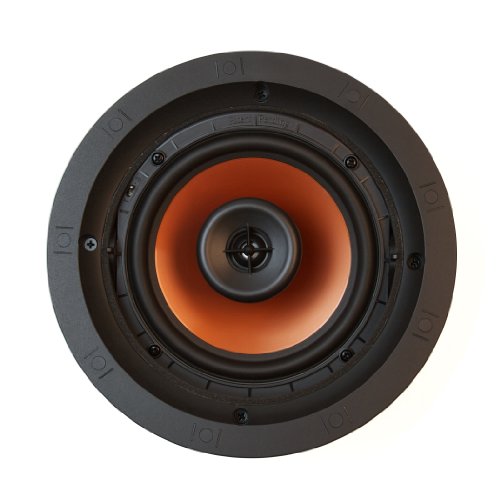
The CDT-3650-C II stands apart with a 6.5-inch pivoting IMG woofer and a 1-inch aluminum tweeter. Its features also name horn-loaded technology, Controlled Dispersion Technology, and a treble attenuation switch; unlike the CDT-5650-C II, a midbass switch is not among its controls. This is a useful alternative when the pivoting woofer is the deciding feature, but the driver size is smaller than the 8-inch model’s woofer. Check whether its driver configuration and ceiling fit suit the room before choosing it for a specific installation.
Bottom line: Pick this if a pivoting 6.5-inch woofer matters most.
Klipsch CDT-5800-C II Single

This CDT-5800-C II entry is identified as a single 8-inch in-ceiling speaker, while the other 5800 entry is named as a pair and specifies its woofer and tweeter materials. The single-speaker entry includes Controlled Dispersion Technology, horn-loaded technology, and treble and midbass attenuation switches. Choose it when you need one speaker and want the named 5800 controls; compare the pair entry if driver composition is a deciding factor.
Bottom line: Pick this if you need the single-speaker configuration.
How to choose an in-ceiling speaker
Choose by the listening area, driver features, and whether the controls match your tuning needs. A stereo pair generally works best with left and right speakers spaced apart and aimed toward the listening area; a single speaker can serve a mono zone, but it does not create separate left-right placement. Pivoting drivers can direct sound toward a seating position, while attenuation switches adjust treble or midbass output where provided. Those controls do not replace matching the speaker to the amplifier. Before buying, confirm the required ceiling cutout and amplifier compatibility, since the physical speaker dimensions are not necessarily the cutout dimensions. If the ceiling cavity is less than 4 inches deep, verify the installed depth and clearance before selecting a model.
Ceiling fit and installation clearances
Measure the ceiling cavity and locate framing before cutting; joists, wiring, ductwork, and pipes can block a speaker opening. A stud finder can help locate framing, but scan the area for utilities and inspect the cavity before making a cut. Speaker outside dimensions are not the same as the cutout diameter, so confirm the installation template and cutout measurement for the exact model. Turn off power to nearby circuits before working in the ceiling, and do not cut into an unknown cavity. Keep the speaker grille clear of insulation unless the installation instructions explicitly allow contact; insulation can obstruct the driver or affect heat management. The key decision rule is simple: if the cavity depth or opening is uncertain, verify it before cutting rather than relying on nominal speaker size.
What controlled dispersion and attenuation do
Controlled dispersion is intended to direct sound more deliberately than a fixed, broad-output driver, and pivoting components can help aim sound toward the listener. The exact direction and amount of adjustment depend on the speaker’s design; do not assume every driver pivots just because a model has controlled dispersion. Attenuation switches reduce output in a frequency range, such as treble or midbass, and should be adjusted after installation in the actual room. A heavily reflective room with tile or glass may sound brighter than a room with carpet and curtains, so treble adjustment can help tailor balance. Switches are tuning controls, not a substitute for correct speaker placement or amplifier matching.
In-ceiling speaker setup mistakes to avoid
The most common setup mistake is cutting the ceiling before confirming the speaker template, cavity depth, and obstructions. A second mistake is placing stereo speakers too close together: separation matters for left-right imaging, so position them to serve the listening area rather than simply choosing the nearest open ceiling bays. Keep speakers away from HVAC vents when practical because airflow and noise can distract from playback. For home theater overhead channels, follow the receiver’s channel layout and place speakers for the intended seating area; ceiling speakers are not automatically interchangeable with front or surround positions. Use an amplifier matched to the speaker’s electrical requirements, and avoid turning the volume up to compensate for a poor fit or blocked grille.
Frequently Asked Questions
Can an in-ceiling speaker work for a stereo pair?
Yes, two speakers can carry left and right channels when placed apart and wired to the corresponding amplifier outputs. For one ceiling speaker in a zone, use a mono signal or a speaker designed for combined stereo input.
How far apart should ceiling speakers be?
For a typical stereo listening area, place the pair with similar spacing from the main listening position rather than clustering them together. Room shape and seating width change the best layout, so prioritize balanced left-right distance and aim pivoting drivers toward listeners where available.
Can I install a speaker directly under insulation?
Do not assume direct insulation contact is safe or acoustically suitable; check the exact installation instructions for clearance requirements. Keep the driver and grille unobstructed, and use an approved backer or enclosure if the installation calls for one.
Do pivoting speaker drivers improve placement flexibility?
A pivoting woofer or tweeter can aim sound toward a listening area when the speaker opening itself cannot be centered over the seats. The amount of adjustment is model-specific, so do not assume every component pivots.
Should I cut the ceiling using the speaker’s outside dimensions?
No, use the cutout measurement or template for the exact model because the frame’s outside size and opening size differ. Check cavity depth and scan for framing, wiring, ducts, and pipes before cutting.