
Klipsch Groove XXL: 4 Speakers Compared by Fit

The Klipsch Groove XXL is the closest match for shoppers seeking a Klipsch Groove XXL, with a 5.25-inch subwoofer and up to 22 hours of playback. Choose a different speaker if you need a smaller body, hands-free calling, or party lighting and instrument inputs.
Portable Bluetooth speakers play audio wirelessly from a paired device; a wired input can provide another way to connect.
We earn a commission if you buy through links on this page. As an Amazon Associate I earn from qualifying purchases. Products are compared on manufacturer specifications, not hands-on testing.
- Best overall: Klipsch Groove XXL – Its 5.25-inch subwoofer, optional 3.5mm input and up-to-22-hour battery claim match the Groove XXL search.
- Best for party inputs: Klipsch Gig XXL – It adds multiple lighting modes, bass boost, a karaoke microphone and a 1/4-inch instrument input.
- Best for compact size: Klipsch Groove – The small Groove measures 5.6 inches wide and has an 8-hour battery claim.
| Product | Best for | Battery life | Audio inputs | Distinctive feature | Shop |
|---|---|---|---|---|---|
| Klipsch Groove XXL | Longer playback | Up to 22 hours | Bluetooth, 3.5mm | 5.25-inch subwoofer | Check Price on Amazon |
| Klipsch Gig XXL | Party connections | 8 hours | Karaoke mic, 6.35 mm | Lighting, bass boost | Check Price on Amazon |
| Klipsch Groove | Compact portability | 8 hours | Bluetooth | Splash-resistant | Check Price on Amazon |
| Klipsch Heritage Groove | Hands-free calls | 8 hours | Bluetooth, microphone | Hands-free calling | Check Price on Amazon |
Klipsch Groove XXL portable Bluetooth speakers
Compare the closest Groove XXL match with related Klipsch portable speakers by battery claim, connection options and intended use.
Klipsch Groove XXL

The Groove XXL is the only exact Groove XXL match here, and its 5.25-inch subwoofer sets it apart from the smaller Groove models. It has dual 2-inch full-range drivers, Bluetooth, and an optional 3.5mm input. Klipsch says its rechargeable battery provides up to 22 hours of playback. At 20.01 inches wide and 10.24 inches high, it is a larger choice than the compact Groove speakers; that size matters if you need a speaker for a small bag or shelf. Choose it when longer claimed playback and a wired audio option matter more than compact dimensions.
Bottom line: Pick this if you want the exact XXL model and its longer claimed battery life.
Klipsch Gig XXL

The Gig XXL differs from the Groove XXL with party-oriented lighting and performance inputs rather than a 3.5mm input. Its feature set includes multiple color modes, strobes, bass boost, a karaoke microphone and a 1/4-inch instrument input; the product name gives an 8-hour playtime claim. Two 6.5-inch woofers and two 2-inch tweeters make its driver configuration distinct. This is a better fit for someone connecting an instrument or microphone and wanting light effects. Skip it if you specifically need the Groove XXL model or a smaller everyday speaker.
Bottom line: Pick this for lighting effects and microphone or instrument connections.
Klipsch Groove

The compact Groove is the smaller alternative, measuring 5.6 inches wide and 4.6 inches high, unlike the larger XXL body. It offers Bluetooth, a USB-rechargeable battery with an 8-hour claim and splash resistance. Choose it for a smaller footprint rather than the XXL’s 5.25-inch subwoofer and longer claimed playback. Keep splash resistance distinct from waterproofing: the feature calls it splash-resistant, not suitable for submersion.
Bottom line: Pick this if a compact, splash-resistant speaker matters more than the XXL form.
Klipsch Heritage Groove
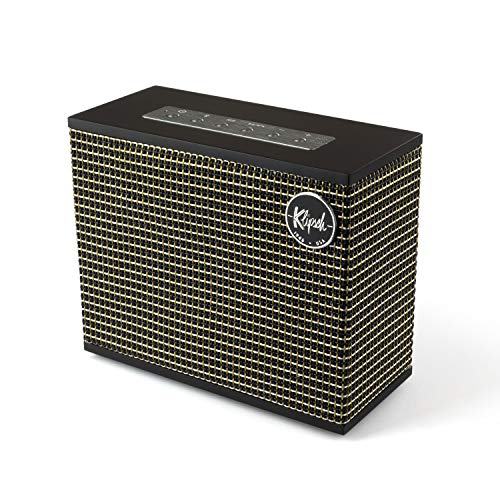
The Heritage Groove adds a built-in microphone for hands-free calls, a function not identified for the Groove XXL. Its Bluetooth connection can play streaming audio or content from a phone or tablet, and the speaker has an 8-hour battery claim. At 7.72 inches wide and 5 inches high, it remains a compact alternative to the XXL. Micro USB charging is specified, so buyers who want a different charging connection should verify compatibility before choosing it. Choose this model for conference-call use and compact dimensions, not for the XXL’s subwoofer setup.
Bottom line: Pick this for hands-free calling in a smaller speaker.
How to choose a Klipsch Groove XXL alternative
Start with the connection and size you need, then compare battery claims. Bluetooth is convenient for playback from a paired phone, while a 3.5mm analog input allows a direct wired connection; a 1/4-inch instrument input serves a different purpose and is not interchangeable with a standard headphone cable. For music away from an outlet, compare the battery hours, but treat “up to” runtime as a ceiling rather than a guarantee: higher playback volume generally uses more power. If you need more than 8 hours of claimed playback, the Groove XXL’s up-to-22-hour figure is the relevant differentiator here. If hands-free calls or compact dimensions matter more, consider the Heritage or smaller Groove instead.
Portable speaker size and placement
Measure the space and carrying case before choosing a portable speaker; a width difference of several inches can decide whether it fits a shelf or packed bag. The Groove XXL is 20.01 inches wide, while the two smaller Groove models are 5.6 and 7.72 inches wide. Speaker driver size alone does not determine loudness or sound quality, since enclosure design, tuning and power also matter. For outdoor listening, keep the speaker within practical Bluetooth range: about 30 feet is a common baseline in open space, while walls and interference can reduce it. Splash resistance is not the same as waterproofing, so do not submerge a speaker unless its specifications explicitly permit it.
Bluetooth, wired audio and party inputs
Bluetooth sends audio wirelessly from a phone or other paired source; a 3.5mm cable carries analog audio and avoids relying on a wireless connection. The Gig XXL’s 1/4-inch input is intended for compatible instruments, while a karaoke microphone input supports its party use; those jacks do not replace a 3.5mm aux input. Use this distinction to avoid buying a speaker that has the wrong connector for your source. A simple decision rule: if your source has only a 3.5mm output, pick a model with that input or confirm you have a compatible adapter before buying. Check cable compatibility rather than assuming all audio inputs accept the same plug.
Battery runtime and splash resistance
Battery-hour claims help sort portable speakers, but real runtime changes with playback volume, wireless use and battery condition. Treat an “up to” figure as a best-case reference, and plan for less time if you play loudly or use the speaker for an extended gathering. Rechargeable lithium-ion batteries are best stored away from extreme heat; avoid leaving a speaker in a hot parked car. Splash-resistant wording signals some exposure tolerance, not permission to rinse or immerse the unit. For poolside use, place the speaker where it cannot fall into water, and stop using it if the charging port or cable is wet. These precautions matter even when a speaker is intended for outdoor settings.
Frequently Asked Questions
How far can a Bluetooth speaker play from a phone?
About 30 feet is a common open-space Bluetooth range, but walls and radio interference can shorten it. Keep the phone closer if audio cuts out.
Does splash-resistant mean a speaker is waterproof?
No; splash resistance does not establish that a speaker can be submerged. Keep it out of the water unless its specifications explicitly allow immersion.
Will a 1/4-inch input take a headphone cable?
A 1/4-inch instrument input is larger than a standard 3.5mm headphone plug. Use a compatible adapter only if the source and speaker support the resulting connection.
Does louder playback reduce battery runtime?
Yes, higher volume generally uses more battery power, so runtime can fall below an “up to” claim. Allow extra battery margin for loud or lengthy listening.
Can a Bluetooth speaker also use a wired source?
Yes, when the speaker has a compatible audio input, such as a 3.5mm jack. Bluetooth pairing and a wired connection are different ways to deliver audio, so check the needed connector before choosing.