
L Proline L Lysine: 4 Combination Supplements Compared

For a combined L-proline and L-lysine tablet with a 550 mg amount and 120-tablet count, start with Source Naturals Proline & Lysine 120 Tablets. Choose another option if you prefer capsules, want 500 mg of each amino acid per capsule, or need a smaller 60-tablet bottle.
L-proline and L-lysine supplements combine amino acids in tablet or capsule form; the amount and serving directions matter when comparing products.
We earn a commission if you buy through links on this page. As an Amazon Associate I earn from qualifying purchases. Products are compared on manufacturer specifications, not hands-on testing.
- Best overall: Source Naturals Proline & Lysine 120 Tablets – Combines a 550 mg amount with 120 tablets and gives a suggested daily serving of 2 to 4 tablets with meals.
- Best for capsules: Carlson Pro-Rite 90 Capsules – Provides 500 mg each of L-proline and L-lysine in capsules.
- Best for a smaller bottle: Source Naturals Proline & Lysine 60 Tablets – Offers the same 550 mg combination as a 60-tablet count.
| Product | Best for | Amount | Count | Form | Shop |
|---|---|---|---|---|---|
| Source Naturals Proline & Lysine 120 Tablets | Daily tablet routine | 550 mg | 120 | Tablets | Check Price on Amazon |
| Carlson Pro-Rite 90 Capsules | Per-amino-acid amount | 500 mg each | 90 | Capsules | Check Price on Amazon |
| Roex L-Lysine L-Proline 120 Count | 120-count combination | — | 120 | — | Check Price on Amazon |
| Source Naturals Proline & Lysine 60 Tablets | Smaller bottle | 550 mg | 60 | Tablets | Check Price on Amazon |
L Proline L Lysine Supplements
Compare the combined amino acid amount, dosage form and bottle count before choosing a supplement.
Source Naturals Proline & Lysine 120 Tablets
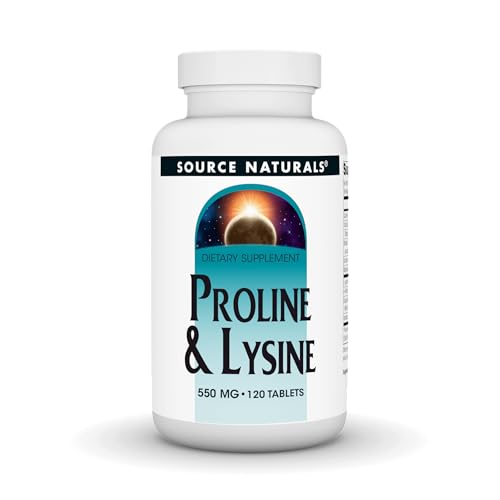
Source Naturals Proline & Lysine 120 Tablets pairs a 550 mg amount with 120 tablets, making it the larger-count option among the two Source Naturals sizes here. The suggested use is 2 to 4 tablets daily with meals, and the formula is suitable for vegetarians. The maker says it contains no yeast, dairy, egg, gluten, soy or wheat, among other exclusions. This may suit someone who wants a tablet and a clear serving range. The amount is not broken down by amino acid, so shoppers seeking a specific dose of each should compare it with a product that gives individual amounts.
Bottom line: Choose this if you want a 120-tablet bottle with a 550 mg combination amount.
Carlson Pro-Rite 90 Capsules

Carlson Pro-Rite 90 Capsules is the option here that gives a separate amount for each amino acid: 500 mg of L-lysine and 500 mg of L-proline per capsule. It comes in a 90-capsule bottle, unlike the tablet combinations in this comparison. The maker says the formula supports joint and overall health, blood vessel flexibility and collagen formation; those are manufacturer claims, not guarantees of an individual result. This choice suits buyers comparing precise per-amino-acid amounts. Its 90-count bottle is smaller than the 120-count combinations, so check how many capsules make up the intended serving before comparing supply.
Bottom line: Choose this if a clearly stated amount of each amino acid is your priority.
Roex L-Lysine L-Proline 120 Count

The maker describes the combination as intended to support muscle maintenance and recovery, and discusses the amino acids’ role in collagen formation. Those are maker claims rather than assured outcomes. This may suit someone who wants a two-amino-acid combination and a 120-count size. The lack of an amount per serving makes dose comparison difficult, so verify the Supplement Facts panel and serving size before choosing it over an option with an amount.
Bottom line: Choose this if you want a 120-count combination and can confirm the dose on its Supplement Facts panel.
Source Naturals Proline & Lysine 60 Tablets
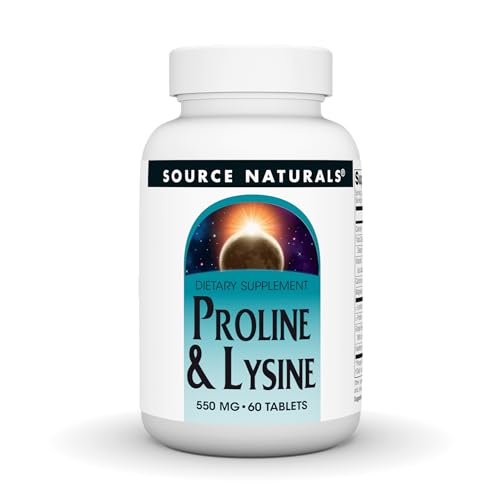
Source Naturals Proline & Lysine 60 Tablets offers the same 550 mg combination amount and 2-to-4-tablet daily direction as the larger Source Naturals bottle, but contains 60 tablets. Its vegetarian suitability and listed ingredient exclusions make it a familiar tablet-format alternative within the same product line. This size may fit someone who prefers a smaller count rather than a 120-tablet supply. As with the larger bottle, the amount is not separated into individual L-proline and L-lysine quantities in the product name, so it is not the clearest choice for a buyer targeting a specific amount of each.
Bottom line: Choose this if you prefer the 60-tablet count and the 550 mg combination.
How to choose an L proline L lysine supplement
Start with the amount per serving, then compare the serving size and form. A label that gives separate amounts for L-proline and L-lysine is easier to compare with a target than a single combined amount. For context, the adult lysine requirement used by the World Health Organization is 30 mg per kilogram of body weight per day from all dietary sources; a supplement is only one possible source. The requirement is not a suggested supplement dose. Tablets and capsules can also differ in how many units make one serving. If the label’s amount is unclear or the serving is multiple tablets, calculate the daily total before choosing.
Understanding amino acid amounts and labels
Supplement labels may give an amount for each amino acid or a combined amount, and those figures are not interchangeable. When one product states 500 mg each, that means 500 mg of each amino acid per stated unit; a combined 550 mg figure does not establish how much of either ingredient it contains. Check the Supplement Facts panel for serving size, amounts, and other ingredients. Lysine is an essential amino acid, while the body can make proline; food proteins also supply amino acids. A supplement label’s serving directions are not a personalized target, so compare the label with dietary intake and any clinician guidance rather than assuming more is better.
Tablets, capsules and bottle counts
Choose the dosage form you can take consistently, then use the serving size to translate count into supply. Bottle count alone does not equal days of use: a 120-tablet bottle lasts 60 days at 2 tablets daily but 30 days at 4 tablets daily. A capsule count likewise needs the capsule serving size to estimate duration. Tablets and capsules may differ in size and ease of swallowing, but count and form do not show the amount of active ingredients. The table compares what the product names or stated specifications establish; use the label’s serving instructions for a meaningful quantity comparison.
Use these distinctions when comparing the four combination options.
| Label quantity | What it tells you | What to check |
|---|---|---|
| Amount for each amino acid | Separate L-proline and L-lysine quantities | Serving units needed to reach that amount |
| Combined amount | Total amount for the combination | Individual amounts on the Supplement Facts panel |
| Count only | Number of tablets or capsules | Amount and serving size |
Supplement safety and when to ask a clinician
Amino acid supplements can interact with health conditions and medications, so check with a clinician or pharmacist before starting one if you take prescription drugs, have a chronic condition, are pregnant or nursing, or are choosing a supplement for a child. Do not treat a supplement as a replacement for food protein or prescribed care. The directions for one product here are 2 to 4 tablets daily with meals; that is a product-specific direction, not a universal dose. Keep supplements in their original containers and follow label storage and serving guidance, especially in homes with children.
Frequently Asked Questions
How do I compare combined and separate amino acid amounts?
A separate amount for each amino acid tells you more than a combined total. For example, 500 mg each means 500 mg of L-proline and 500 mg of L-lysine per stated unit; verify the serving size on the Supplement Facts panel.
How long does a 120-tablet bottle last?
At 2 tablets per day, 120 tablets last 60 days; at 4 tablets per day, they last 30 days. The serving direction for the specific product determines which calculation applies.
Does the body make L-proline on its own?
Yes, the body can make proline, while lysine is an essential amino acid that must come from dietary sources. A supplement is not the only source of either amino acid, so consider food intake as well.
Can amino acid supplements interact with medications?
They may interact with medicines or matter for some health conditions, so ask a clinician or pharmacist before adding one if you take prescription medication. This is especially important during pregnancy, nursing, or when selecting a product for a child.
What should I check on the Supplement Facts panel?
Check the serving size, the amount of each amino acid per serving, and how many tablets or capsules make that serving. A combined total alone does not establish the separate L-proline and L-lysine amounts.