
Laser Paint Stripping Machine for Wood Compared

WTTTOOLS LPC-500 is the strongest match for wood because its maker says it is designed for wood cleaning and it uses a pulsed laser. Choose Xlaserlab Q1 120W MOPA or 200W Pulsed Wood/Metal Cleaner if their cleaning or engraving features better fit your work; all three require careful control because wood can scorch or ignite under concentrated laser energy.
We earn a commission if you buy through links on this page. As an Amazon Associate I earn from qualifying purchases. Products are compared on manufacturer specifications, not hands-on testing.
- Best overall: WTTTOOLS LPC-500 – Designed for wood, with pulsed operation and a 0–100 mm scanning width.
- Best for adjustable cleaning: Xlaserlab Q1 120W MOPA – Offers adjustable frequency, pulse width and nine cleaning patterns.
- Best for compact access: 200W Pulsed Wood/Metal Cleaner – The maker describes its compact design for narrow spaces and outdoor use.
| Product | Best for | Scan width | Machine size | Shop |
|---|---|---|---|---|
| WTTTOOLS LPC-500 | Wood-focused cleaning | 0–100 mm | 26 × 19.7 × 13 in | Check Price on Amazon |
| Xlaserlab Q1 120W MOPA | Adjustable cleaning | Up to 120 mm | 19.4 × 13.6 × 11.5 in | Check Price on Amazon |
| 200W Pulsed Wood/Metal Cleaner | Narrow-space work | — | — | Check Price on Amazon |
Laser paint stripping machines for wood
Compare the three wood-related pulsed cleaners by their controls, scan widths and physical dimensions.
WTTTOOLS LPC-500
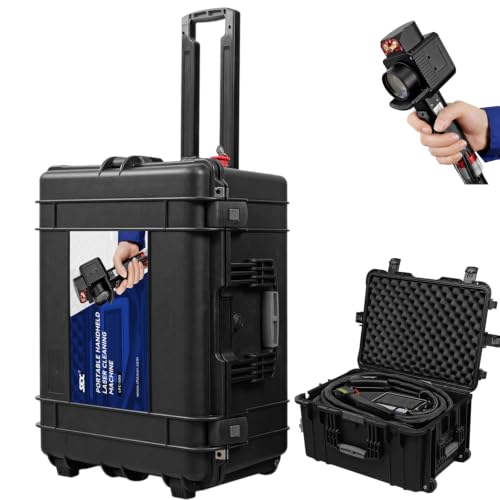
WTTTOOLS LPC-500 is the wood-focused option, with pulsed operation and a scan width from 0 to 100 mm. Its maker says the 500 W LPC-500 is intended for wood cleaning and rust removal, and specifies a 1070 ± 10 nm wavelength, air cooling and 110–220 V input. At 79.4 lb, it suits a stationary workshop setup more than frequent carrying. The maker describes its pulsed operation as gentler than continuous laser cleaning, but that does not guarantee a finish free of scorch marks; test a small, hidden area and adjust cautiously.
Bottom line: Choose it when wood-specific positioning and a defined scan-width range matter most.
Xlaserlab Q1 120W MOPA

Xlaserlab Q1 120W MOPA stands out for its cleaning controls: its maker says frequency and pulse width are adjustable, with nine cleaning patterns and a cleaning width up to 120 mm. The product name identifies a 120 W MOPA pulsed machine, while the maker claims 200 W cleaning performance and 2 mJ pulse energy. Those are separate claims, so compare the operating specifications that matter to your material rather than treating the wattage figures as interchangeable. The unit measures 19.4 × 13.6 × 11.5 in. Its engraving capability may suit a mixed-use workspace, but a wider scan setting alone does not ensure an even finish on wood.
Bottom line: Pick it if adjustable pulse controls and multiple cleaning patterns are priorities.
200W Pulsed Wood/Metal Cleaner

200W Pulsed Wood/Metal Cleaner is presented for wood and metal paint, oil and rust removal, and its maker emphasizes a compact structure for narrow spaces and outdoor work. The machine is identified as a 200 W pulsed cleaner; the maker also claims its electronic control system can limit excessive ablation at the ends of a cleaning pass. That claim does not remove the need to test on a scrap piece, especially where paint thickness, wood species or existing finish changes across the surface. Its weight is 132.3 lb after converting the kilogram figure, so portability claims should be weighed against the actual lifting and transport plan.
Bottom line: Choose it when access to narrow work areas is more important than a scan width.
How to choose a laser paint stripper for wood
For wood, prioritize controllable pulsed operation and a safe way to test before prioritizing wattage or scan width. Laser cleaners remove coatings by directing concentrated light at the surface; the response changes with the coating, wood species, grain, moisture and focus. A broader scan can cover more area per pass, but it does not by itself establish finish quality. Start with a small, hidden test area, then inspect for darkening, raised grain or residual coating before expanding the work. Wood is combustible, so keep the work area clear of dust and flammable debris, never leave an active beam unattended, and use the machine only with its required laser controls and eye protection. If the coating or substrate cannot be safely distinguished, do not begin.
Scan width and work-area fit
A scan width describes the swath the cleaning head can address in one pass, not a promise of uniform removal across every material. The maximum for Xlaserlab Q1 120W MOPA is 120 mm, while WTTTOOLS LPC-500 gives a 0–100 mm range; narrower settings can help limit the treated area near edges or delicate details. Measure the workpiece and allow room to keep the head moving consistently rather than pausing over one spot. Machine dimensions also matter: WTTTOOLS LPC-500 measures 26 × 19.7 × 13 in, so plan a stable surface and clearance for cables and airflow. For a narrow recess, head access and the ability to maintain a controlled pass matter more than the largest scan setting.
Pulsed lasers versus continuous cleaners
Pulsed and continuous laser cleaners deliver energy differently: pulsed units emit short bursts, while continuous models emit a sustained beam. That distinction can affect heat input and control, but it does not make pulsed equipment automatically safe for wood or guarantee damage-free stripping. The three wood-related options here are pulsed; the continuous machines in the set are aimed at general paint, oil or rust removal rather than explicitly identifying wood as a target. Treat intended substrate as a decisive filter. A practical choice rule is to prefer an explicitly wood-oriented pulsed model for wood work, and do not substitute a metal-focused continuous cleaner solely because it advertises a wider scan or greater power.
Wood laser stripping safety and test passes
Wood dust and many finishes can ignite, and near-infrared cleaning beams may be invisible; a beam reflection can still present an eye hazard. Keep combustible dust, solvents and loose paper away from the work zone, use the enclosure or barrier appropriate to the machine, and wear wavelength-matched laser eyewear rather than ordinary safety glasses. Confirm the machine’s class and required protective setup before operation; a class label alone does not mean an exposed beam is harmless. Begin with a scrap of the same wood and finish, use a moving pass, and stop if the surface chars, smokes or flames. Provide ventilation suited to the coating being removed, since laser ablation can produce hazardous fumes.
Frequently Asked Questions
Can a laser cleaner remove paint from wood?
Yes, a laser cleaner can remove some coatings from wood, but results depend on the finish, wood species and settings. Test a hidden area or matching scrap first, because concentrated laser energy can scorch or ignite wood.
Is a pulsed laser safer for wood than continuous?
Pulsed lasers deliver energy in short bursts, whereas continuous lasers sustain the beam, so pulsed operation can offer finer control over heat input. Neither type is inherently safe for wood; keep the beam moving and stop if the surface smokes or chars.
What scan width should I use on wood?
Use a narrower scan when working near edges or details, then widen only after a test pass shows controlled removal. A scan width is the treated swath, not a guarantee of uniform stripping across different grains or coatings.
Do laser paint strippers need ventilation?
Yes, removing paint can produce fumes and fine airborne residue, so use ventilation suitable for the coating and work area. Stop if smoke builds up, and do not assume a general-purpose dust mask handles coating fumes.
What laser eyewear is needed for cleaning wood?
Use eyewear rated for the laser’s wavelength and required optical density, and follow the machine’s specified protective setup. Near-infrared beams can be invisible, so ordinary safety glasses are not a substitute.