
Lasko Misto Outdoor Misting Blower Fan Compared

The Lasko Misto Outdoor Misting Blower Fan is the closest fit for someone who wants a compact, hose-connected blower with three speeds and a pivoting head. Choose a tower or larger pedestal fan instead if you need a different airflow style or broader area coverage.
We earn a commission if you buy through links on this page. As an Amazon Associate I earn from qualifying purchases. Products are compared on manufacturer specifications, not hands-on testing.
- Best overall: Lasko Misto 15-Inch Blower Fan 7050 – Its three speeds, pivoting head and internal louvers combine adjustable airflow with hose-connected misting.
- Best for tower airflow: Lasko Misto 42-Inch Tower Fan YF300 – The 42-inch tower design adds four speeds and internal oscillation.
- Best for broad coverage: HiCFM 30-Inch Misting Pedestal Fan – The 30-inch pedestal fan has four brass nozzles and a mist reach of up to 16 feet.
| Product | Best for | Fan style | Speeds | Shop |
|---|---|---|---|---|
| Lasko Misto 15-Inch Blower Fan 7050 | Directed patio cooling | Blower | 3 | Check Price on Amazon |
| Lasko Misto 42-Inch Tower Fan YF300 | Oscillating airflow | Tower | 4 | Check Price on Amazon |
| HiCFM 30-Inch Misting Pedestal Fan | Large outdoor spaces | Pedestal | — | Check Price on Amazon |
| XPOWER FM-48 Misting Fan | Portable circulation | Portable fan | 3 | Check Price on Amazon |
Lasko Misto Outdoor Misting Blower Fan and Alternatives
Compare the fan style, speed range and misting approach to match the airflow to your outdoor space.
Lasko Misto 15-Inch Blower Fan 7050
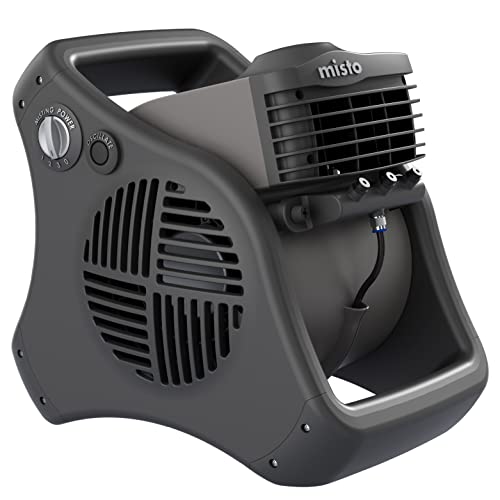
The Lasko Misto 7050 is the compact blower-style option in this group, with a pivoting head that adjusts up to 90 degrees and internal louvers that sweep airflow. It connects to a standard garden hose for misting, and manual controls offer three speeds. The fan is 16.1 pounds and has an in-line GFI cord and grounded plug, useful features around outdoor water. Lasko says its mist can reduce the feeling of outdoor temperatures by up to 25 degrees. This style suits a seating area where you want to direct the breeze; buyers seeking broad coverage should consider a larger fan format.
Bottom line: Choose it for adjustable, hose-connected misting in a compact blower format.
Lasko Misto 42-Inch Tower Fan YF300

The Lasko Misto YF300 differs from the 7050 with a 42-inch tower shape, internal oscillation and four fan speeds. Its electronic controls and louvered oscillation are suited to directing airflow across a porch or deck rather than aiming a pivoting blower head at one spot. The product is designed for outdoor use with UV- and weather-resistant construction. Lasko says the mist can make a person feel up to 20 degrees cooler. Its tall footprint may suit a fixed patio location, but it is less compact than the 15-inch blower style.
Bottom line: Pick this tower when oscillating airflow and a fourth speed matter more than a pivoting head.
HiCFM 30-Inch Misting Pedestal Fan

The HiCFM stands apart with a 30-inch oscillating pedestal fan and a spray ring that uses four brass nozzles; its mist reach is up to 16 feet. It connects to a garden hose through a water shut-off valve, making it a fit for larger outdoor areas where point-directed blower airflow may be too limited. Its 47.4-pound weight and 77-inch height are considerations when choosing a location. The fan has an IP44 enclosure, a 9-foot cord and a GFCI plug. Buyers should account for its larger footprint and place it where the cord can reach a suitable outdoor outlet.
Bottom line: Choose this pedestal model when a larger fan and stated 16-foot mist reach suit the space.
XPOWER FM-48 Misting Fan
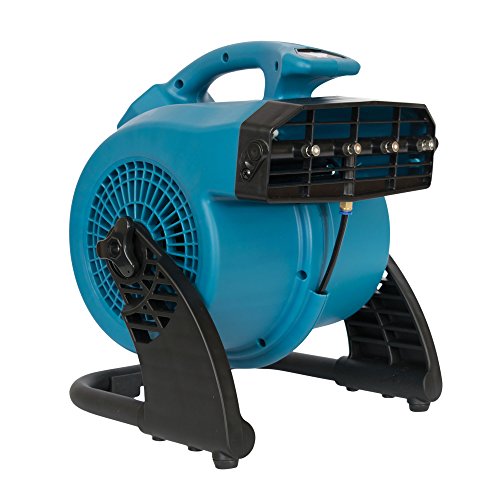
The XPOWER FM-48 is a portable alternative with a 600 CFM airflow and three speeds, plus 135-degree rotation positions for broader directional coverage. It needs a garden hose for outdoor misting and can also run indoors as an air circulator without mist. XPOWER says it draws 1.2 amps or less and describes the motor as sealed against water and debris. At 12 pounds, it is lighter than the Lasko Misto 7050. Its rotation angle gives a different way to spread airflow, but buyers comparing mist reach should confirm whether that measurement matters for their layout.
Bottom line: Choose it for a lighter portable fan that can circulate air indoors without mist.
How outdoor misting fans cool a space
Outdoor misting fans cool by evaporating fine water droplets into moving air, so they work best when the air is dry enough to absorb moisture. In humid weather, evaporation slows and the cooling effect is reduced; a fan still moves air, but mist can leave surfaces damp. A practical decision rule is to use mist when you can feel the droplets evaporating rather than settling on furniture or skin. Keep mist pointed away from electronics, uncovered food and slippery walking surfaces. A hose connection supplies water continuously, so place the fan where overspray will not reach an outlet or create a slick path.
Choosing a fan style for patio coverage
Choose a blower when you want to aim airflow at a specific seating area, a tower when you want oscillating airflow from a tall, narrow footprint, or a pedestal fan when a larger fan and broad area coverage are priorities. Fan diameter and airflow direction matter more than the word “outdoor” alone: a pivoting head changes aim, while oscillation sweeps air across a wider arc. Check the space around the fan as well as its height, because a larger base can obstruct a walkway.
| Need | Style to consider | Trade-off |
|---|---|---|
| Directed breeze | Blower | Focused rather than broad coverage |
| Sweeping airflow | Tower or oscillating pedestal | Needs a stable open placement |
| Large-area mist | Pedestal with nozzle ring | Larger footprint and more overspray |
Hose placement and outdoor electrical safety
Keep the fan’s plug and cord connection dry, and use a GFCI-protected outdoor receptacle; GFCI protection cuts power when it detects an electrical fault. Route the cord away from standing water, foot traffic and hot surfaces, and do not use an indoor extension cord outdoors. A grounded plug and an in-line safety device add protection, but they do not make it safe to submerge electrical parts or direct water at the motor. Before setup, check that the hose reaches without stretching across a walkway and confirm the threaded hose connector before ordering.
Keeping mist nozzles working
Mineral deposits from hard water can narrow misting nozzles and make the spray uneven, so inspect the nozzles when the mist pattern changes. Shut off the hose and power before cleaning or repositioning a fan; never handle a powered fan with wet hands. For hose-fed systems, draining standing water after use helps limit residue and stagnant water in the line, especially before storage. Use only cleaning methods compatible with the nozzle material and fan manual. If mist stops while airflow continues, check the hose valve and nozzle openings before assuming the fan motor has a problem.
Frequently Asked Questions
Do misting fans work in humid weather?
Misting fans are most effective in dry air because droplets need to evaporate to remove heat. In humid conditions, evaporation slows, so mist may feel less cooling and leave nearby surfaces damp.
How much area can a misting fan cool?
Coverage depends on fan airflow, nozzle layout, wind and humidity rather than a single room-size rating. For a known reach, the HiCFM model gives a mist distance of up to 16 feet; keep seating within the spray path and away from overspray-sensitive items.
Can outdoor misting fans get rained on?
Only use a fan outdoors in the conditions allowed by its manufacturer; an outdoor designation does not mean every electrical part can be exposed to water. Keep plugs and cord connections out of rain and standing water, and disconnect power before moving or cleaning the fan.
Why does a misting fan spray unevenly?
Mineral scale or debris can partially block mist nozzles and disrupt the spray pattern. Turn off the water and power, then inspect and clean the nozzle openings using a method allowed for the fan.
Should a misting fan run without water?
Many hose-fed fans can move air without mist, but the product facts do not confirm dry-mode operation for every model here. Check the manual for that capability; the XPOWER FM-48 is specifically described as usable indoors without its misting feature.