
Laundry Room Exhaust Fan: 5 Options Compared

V2262-50 7-Inch Exhaust Fan is the closest match for a laundry room, with 50 CFM airflow and an 8-inch rough-in opening. Choose another option if you need a different airflow, duct size, or wall-mounted installation; an exhaust fan removes room air and does not replace a clothes-dryer vent.
We earn a commission if you buy through links on this page. As an Amazon Associate I earn from qualifying purchases. Products are compared on manufacturer specifications, not hands-on testing.
- Best overall: V2262-50 7-Inch Exhaust Fan – It names laundry rooms as a suitable space and provides 50 CFM of airflow.
- Best for higher airflow: 10-Inch Panel Exhaust Fan – Its 110 CFM rating is higher than the ceiling models rated at 50 or 80 CFM.
- Best for wall mounting: 8-Inch Wall-Mount Fan with Speed Controller – It is an 8-inch wall-mount fan with an adjustable speed controller.
| Product | Best for | Airflow | Noise | Duct or opening | Shop |
|---|---|---|---|---|---|
| V2262-50 7-Inch Exhaust Fan | Laundry room ceiling | 50 CFM | 1.0 sone | 8-inch rough-in | Check Price on Amazon |
| 10-Inch Panel Exhaust Fan | Higher airflow | 110 CFM | 1.0 sone | 4-inch duct | Check Price on Amazon |
| 8-Inch Wall-Mount Fan with Speed Controller | Wall-mounted ventilation | 700 CFM (brand claim) | — | — | Check Price on Amazon |
| Broan-NuTone 50 CFM Bathroom Fan | Small room ventilation | 50 CFM | 2.0 sones | 3-inch duct | Check Price on Amazon |
| Amico 80 CFM Bathroom Fan | 80 CFM ceiling fan | 80 CFM | 1.0 sone | 4-inch duct | Check Price on Amazon |
Laundry Room Exhaust Fans
Compare airflow and installation dimensions before choosing a fan for your laundry room.
V2262-50 7-Inch Exhaust Fan

V2262-50 7-Inch Exhaust Fan is the only option here that explicitly names laundry rooms as a suitable space. The ceiling-mounted fan is rated at 50 CFM and 1.0 sone, and it requires an 8-inch-diameter rough-in opening. Its 7-inch fan size and 8-inch opening requirement are different measurements, so match the cutout to the rough-in specification rather than the fan diameter. The motor duct extends 6.5 inches, which matters where ceiling space is limited. Brand says its motor design reduces vibration; buyers needing more than 50 CFM should compare a higher-airflow option.
Bottom line: Choose it for a laundry room ceiling when the 8-inch rough-in and 50 CFM suit the space.
10-Inch Panel Exhaust Fan

10-Inch Panel Exhaust Fan provides the highest airflow among the ceiling-style choices, at 110 CFM, with a 1.0-sone rating and a 4-inch duct. Its panel is 10 inches across, while the hole size is 8 inches; those dimensions serve different fit checks. Brand says it is suited to bathrooms up to 100 square feet, but the product is presented primarily as a bathroom fan rather than a laundry-specific model. The 4-inch duct requirement also means it may not suit an existing installation built around another duct size.
Bottom line: Choose it when you need a 4-inch duct and the higher 110 CFM rating.
8-Inch Wall-Mount Fan with Speed Controller
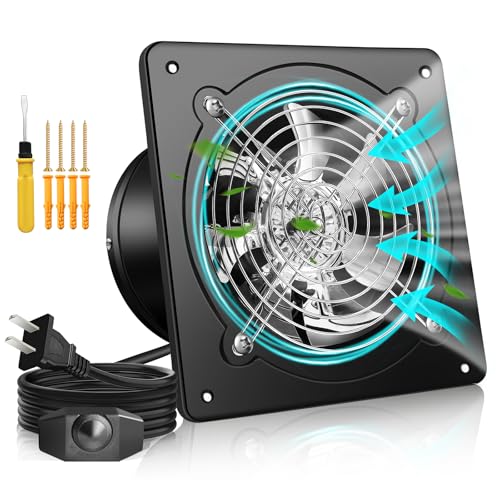
8-Inch Wall-Mount Fan with Speed Controller differs from the ceiling fans by using an 8-inch wall-mount design and an adjustable speed controller. Brand says the brushless motor delivers up to 700 CFM at up to 2,600 RPM while consuming 80 watts. Its uses include garages, basements, and other spaces needing ventilation, making it a possible room-air option where wall mounting is appropriate. The specifications do not give a duct or opening specification, so confirm the wall cutout and discharge arrangement before choosing it. The high claimed airflow may be more than a small laundry room needs.
Bottom line: Choose it when you specifically need adjustable, wall-mounted ventilation.
Broan-NuTone 50 CFM Bathroom Fan

Broan-NuTone 50 CFM Bathroom Fan is a compact bathroom fan rather than a laundry-specific model, with 50 CFM airflow and a 3-inch duct connection. Its housing measures 7.25 by 7.5 by 3.625 inches, and the cover measures 8.625 by 8.375 inches, useful dimensions when replacing a ceiling unit. Brand says the fan is Energy Star certified and intended for bathrooms or powder rooms up to 45 square feet; the 2.0-sone rating is louder than the 1.0-sone ceiling options here. Its small-space rating may not fit a larger laundry area.
Bottom line: Choose it for a small space where a 3-inch duct and compact housing fit.
Amico 80 CFM Bathroom Fan

Amico 80 CFM Bathroom Fan sits between the 50 CFM and 110 CFM ceiling options, with 80 CFM airflow, a 1.0-sone rating, and a 4-inch duct. Its recommended ceiling cutout is 7.6 by 7.3 inches; the housing measures 7.5 by 7.2 by 4 inches, and the grille is 9.4 by 8.6 inches. Brackets support mounting between ceiling joists or directly to a joist. Brand says a 3-inch existing duct can be matched with a reducer available from Amico. Its intended category is bathroom ventilation, so confirm it suits your laundry-room layout.
Bottom line: Choose it when an 80 CFM ceiling fan and 4-inch duct match the installation.
How to choose a laundry room exhaust fan
Choose by room size, airflow, duct route, and mounting location rather than by fan diameter alone. A common starting point for room exhaust is about 1 CFM per square foot; a 100-square-foot room therefore suggests roughly 100 CFM before duct resistance is considered. Long duct runs, bends, and restrictive grilles reduce delivered airflow, so a fan’s rating does not guarantee the same airflow after installation. For the options here, compare the 50, 80, 110, and 700 CFM ratings with the room and installation needs. A fan with speed control can adjust room ventilation, but it does not make an unsuitable duct route acceptable.
| Need | Choice to compare | Fit check |
|---|---|---|
| Small ceiling fan | 50 CFM or 80 CFM | Opening and duct |
| More listed airflow | 110 CFM | 4-inch duct |
| Adjustable wall fan | 700 CFM claimed | Wall cutout and discharge |
Check ceiling openings and duct sizes
Match the rough-in opening, housing, grille, and duct as separate dimensions before installation. A fan described as 7 inches can still require an 8-inch rough-in opening, as V2262-50 7-Inch Exhaust Fan does; the fan diameter is not the cutout size. Duct diameter also matters: the ceiling choices here use 3-inch or 4-inch ducts, and a reducer can help only when the fan maker supports that configuration. Measure the existing opening and duct, then check the joist spacing and available ceiling depth. With less than 6.5 inches of clear motor space, V2262-50 7-Inch Exhaust Fan may not fit as described; also allow room for the duct connection and wiring.
Keep laundry exhaust separate from dryer exhaust
A room exhaust fan and a clothes-dryer exhaust serve different jobs: the fan moves room air, while a dryer duct carries hot, lint-bearing exhaust outside. Never route dryer exhaust into the laundry room, attic, or a wall cavity; moisture and lint can accumulate, and lint is combustible. Dryer ducting is typically 4 inches in diameter, should be as short and straight as the installation allows, and should use rigid or semi-rigid metal rather than plastic. Clean lint from the dryer screen after every load and inspect the duct at least annually, sooner if airflow weakens or drying takes longer. Keep the room fan’s discharge separate from the dryer duct.
Plan safe fan placement and upkeep
Exhaust fans should discharge outdoors, not into an attic or enclosed ceiling space, because warm damp air can condense on building materials. A backdraft damper helps limit outside air moving back through the duct when the fan is off; verify that the chosen installation includes or can accommodate one. Laundry rooms also need make-up air: a tightly closed room can restrict exhaust flow, so leave a door undercut or other approved air path. Keep lint away from fan grilles and clean the grille periodically with power disconnected. For electrical work, follow local code and use a qualified electrician when the wiring or circuit requirements are uncertain.
Frequently Asked Questions
How much airflow does a laundry room fan need?
A useful starting point is about 1 CFM per square foot, so a 100-square-foot room suggests roughly 100 CFM. Long ducts and multiple bends can reduce delivered airflow, so account for the route as well as floor area.
Can a room exhaust fan vent a clothes dryer?
No. A room fan moves room air, while a dryer requires its own duct to carry hot air and lint outdoors. Keep the two exhaust paths separate and never vent dryer air into a room or attic.
How often should I clean a dryer vent?
Clean the dryer’s lint screen after every load and inspect the exhaust duct at least once a year. Check sooner if drying time increases or airflow at the exterior outlet seems weak, since lint buildup restricts flow.
Where should a laundry exhaust fan discharge?
A room exhaust fan should send air outdoors, not into an attic or ceiling cavity. Damp exhaust can condense on building materials, so plan an exterior termination and a route that does not join the dryer duct.