
LGA 1151 CPU Coolers: Four Models Compared by Fit

The Thermalright Assassin X120 Refined SE suits most LGA 1151 builds that can fit a 148 mm-tall air cooler, with support for several Intel sockets and AMD AM4/AM5. Choose a different model if your case has less clearance, you need a low-profile cooler, or you prefer liquid cooling.
We earn a commission if you buy through links on this page. As an Amazon Associate I earn from qualifying purchases. Products are compared on manufacturer specifications, not hands-on testing.
- Best overall: Thermalright Assassin X120 Refined SE – Its 148 mm height and single-tower air design make its case-clearance requirement clear.
- Best for dual-fan air cooling: Thermalright Peerless Assassin 120 SE – It pairs six heat pipes with two 120 mm PWM fans.
- Best for compact fit: Cooler Master i30 – Its 92 mm fan and support for LGA 1151 distinguish this small-format option.
- Best for liquid cooling: Thermalright Aqua Elite 240 V3 – Its 240 mm radiator and LGA 1151 support suit builds planned around an AIO.
| Product | Best for | Cooler type | Height or radiator size | Shop |
|---|---|---|---|---|
| Thermalright Assassin X120 Refined SE | Single-tower air | Air, 4 heat pipes | 148 mm | Check Price on Amazon |
| Thermalright Peerless Assassin 120 SE | Dual-fan air | Air, 6 heat pipes | 155 mm | Check Price on Amazon |
| Cooler Master i30 | Small-format air | Air, heatsink and 92 mm fan | — | Check Price on Amazon |
| Thermalright Aqua Elite 240 V3 | 240 mm liquid | Liquid AIO, 240 mm radiator | 240 mm radiator | Check Price on Amazon |
LGA 1151 CPU coolers
Compare socket fit and cooler dimensions first, then match the design to your case and build preferences.
Thermalright Assassin X120 Refined SE

Among these air coolers, the Assassin X120 Refined SE has the narrower listed footprint at 71 mm wide, while standing 148 mm tall. It uses an aluminum heatsink, four heat pipes and a TL-C12C PWM fan; the cooler measures 125 × 71 × 148 mm and weighs 1.42 lb. Its socket list includes Intel LGA 1151 as well as LGA 1150, 1155, 1200, 1700 and 1851, plus AMD AM4/AM5. It suits a build with enough vertical clearance. Check both case height clearance and nearby memory or motherboard-component clearance before choosing it.
Bottom line: Choose this for a conventional air cooler if your case allows 148 mm of height.
Thermalright Peerless Assassin 120 SE
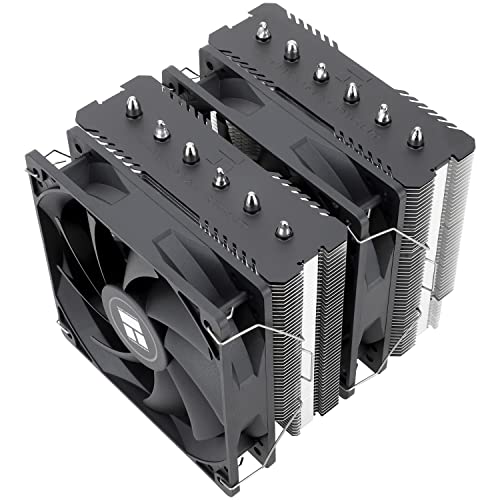
The Peerless Assassin 120 SE is the dual-fan choice here, with six heat pipes and two 120 mm PWM fans. Its aluminum heatsink measures 125 × 135 × 155 mm, making it taller and wider than the Assassin X120 Refined SE. The model supports Intel LGA 1151 and several other Intel and AMD sockets. This design is a fit for buyers who want a larger air-cooling assembly rather than a single-fan tower. Its 155 mm height and 135 mm width call for careful case and component clearance checks; confirm those measurements against your case and motherboard before selecting it.
Bottom line: Pick this if you want a dual-fan air cooler and have room for its 155 mm height.
Cooler Master i30
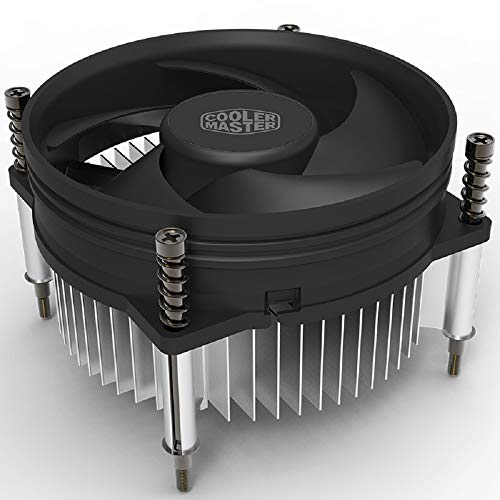
The Cooler Master i30 is the small-format option, using a 92 mm fan and a 90 × 30 mm heatsink. Its socket range covers Intel LGA 1150, 1151, 1155 and 1156, and the fan runs at 2,200 RPM ±10% with a 3-pin connector. The package includes a backplate and pre-applied thermal compound. It suits a buyer seeking a basic Intel-compatible cooler with a smaller fan than the two tower models. The dimensions do not give a reliable total cooler height, so verify the cooler’s full installed clearance before buying if the case is tight.
Bottom line: Choose this for a small-format cooler when its full installed height fits your case.
Thermalright Aqua Elite 240 V3

The Aqua Elite 240 V3 is the only liquid cooler in this group, built around a 240 mm aluminum radiator and two PWM ARGB fans. Its compatibility list includes Intel LGA 1151 along with LGA 1150, 1200, 1700 and 1851, plus AMD AM4/AM5. The maker says its pump can run up to 2,800 RPM ±10% and has a life of up to 40,000 hours. This suits a build designed for a radiator-based cooling loop rather than a tower heatsink. A 240 mm radiator needs a matching mounting location and room for its fans, so check case radiator fit before choosing it.
Bottom line: Pick this if you want an AIO and your case supports a 240 mm radiator.
How to choose an LGA 1151 CPU cooler
Start with socket mounting support, then check the physical space available around the CPU. A cooler can support LGA 1151 and still fail to fit a case that cannot accommodate its height, width, or radiator location. Compare the cooler’s overall dimensions with the case’s CPU-cooler clearance; also consider memory modules and nearby motherboard parts. Air coolers transfer heat from a heatsink using one or more fans, while an all-in-one liquid cooler moves heat through a pump, tubing and radiator. Choose air for a tower-style assembly, or choose an AIO only if the case has a suitable radiator mount. A measurable rule: if case clearance is below 148 mm, the Assassin X120 Refined SE does not meet that height limit.
Check case and radiator clearance
For tower air coolers, compare the full cooler height with the case’s published CPU-cooler clearance; a few millimeters of shortfall can prevent the side panel from closing. Width also matters because a wide heatsink or fan can crowd memory slots and motherboard components. For the Aqua Elite 240 V3, confirm that the case has a 240 mm radiator position and enough room for the radiator-and-fan assembly, not just a place to mount a fan. A radiator’s nominal size describes its class, not necessarily the full installed dimensions. Measure the available space and account for neighboring components before settling on a mounting position.
Air coolers and AIO liquid coolers compared
Air coolers use a heatsink and fan, while an AIO combines a pump, tubing, radiator and fans in a closed assembly. Air models avoid radiator placement, but their tower height and width can constrain case and component clearance. AIO models shift the main heat exchanger to a case radiator mount, so radiator location and tubing route become important fit checks. The table gives the practical distinction for these LGA 1151 options.
| Design | Space to check | Choose when |
|---|---|---|
| Single- or dual-tower air | Heatsink height and width | There is room above the CPU for a tower |
| Small-format air | Full installed cooler dimensions | A smaller fan format suits the build |
| 240 mm AIO | Radiator position and assembly clearance | The case supports the radiator arrangement |
Socket fit alone does not settle cooler fit: confirm both the motherboard mounting support and the case’s available space.
Mounting and thermal paste basics
CPU coolers need a firm, even contact between the heatsink base and the processor heat spreader; thermal compound fills microscopic gaps at that interface. Apply only the amount recommended for the cooler’s mounting method, and avoid smearing compound onto the socket or motherboard. A cooler with pre-applied compound, such as the i30, removes the separate paste-application step for its initial installation. Before powering on, confirm the mounting hardware is secure and the fan cable is connected to the appropriate motherboard header; the i30 uses a 3-pin connector. Never handle an installed cooler while the computer is powered.
Frequently Asked Questions
How do I know if an LGA 1151 cooler fits my case?
Compare the cooler’s total height with the case’s CPU-cooler clearance and check its width against memory and motherboard components. For a tower listed at 148 mm tall, case clearance must be at least 148 mm, with additional room preferable for installation.
Can an LGA 1151 cooler also fit another socket?
Yes, some coolers include mounting support for multiple sockets; the Assassin X120 Refined SE also lists LGA 1150, 1155, 1200, 1700 and 1851. Confirm the exact socket support for the specific cooler model before reusing it on another motherboard.
What does a 240 mm AIO radiator size mean?
A 240 mm AIO is a radiator class commonly arranged for two 120 mm fans. Case fit depends on the radiator mount and surrounding component clearance, so check the case’s radiator support and installation space rather than assuming the 240 mm figure is the complete assembly size.
Do I need thermal paste when installing a CPU cooler?
Thermal paste is needed at the heatsink-to-CPU contact unless the cooler has compound pre-applied; the Cooler Master i30 includes pre-applied thermal compound. Use the cooler’s specified mounting approach and keep compound away from the socket and motherboard.
Is a 92 mm CPU cooler fan quieter than a 120 mm fan?
Fan diameter alone does not determine noise: speed, blade design, bearing and workload also matter.