
Low Calorie Burger Buns: 4 Options Compared by Fit

Hero Classic Hamburger Buns is the clearest low-calorie burger bun choice because each bun has 90 calories, along with 1g net carbs. Choose another option if soft white bread, a keto-oriented formula, or brioche style matters more than a published calorie figure.
Burger buns are portioned bread rolls, so compare calories per bun and check that the package serving matches the portion you plan to eat.
We earn a commission if you buy through links on this page. As an Amazon Associate I earn from qualifying purchases. Products are compared on manufacturer specifications, not hands-on testing.
- Best overall: Hero Classic Hamburger Buns – Each bun has 90 calories, 1g net carbs and 22g dietary fiber.
- Best for soft white bread: Nature’s Own Life Keto Burger Buns – The package has eight soft white keto buns.
- Best for keto claims: Keto Culture Baking Hamburger Buns – The maker says each bun has 1 net carb and zero sugar.
| Product | Best for | Calories per bun | Net carbs per bun | Pack count | Shop |
|---|---|---|---|---|---|
| Hero Classic Hamburger Buns | Lower calorie choice | 90 calories | 1 g | 16 buns | Check Price on Amazon |
| Nature’s Own Life Keto Burger Buns | Soft white style | — | — | 8 buns | Check Price on Amazon |
| Keto Culture Baking Hamburger Buns | Keto-style buns | — | 1 g | 16 buns | Check Price on Amazon |
| Nature’s Own Brioche Style Hamburger Buns | Brioche texture | 180 calories | — | 8 buns | Check Price on Amazon |
Low calorie burger buns compared
Compare the calorie figure first, then weigh carb claims, bun style and pack size against your meal plan.
Hero Classic Hamburger Buns

Hero Classic Hamburger Buns stands out with a calorie count of 90 per bun, making it the easiest option here to compare by calories. Hero says each bun also has 1g net carbs, 0g sugar, 11g protein and 22g dietary fiber, and that the plant-based recipe uses olive oil. The two-pack totals 16 buns, useful when you want more servings at once. Choose it when calorie and carb numbers are central to your decision. Its high fiber amount may not suit everyone; increase fiber gradually and drink enough fluids.
Bottom line: Pick this when a 90-calorie bun and explicit nutrition figures are your priorities.
Nature’s Own Life Keto Burger Buns
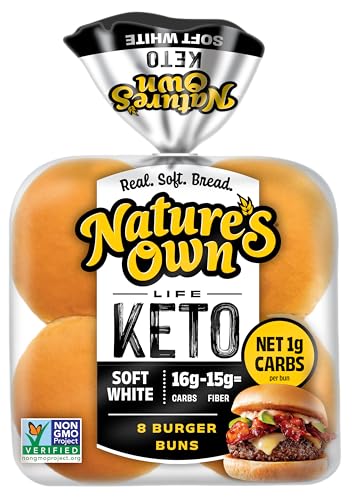
Nature’s Own Life Keto Burger Buns is the soft white option in this group, with an eight-bun package and a keto-oriented recipe. Nature’s Own says the buns are Non-GMO Project Verified and made without artificial colors, flavors or preservatives; the recipe uses expeller-pressed canola oil. The soft texture makes this a fit for shoppers who want a conventional white-bread feel rather than a brioche style. The package facts here do not give a per-bun calorie figure, so it is harder to compare directly with a calorie target. Choose it for its bread style, not a numeric calorie advantage.
Bottom line: Choose this for soft white keto buns when style matters more than a calorie comparison.
Keto Culture Baking Hamburger Buns

Keto Culture Baking Hamburger Buns differs by pairing a 16-bun pack with a net-carb figure but no per-bun calorie number. The maker says each bun has 1 net carb and zero sugar, and describes the interior as soft and fluffy with a golden-brown crust. That combination may appeal to shoppers prioritizing a keto-style bun and a larger pack. Net carbs are calculated as total carbohydrate minus fiber, so the figure is useful only alongside the label’s serving information. Without calories per bun in the specifications, this is not the most direct pick for a calorie-led choice.
Bottom line: Pick this for a 1-net-carb claim and a 16-bun pack, not a calorie target.
Nature’s Own Brioche Style Hamburger Buns

Nature’s Own Brioche Style Hamburger Buns is the brioche-style alternative, with 180 calories and 6g protein per bun. Nature’s Own says the eight-count buns are Non-GMO Project Verified and contain no artificial colors, flavors or preservatives. The richer brioche style can suit a shopper who values that texture and flavor profile over minimizing calories. At 180 calories per bun, it is the highest published calorie figure among these options, so it is a weaker match when lowering bun calories is the main goal. The package is an eight-count, rather than a larger two-pack.
Bottom line: Choose this when brioche style matters more than keeping bun calories low.
How to compare burger bun calories
Compare calories per bun only when the serving size is one bun; package labels can use a different serving basis. Calories also track portion weight, so a larger bun can have more calories even when its ingredients are similar.
| Need | Choice | Reason |
|---|---|---|
| Lowest published calorie figure | Hero Classic Hamburger Buns | 90 calories per bun |
| Brioche-style bun | Nature’s Own Brioche Style Hamburger Buns | 180 calories per bun |
| Keto-style bun with no calorie figure | Nature’s Own Life Keto Burger Buns or Keto Culture Baking Hamburger Buns | Compare package nutrition labels |
For a calorie target, use the per-bun figure and count how many buns you will actually eat. Toppings, cheese and sauces add calories too, so the bun alone does not represent the full burger.
How net carbs differ from calories
Net carbs and calories measure different things: net carbs are calculated as total carbohydrates minus fiber, while calories measure energy from carbohydrate, protein and fat. A low net-carb figure does not by itself mean a bun has fewer calories. Fiber can also vary substantially among breads; the maker’s figures for Hero Classic Hamburger Buns include 22g dietary fiber and 11g protein per bun, alongside its calorie and net-carb amounts.
For a fair comparison, check total carbohydrate, fiber, protein, calories and serving size on the package. People who are increasing fiber intake may prefer to do so gradually, since a sudden increase can cause digestive discomfort. A 1g net-carb claim should not be substituted for total carbohydrates when a clinician or meal plan asks you to track total carbs.
Choose bun style and pack size
Choose a bun style that fits the meal as well as the nutrition goal: soft white, classic hamburger and brioche-style buns can differ in texture and richness. Package counts also change how many servings you have on hand; these choices range from eight to 16 buns. The weight or dimensions can help you judge whether a bun is substantial enough, but they do not reveal its calorie content unless nutrition data is provided.
When serving a group, divide package count by the number of people to estimate servings, then account for anyone likely to have seconds. For a smaller meal, freeze extra bread if the packaging and food-safety guidance permit it. Keep buns sealed and follow the package’s storage directions after opening.
Read nutrition labels for your meal plan
Use the Nutrition Facts panel’s serving size and calories together; U.S. labels report calories per serving, not necessarily per individual piece. If a serving contains more than one bun, divide the calories by the number of buns only when the serving is evenly portioned. Ingredient and allergen statements matter too, since buns may contain wheat, sesame, soy or other allergens depending on the formula.
For a specific dietary requirement, confirm the current package label before eating because recipes and packaging can change. Do not rely on terms such as “keto” or “plant-based” as a substitute for checking carbohydrates, allergens or other nutrients that matter to your own plan.
Frequently Asked Questions
Are low net-carb buns always lower in calories?
No; net carbs and calories measure different things. A bun’s calories also reflect its carbohydrate, protein and fat, so compare calories per bun directly.
How many calories are in a typical burger bun?
Bun calories vary with size and recipe, so there is no single typical value to use for every brand. Compare the package’s calories per bun and serving size; one option here provides 90 calories per bun, while another provides 180.
What does net carbs mean on bread?
Net carbs are commonly calculated by subtracting dietary fiber from total carbohydrates. Check the Nutrition Facts panel too, since total carbohydrates and fiber remain separate values.
Can I eat a bun if I have a wheat allergy?
Do not assume any bun is wheat-free; check its current ingredient and allergen statements before eating it. For a serious allergy, avoid products whose labeling or handling you cannot verify.
How many burger buns should I serve per person?
One bun per burger is a practical starting portion, but the number needed depends on appetite and whether other food is served. For a group of eight, an eight-count pack supplies one bun per person.