
Low Carb Rice Cooker: 3 Models Compared by Features

For a low carb rice cooker with induction heating and eight cooking functions, choose Toshiba IH Low Carb Rice Cooker; its 5.5-cup uncooked capacity is the deciding fit for larger batches. Choose Mini Stainless Steel Low Carb Rice Cooker instead for a compact cooker with 3 uncooked cups, or 3 L Four-Stage Low Carb Cooker if you want a 3-liter model with four-stage starch removal.
We earn a commission if you buy through links on this page. As an Amazon Associate I earn from qualifying purchases. Products are compared on manufacturer specifications, not hands-on testing.
- Best overall: Toshiba IH Low Carb Rice Cooker – Induction heating, eight functions and 5.5 cups uncooked make it the most versatile larger-capacity choice.
- Best for starch draining: 3 L Four-Stage Low Carb Cooker – Its maker describes a four-stage lift-draining system and a 3-liter capacity.
- Best for small kitchens: Mini Stainless Steel Low Carb Rice Cooker – The 3-cup uncooked capacity and compact dimensions suit single cooks or couples.
| Product | Best for | Uncooked capacity | Cooking functions | Starch approach | Shop |
|---|---|---|---|---|---|
| Toshiba IH Low Carb Rice Cooker | Versatile family cooking | 1.30 L | 8 | Low-carb setting | Check Price on Amazon |
| 3 L Four-Stage Low Carb Cooker | Starch-draining method | 3 L | — | 4-stage lift drain | Check Price on Amazon |
| Mini Stainless Steel Low Carb Rice Cooker | Small-batch cooking | 0.71 L | 10 | Low-carb | Check Price on Amazon |
Low Carb Rice Cookers Compared
Compare capacity, cooking modes and the way each cooker handles starch before choosing for your household.
Toshiba IH Low Carb Rice Cooker
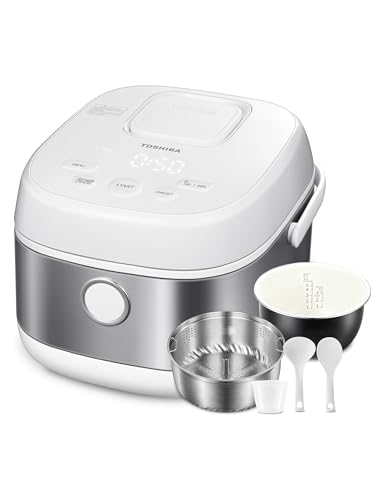
Induction heating and eight cooking functions distinguish this model, with programs for low carb rice, white and brown rice, mixed grains, quinoa, steaming and oatmeal. The 5.5-cup uncooked capacity favors households that prepare more than a small single-serving batch. Toshiba says its low carb setting reduces digestible starch and increases resistant starch; that claim does not mean the cooked rice is carbohydrate-free. The included steam basket adds a separate way to prepare vegetables or seafood. Its larger footprint and 10.5-pound weight matter if counter space or moving the cooker is a priority.
Bottom line: Choose it if you want induction heating and several grain programs in a larger cooker.
3 L Four-Stage Low Carb Cooker
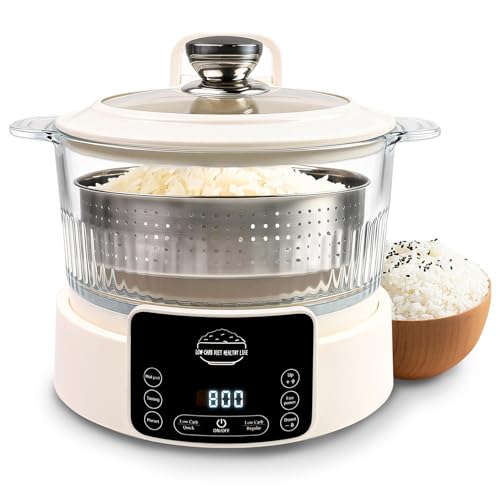
A four-stage lift-draining approach sets this 3-liter cooker apart from models described mainly by heating style or cooking programs. It has 800 watts of power, a 24-hour delay timer and an automatic keep-warm function, useful for planning a meal ahead. The maker positions its capacity for one to four servings, so it can suit a small household without taking on a larger-batch role. The cooker’s starch-removal process is not a guarantee of a particular carbohydrate level in the finished rice. Buyers who want listed grain-specific programs should compare those needs carefully, since the functions do not identify a full program count.
Bottom line: Pick it if a multi-stage draining design is your main priority.
Mini Stainless Steel Low Carb Rice Cooker
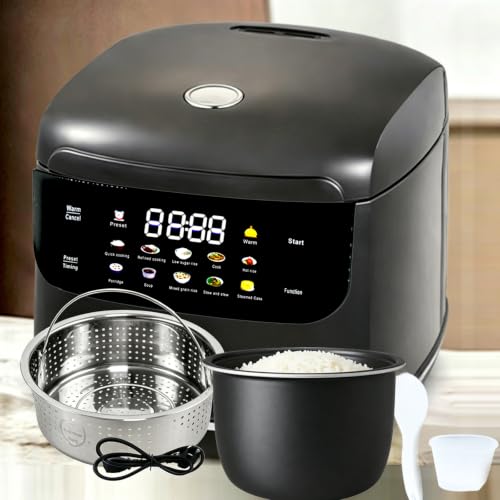
With capacity for 3 cups uncooked rice, this is the small-batch option among the three, and its dimensions are 9.45 by 8.46 by 7.87 inches. The maker’s title calls the inner pot non-stick, while the stainless-steel wording identifies the cooker; check which component a material description refers to if pot material is decisive. Ten programs include quick rice, brown rice, oatmeal, soup, cake and stew, alongside a 24-hour timer and automatic keep-warm. At 400 watts, it has less listed power than the 800-watt model, and its small capacity is limiting for larger families.
Bottom line: Choose it for compact storage and smaller rice batches.
How to choose a low carb rice cooker
Choose by the cooker’s starch method, capacity and programs rather than the low carb label alone. Low carb rice cookers may use a separate draining or lift-and-drain process, while other models offer a dedicated cooking setting; those approaches are not interchangeable specifications. Cooked rice still contains carbohydrates, so a low carb mode should not be read as carbohydrate-free rice. Match uncooked capacity to the amount you routinely prepare: a 3-cup cooker is suited to small batches, while 5.5 cups supports a larger batch. If you regularly cook several grain types, favor a model that names those programs rather than assuming every low carb cooker handles them.
Rice cooker capacity and serving size
Compare rice cookers by uncooked capacity, because cooked yield changes with the grain and water ratio. Rice cooker cups are commonly about 180 milliliters, smaller than a US measuring cup of 240 milliliters, so use the cooker’s cup when measuring if it is supplied. For a single cook or couple, a 3-cup uncooked limit is a practical ceiling; choose more capacity if you prepare several servings or batch cook. A liter volume and a cup count may refer to different measurements, so do not convert them as though both describe uncooked rice. Before ordering, confirm that the capacity basis suits your usual batch size.
Low carb modes and starch draining
Low carb modes and starch-draining designs describe cooking methods, not a guaranteed nutrition result. Rice starch is part of the grain, and washing or draining can change what remains in the pot without making cooked rice carbohydrate-free. A cooker using a lift-and-drain process separates cooking water from the rice; a dedicated mode may instead adjust its cooking cycle. Rinse rice in a bowl or fine strainer until the water runs less cloudy if reducing loose surface starch is your goal, then measure water consistently. Do not infer a precise carb reduction unless the maker provides a substantiated figure for the specific rice and preparation.
Using and cleaning a low carb rice cooker safely
Hot steam can burn, so keep hands and face away from the vent when opening a rice cooker and use the lid handle. A keep-warm setting is for serving convenience, not indefinite storage; refrigerate leftover rice promptly, ideally within two hours, and reheat until steaming hot. Starch-draining models can leave hot liquid in a separate collection area, so let components cool before emptying or washing them. Non-stick inner pots should be cleaned with a soft sponge rather than metal utensils that can scratch a coating. Keep the cooker base and electrical cord dry, and unplug the appliance before cleaning.
Frequently Asked Questions
Does a low carb rice cooker make rice carb-free?
No, cooked rice still contains carbohydrates. A low carb mode or starch-draining cycle may change starch in the cooking process, but it does not make rice carbohydrate-free.
How many cups of uncooked rice should I choose?
A 3-cup uncooked capacity suits a small batch for one or two people, while larger households may want more room. Rice cooker cups are often about 180 milliliters, so distinguish them from standard 240-milliliter US measuring cups.
Should I rinse rice before using a low carb cooker?
Rinsing can remove some loose surface starch and dust, but it does not remove all carbohydrates from rice. Rinse until the water is less cloudy, then follow the cooker’s water markings or recipe for the grain.
How long can cooked rice stay on keep warm?
Use keep-warm for serving rather than prolonged storage, and refrigerate leftovers within two hours. Reheat refrigerated rice until steaming hot before eating.
Can I cook grains other than white rice?
Some models name programs for brown rice, mixed grains, quinoa or oatmeal, while program choices vary by cooker. Check the available program names against the grains you actually prepare.