
Luxgrove Leather Repair: Salves and Alternatives Compared

LUXGROVE Wood & Leather Salve, 8 oz is the better fit for most people seeking Luxgrove leather repair because its 8-ounce size is twice LUXGROVE Leather & Furniture Salve, 4 oz’s 4 ounces. Choose a color-specific balm or a repair kit instead if you need a particular shade or need to address a tear or hole.
Leather repair salves are surface-care products intended to refresh appearance; they are different from kits made to fill physical damage.
We earn a commission if you buy through links on this page. As an Amazon Associate I earn from qualifying purchases. Products are compared on manufacturer specifications, not hands-on testing.
- Best overall: LUXGROVE Wood & Leather Salve, 8 oz – Its 8-ounce size offers twice the quantity of the other Luxgrove salve.
- Best for a smaller amount: LUXGROVE Leather & Furniture Salve, 4 oz – The 4-ounce salve is the smaller Luxgrove option.
- Best for tears and holes: COCONIX Leather & Vinyl Repair Kit – The kit is designed for repairs including tears, holes, scratches, and peeling.
| Product | Best for | Size | Color | Intended surfaces | Shop |
|---|---|---|---|---|---|
| LUXGROVE Wood & Leather Salve, 8 oz | Larger quantity | 8 oz | — | Wood and leather | Check Price on Amazon |
| LUXGROVE Leather & Furniture Salve, 4 oz | Smaller amount | 4 oz | — | Wood and leather | Check Price on Amazon |
| FORTIVO Recoloring Balm, Dark Brown | Dark brown leather | — | Dark brown | Leather and vinyl | Check Price on Amazon |
| Furniture Clinic Recoloring Balm, Medium Brown | Medium brown leather | — | Medium brown | Leather | Check Price on Amazon |
| COCONIX Leather & Vinyl Repair Kit | Physical damage | — | Multi-color | Leather and vinyl | Check Price on Amazon |
Luxgrove Leather Repair Salves and Alternatives
Compare the salves, recoloring balms, and repair kit by size, color, and the kind of surface or damage they address.
LUXGROVE Wood & Leather Salve, 8 oz
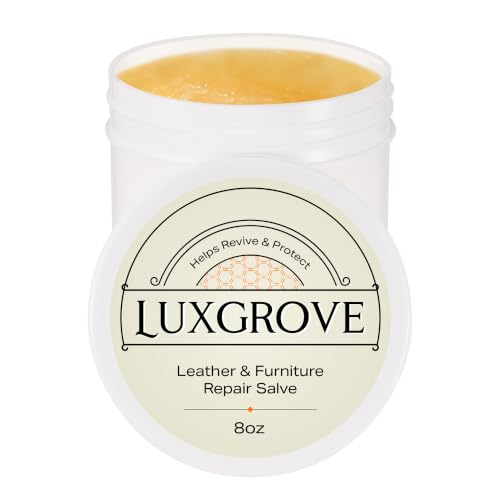
LUXGROVE Wood & Leather Salve, 8 oz is the larger of the two Luxgrove salves, with an 8-ounce container for buyers caring for multiple pieces or larger surfaces. The maker says the balm helps revive dry, dull, or scuffed surfaces and helps protect against cracking and fading. Its uses span leather furniture and accessories as well as wood furniture. This suits someone seeking a multi-surface conditioning balm rather than a kit for filling holes or tears. Because the formula is also intended for wood, check that the surface is finished wood or compatible leather before applying it.
Bottom line: Choose this if you want the larger Luxgrove salve for wood and leather surfaces.
LUXGROVE Leather & Furniture Salve, 4 oz

LUXGROVE Leather & Furniture Salve, 4 oz is the 4-ounce Luxgrove option, half the quantity of LUXGROVE Wood & Leather Salve, 8 oz, and the product text presents it for everyday care of leather and wood surfaces. The maker says it helps refresh dry, faded, dull, or lightly scuffed furniture and identifies use around home, office, and car interiors. Pick it when a smaller container better matches the area you plan to care for. The purpose is surface appearance and care, so buyers dealing with a hole, tear, or peeling material should consider a repair kit rather than expect a salve to rebuild missing material.
Bottom line: Choose this for a smaller amount of Luxgrove salve for leather and wood.
FORTIVO Recoloring Balm, Dark Brown

FORTIVO Recoloring Balm, Dark Brown differs from the Luxgrove options by offering a specific dark brown recoloring balm for leather and vinyl. The maker says it is intended to restore color on scratched or faded items and maintain the material’s natural oils. Its shade makes it a more targeted choice for someone matching dark brown surfaces, but it is not a general wood-and-leather care salve. Color match matters: a dark brown balm can visibly contrast with lighter brown or differently toned upholstery. Test color on a hidden area first and let it dry before deciding whether the match is acceptable.
Bottom line: Choose this when the surface is dark brown leather or vinyl and color restoration is the priority.
Furniture Clinic Recoloring Balm, Medium Brown

Furniture Clinic Recoloring Balm, Medium Brown is a medium brown leather recoloring balm, making it a shade-specific alternative to the Luxgrove multi-surface salves. The maker says the balm is intended for faded, worn, or scratched leather, including furniture and car seats. Its scope centers on leather recoloring rather than wood care or structural repair. Buyers should confirm the existing leather color and finish can accept a surface recoloring product; an incorrect shade can stand out more than the original scuff.
Bottom line: Choose this for medium brown leather when targeted recoloring matters more than wood care.
COCONIX Leather & Vinyl Repair Kit

COCONIX Leather & Vinyl Repair Kit is a repair kit rather than a conditioning salve, and its intended damage includes tears, holes, scratches, and peeling on leather or vinyl. The maker says the kit includes materials for repair and a color-mixing guide, which makes it more relevant when surface damage needs filling or patching instead of simply refreshing appearance. The kit describes a range of colors, but a close match still depends on the item’s actual shade and the repair area. Choose a balm for surface care; choose this format when the damage involves missing or lifted material.
Bottom line: Choose this when a tear, hole, or peeling area needs more than a surface balm.
How to Choose a Leather Repair Balm
Choose a surface balm for appearance-level wear, not for a hole or a torn seam. A recoloring balm adds or refreshes pigment at the surface, while a repair kit is the more suitable format for filling damage such as holes or tears. Match the product’s surface and color to the item: these options include multi-surface salves, dark brown and medium brown leather balms, and a multi-color leather-and-vinyl kit. Before treating the visible area, test a small hidden spot and allow it to dry; this can reveal a color mismatch or an unwanted finish change. If the test area looks too dark or uneven, stop rather than spreading the product across the item.
Leather Finish and Surface Compatibility
Leather finish changes how a surface treatment looks: smooth, coated leather generally accepts surface color differently from porous aniline leather, suede, or nubuck. Suede and nubuck have a napped surface, so a balm designed for smooth furniture leather is not a safe assumption for those materials. Identify the upholstery type before choosing any recoloring product, and use only a treatment whose maker specifies that surface. Vinyl is not leather, even when it resembles leather; use a formula that explicitly includes vinyl when treating it. The Luxgrove salves are presented for wood and leather, while some alternatives specify leather and vinyl. Those distinctions make the product’s surface scope a practical filter before considering size or shade.
Color Matching and Application Mistakes
Color match is the main decision for a recoloring balm: choose a shade that matches the item after the test patch dries, not merely the name of the color. Brown upholstery can vary from tan to nearly black, and natural wear can leave different tones across one couch or seat. Apply a small amount to a concealed area first, since a wet application may look different from the dry result. Avoid treating large areas before checking for color transfer or an uneven sheen. A balm can address surface appearance, but it cannot replace missing leather, reattach a torn seam, or rebuild a deep cut; use a repair format for physical damage instead.
When a Balm Is Not Enough
A surface balm is meant for appearance care, while physical damage needs a repair approach that addresses the missing or separated material. Small scuffs and faded color are different problems from an open hole, a split seam, or peeling upholstery. Use the type of repair that matches the damage: a recoloring product for color wear, and a repair kit when the surface needs filling or patching. For safety and finish protection, keep treatments away from areas where they could transfer onto clothing or skin until dry, and avoid applying a product to any surface its maker does not identify. If damage affects a seat belt, air bag area, or other safety equipment, do not treat it as cosmetic upholstery repair.
Frequently Asked Questions
Can leather balm repair a hole in a couch?
No, a surface balm is not a substitute for filling missing material. A kit intended for holes or tears is a better format for that damage; a balm is for appearance-level surface care.
How do I match a leather recoloring balm?
Test the color on a hidden spot and let it dry before treating a visible area. Brown upholstery ranges from light tan to very dark brown, so the broad shade name alone may not guarantee a match.
Can I use leather balm on suede or nubuck?
Do not assume a balm for smooth furniture leather is suitable for suede or nubuck. Their napped surfaces respond differently, so use a product specifically intended for that material.
Is vinyl the same as leather for repair products?
No, vinyl is a separate upholstery material despite its leather-like appearance. Use a product whose compatible surfaces include vinyl when treating vinyl upholstery.
Should I apply recoloring balm over the whole couch?
Test a small concealed patch first, then assess the dried color and sheen before expanding. Treating a large area before checking the match can leave a visible uneven finish.