
M. Asam Magic Finish Mousse: Shades Compared

For light-to-medium skin, M. Asam Magic Finish Mousse, Light to Medium is the closest match in this M. Asam Magic Finish mousse group; choose M. Asam Magic Finish Porcelain Teint for fair skin instead. These mousses combine primer, foundation, concealer, and finishing powder, while M. Asam Magic Finish Classic Seashell is a Classic Seashell edition with medium coverage.
Choose a different product if you want transparent wrinkle-blurring makeup rather than a tone-matching mousse.
We earn a commission if you buy through links on this page. As an Amazon Associate I earn from qualifying purchases. Products are compared on manufacturer specifications, not hands-on testing.
- Best overall: M. Asam Magic Finish Mousse, Light to Medium – Its light-to-medium shade fit and buildable light-to-medium coverage suit the broadest tone range.
- Best for fair skin: M. Asam Magic Finish Porcelain Teint – The Porcelain Teint option is specified for fair skin tones.
- Best for medium coverage: M. Asam Magic Finish Classic Seashell – The Classic Seashell edition specifies medium coverage for light-to-medium skin.
| Product | Best for | Shade fit | Coverage | Edition | Shop |
|---|---|---|---|---|---|
| M. Asam Magic Finish Mousse, Light to Medium | Light-medium skin | Light to medium | Light to medium, buildable | Standard | Check Price on Amazon |
| M. Asam Magic Finish Porcelain Teint | Fair skin | Fair | Light to medium, buildable | Porcelain Teint | Check Price on Amazon |
| M. Asam Magic Finish Classic Seashell | Medium coverage | Light to medium | Medium | Classic Seashell | Check Price on Amazon |
M. Asam Magic Finish Mousse Options
Compare the shade fit and coverage first, then choose the version whose range best matches your complexion.
M. Asam Magic Finish Mousse, Light to Medium
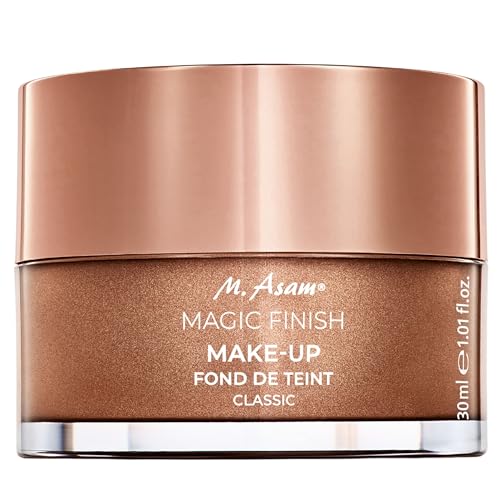
For a light-to-medium complexion, this Magic Finish mousse combines four makeup steps in one product: primer, foundation, concealer, and finishing powder. The maker says coverage ranges from light to medium depending on application, with a matte finish, and that the mousse can be blended with fingers, a sponge, or a firm brush. Apply over day cream and add layers gradually where you want more coverage. Its shade fit is narrower than the fair-skin option, so it may not suit someone seeking a specifically fair shade.
Bottom line: Choose this if your complexion falls in the light-to-medium range and you want adjustable coverage.
M. Asam Magic Finish Porcelain Teint

The Porcelain Teint version is the fair-skin choice among these Magic Finish mousses. It combines primer, foundation, concealer, and finishing powder, and the maker says it adapts to fair skin tones while offering buildable light-to-medium coverage and a matte finish. Apply over day cream, blending with fingers, a sponge, or a firm brush; thin layers make it easier to control coverage than applying a heavy layer at once. The shade range is fair, so shoppers with light-to-medium skin should compare it with the broader shade option.
Bottom line: Choose this if you need a fair-skin shade rather than a light-to-medium match.
M. Asam Magic Finish Classic Seashell

The Classic Seashell edition stands apart by specifying medium coverage for light-to-medium skin. Its mousse combines primer, concealer, makeup, and face powder; the maker says it leaves a matte, velvety finish and visually evens the look of redness and pigmentation. Apply it over daily skincare to the face and neck with fingers, a sponge, or a brush, blending gently; a second thin layer can add coverage to uneven areas. This edition describes medium rather than light-to-medium coverage, so it may be less suitable if you prefer the sheerest result.
Bottom line: Choose this if medium coverage and a light-to-medium shade fit are your priorities.
How to Choose a Magic Finish Shade
Choose by your complexion first, because coverage does not correct a shade that is visibly too light or dark. Test a small amount along the jawline and compare it in indirect daylight; indoor bulbs can shift how beige and peach tones appear. Check the blend at the jaw and neck, not only on the hand, since those areas may have different color. If you are between shades, compare both in thin swatches and allow them to settle before deciding. The options here cover fair and light-to-medium skin; a shade outside those ranges may require another option.
How to Build Coverage Without a Heavy Layer
Start with a thin layer over your usual day cream, then add a second layer only where more coverage is needed. The maker gives light-to-medium buildable coverage for two options and medium coverage for the Classic Seashell edition. A sponge can help press product into small areas, while fingers or a brush allow broader blending; use a clean tool to avoid transferring residue. Keep layers thin around the nose, mouth, and fine lines, where excess product can collect. Avoid adding more simply to change the shade: coverage builds opacity, but it does not make a mismatched undertone a better fit.
What the Four-in-One Format Means
A four-in-one complexion product is intended to combine primer, foundation, concealer, and finishing powder in one application. It can simplify the number of separate steps, but those roles are not always interchangeable with every person’s routine: someone needing targeted concealing or a different finish may still prefer separate products. Mousse texture is spread in a thin film, so use a small amount and blend outward rather than applying a thick coat at once. The options here describe matte finishes, which can look different over dry or oily skincare; allow moisturizer to settle before applying makeup and adjust the amount rather than piling on layers.
Skin Prep and Application Mistakes to Avoid
Apply complexion mousse to clean, moisturized skin after skincare has settled; wet or tacky cream can make blending less even. Use clean fingers or wash brushes and sponges regularly, since makeup tools collect oil and residue. Introduce a new face product cautiously by trying a small amount on a limited area first, especially if your skin is reactive, and stop use if irritation develops. Do not share applicators or tools around the eyes. For a natural-looking blend, check the jawline in daylight and remove any visible edge before adding more coverage. Repeated layering can emphasize texture, so build gradually and reassess after each pass.
Frequently Asked Questions
How can I tell if a mousse shade matches my skin?
Blend a small swatch along your jawline and compare it with your neck in indirect daylight. A close match should not leave a visible stripe after blending.
Should I apply moisturizer before makeup mousse?
Yes, apply it over your usual day cream after the cream has settled. Tacky skincare can make an even blend harder, so wait until the surface feels dry to the touch.
Can I apply this mousse with a makeup sponge?
Yes, the Magic Finish mousse options describe application with a sponge, fingers, or a brush. Use a clean tool and blend in thin layers, adding more only where needed.
How many layers should I use for more coverage?
Start with one thin layer, then add a second only to areas that need more coverage. The coverage ranges from light-to-medium buildable to medium, so extra layers may look heavier.
What should I do if my skin reacts to makeup?
Stop applying the product if irritation develops. For a new cosmetic, try a small amount on a limited area first, and avoid sharing tools or applicators.