
Maglite LED Conversion Kits: 4 Bulb Options Compared

For most owners of a 3–6-cell C- or D-cell Maglite, Lumencraft 1100-Lumen 3-6 Cell Kit is the fit to consider first because it supports three output levels and fits that cell range. Choose another kit if your flashlight uses 2 cells, a specific P13.5S socket, or a newer bi-pin bulb assembly.
LED conversion kits replace or adapt a flashlight’s light source; matching the cell count, bulb base, and polarity matters because a bulb that does not fit the socket or electrical configuration may not work.
We earn a commission if you buy through links on this page. As an Amazon Associate I earn from qualifying purchases. Products are compared on manufacturer specifications, not hands-on testing.
- Best overall: Lumencraft 1100-Lumen 3-6 Cell Kit – Fits 3–6 C- or D-cell Maglites and offers low, medium, and high output modes.
- Best for 2–4 cells: GLGYCB 2-4 Cell P13.5S Kit – Fits 2–4-cell C/D models and specifies a P13.5S/PR2 base and positive-tip polarity.
- Best for 3–6 cells: Swess 3-6 Cell P13.5S Kit – Supports 3–6 C/D cells and gives a DC input range of 4–24V.
- Best for newer D-cell models: Lumencraft 2500-Lumen 3-4 D-Cell Kit – Designed for newer incandescent Maglites with a D in the serial number, including certain bi-pin assemblies.
| Product | Best for | Compatible cell range | Bulb/base fit | Output | Shop |
|---|---|---|---|---|---|
| Lumencraft 1100-Lumen 3-6 Cell Kit | Multi-mode output | 3–6 C/D cells | Fits Maglite; base not given | 45 / 315 / 1,100 lumens | Check Price on Amazon |
| GLGYCB 2-4 Cell P13.5S Kit | 2-cell compatibility | 2–4 C/D cells | P13.5S / PR2 | 200 lumens | Check Price on Amazon |
| Swess 3-6 Cell P13.5S Kit | Wide voltage range | 3–6 C/D cells | P13.5S | 3W | Check Price on Amazon |
| Lumencraft 2500-Lumen 3-4 D-Cell Kit | Newer D-cell models | 3–4 D cells | Newer incandescent; D serial marker | Up to 2,500 lumens | Check Price on Amazon |
Maglite LED conversion kits
Match the conversion kit to your flashlight’s cell count and existing bulb assembly before choosing by output.
Lumencraft 1100-Lumen 3-6 Cell Kit
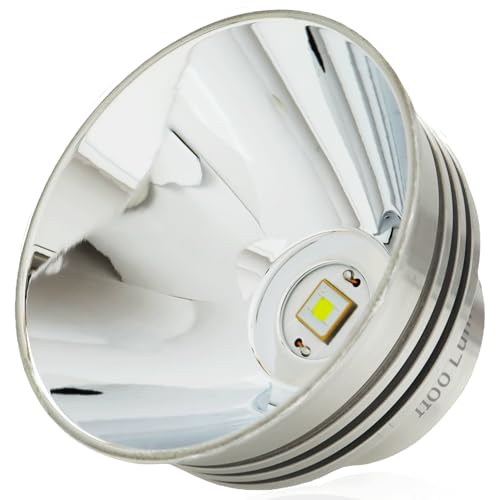
Three brightness modes distinguish this module: Lumencraft says its output is 45 lumens on low, 315 on medium, and 1,100 on high. The maker also claims a beam distance of up to 380 meters and up to 160 hours on low. It fits 3-, 4-, 5-, and 6-cell C- and D-cell Maglites, making it a candidate for several full-size flashlight configurations. Check the existing bulb assembly before choosing it: the product identifies cell compatibility but does not specify a bulb base in the specifications, which matters if your flashlight has a specialized socket.
Bottom line: Choose this if you want three output settings and have a compatible 3–6-cell C/D Maglite.
GLGYCB 2-4 Cell P13.5S Kit

The 2-cell compatibility sets this four-bulb pack apart from the kits aimed at 3-cell-and-larger Maglites. It fits 2-, 3-, and 4-cell C/D flashlights using a P13.5S or PR2 socket, and the maker specifies 3W output at 200 lumens with a 6000K nature-white color. The bulb’s polarity is positive tip and ring negative, so check that your flashlight uses the same arrangement before fitting it. The fit excludes Mag-Num Star bi-pin xenon bulbs; owners of those assemblies need a different conversion type.
Bottom line: Pick this for a 2–4-cell C/D flashlight with a matching P13.5S/PR2 socket and polarity.
Swess 3-6 Cell P13.5S Kit
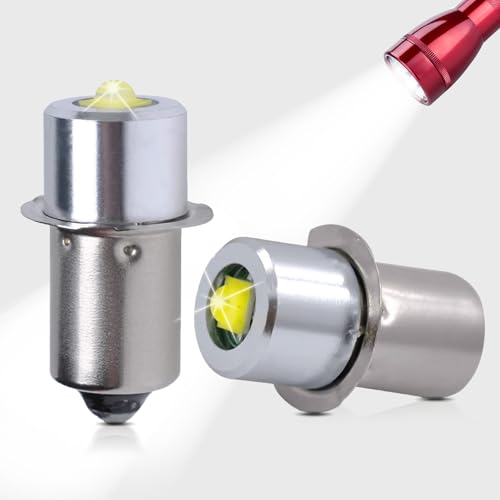
A 4–24V operating range and P13.5S base distinguish this 3W replacement bulb. It is intended for 3-, 4-, 5-, and 6-cell C/D Maglites, including the corresponding C- and D-cell model sizes. The maker describes a 120-degree optical design that works with the existing reflector; the resulting beam depends on the flashlight’s reflector and condition. This bulb does not fit 2-cell C/D flashlights or bi-pin xenon assemblies, so it is a poor match if either describes your light. The pack contains two bulbs.
Bottom line: Choose this for a 3–6-cell C/D Maglite with a P13.5S socket, not a 2-cell or bi-pin model.
Lumencraft 2500-Lumen 3-4 D-Cell Kit

This conversion module targets newer incandescent D-cell Maglites marked with a D in the serial number, including some models with Magnum Star bi-pin bulbs. Lumencraft says its 12 LED emitters produce up to 2,500 lumens and a beam distance of up to 164 meters, with up to 130 hours of runtime on low mode. The compatibility is narrower than kits for multiple C/D cell counts, so confirm the flashlight’s serial marker and bulb assembly before selecting it. The maker says installation requires no tools or modifications.
Bottom line: Pick this if your newer incandescent D-cell Maglite matches the serial-marker and bulb-assembly fit.
How to choose a Maglite LED conversion kit
Start with cell count, then match the bulb base and electrical polarity. Standard alkaline C and D cells are nominally 1.5 volts each, so a 2-cell light is 3V, a 3-cell light is 4.5V, and a 4-cell light is 6V; use the flashlight’s actual configuration rather than estimating from its length. A P13.5S base, a PR2 bulb designation, and a bi-pin xenon assembly are not interchangeable socket descriptions. The table summarizes the fit cues that separate these options; check the bulb currently installed before ordering if its base or polarity is unclear.
| Need | Fit cue | Option |
|---|---|---|
| 2-cell C/D light | 2–4 cells; P13.5S/PR2; positive tip | GLGYCB 2-4 Cell P13.5S Kit |
| 3–6-cell C/D light | Three brightness modes | Lumencraft 1100-Lumen 3-6 Cell Kit |
| 3–6-cell C/D light | P13.5S; 4–24V range | Swess 3-6 Cell P13.5S Kit |
| Newer incandescent D-cell light | D in serial number; specified assembly fit | Lumencraft 2500-Lumen 3-4 D-Cell Kit |
Cell count, voltage, and socket fit
Cell count is a useful voltage check, but it does not establish socket compatibility. Two alkaline cells provide a nominal 3V, while six provide 9V; rechargeable cells can have different nominal voltages, so match the conversion module’s operating range to the battery setup. A P13.5S bulb uses a single-contact base, whereas a bi-pin assembly uses two pins, so a single-contact bulb cannot simply replace a bi-pin bulb. Also compare polarity: a positive-tip, ring-negative bulb requires the flashlight’s contacts to match. With a 2-cell light, rule out any kit whose fit begins at 3 cells, even if the bulb appears physically similar.
Brightness modes and beam expectations
Lumen output measures light produced by the source, while beam distance depends on the light source and the flashlight’s reflector and focusing arrangement. A higher lumen figure alone does not guarantee a longer-reaching beam: the 1,100-lumen module and 2,500-lumen module have different stated beam distances, and their compatible flashlight configurations differ. Multi-mode kits can reduce output for close work or longer runtime, but runtime claims apply to the mode and conditions specified by the maker. If you mainly need a simple bulb swap, prioritize socket and cell compatibility before comparing maximum lumens. A conversion bulb that does not match the reflector assembly can yield a different beam pattern than expected.
Installation checks and common mistakes
Before installation, remove the batteries and compare the old bulb’s base and polarity with the replacement. Confirm whether the flashlight has a single-contact P13.5S socket or a two-pin xenon module; confusing those designs is a common fit error. Check the cell count as well, because a 3–6-cell bulb is not suitable for a 2-cell light unless its maker explicitly includes that configuration. Avoid forcing a bulb into a socket: mismatched bases can damage contacts. After installation, test the flashlight briefly and stop if it does not light or if the contacts do not seat securely. Keep the removed bulb available until the conversion works, so you can identify the original assembly if needed.
Frequently Asked Questions
How do I identify a Maglite bulb base?
Remove the old bulb and inspect its contact end: a single center contact indicates a different arrangement from two separate pins. P13.5S and bi-pin xenon bulbs are distinct formats, so match the replacement to the one removed.
Does a 3-cell Maglite use a 4.5V bulb?
A 3-cell flashlight with alkaline cells has a nominal 4.5V supply because each cell is 1.5V. Check the conversion bulb’s voltage range and the flashlight’s bulb type as well as the cell count.
Can I use rechargeable batteries with an LED conversion bulb?
Check the battery chemistry’s voltage against the bulb’s operating range before use. Alkaline C and D cells are nominally 1.5V each, while rechargeable cells may have a different nominal voltage.
Will an LED bulb keep the original Maglite beam?
Not necessarily; beam shape depends on the bulb’s optical design and the flashlight reflector. A bulb’s lumen rating describes source output, not the finished beam pattern or distance.
Can I replace a bi-pin xenon bulb with P13.5S?
No, those base types are physically different and are not direct substitutes. Choose a kit that explicitly fits the flashlight’s existing bi-pin assembly if it has two-pin xenon contacts.