
Motor Speed Measuring Devices: 4 Tachometers Compared

For a motor speed measuring device, YFYIQI Digital Photo/Contact Tachometer is the closest match to a general-purpose tachometer because it offers contact and laser measurement modes.
We earn a commission if you buy through links on this page. As an Amazon Associate I earn from qualifying purchases. Products are compared on manufacturer specifications, not hands-on testing.
- Best overall: YFYIQI Digital Photo/Contact Tachometer – Contact and laser tachometer modes suit general motor-speed checks.
- Best for onsite records: Shimpo DT-2100 Tachometer – USB output, data logging and grouping support multiple-machine checks.
- Best for linear speed: Shimpo DT-207LR-S12 Tachometer – The 12-inch wheel measures linear speed and total length as well as rotation.
| Product | Best for | Measurement method | RPM range | Special feature | Shop |
|---|---|---|---|---|---|
| YFYIQI Digital Photo/Contact Tachometer | General motor checks | Contact and laser | — | Stores last, max and min | Check Price on Amazon |
| Shimpo DT-2100 Tachometer | Onsite data review | Contact and noncontact | — | USB output; logging | Check Price on Amazon |
| Shimpo DT-207LR-S12 Tachometer | Linear speed checks | Contact and laser | 6–99,999 rpm | 12-inch wheel; length | Check Price on Amazon |
| AIOMEST Digital Tachometer | Touchless RPM checks | Noncontact laser | 2.5–99,999 rpm | Max, min and last log | Check Price on Amazon |
Motor speed measuring devices compared
Choose by measurement method first, then by whether you need records or linear-speed readings.
YFYIQI Digital Photo/Contact Tachometer
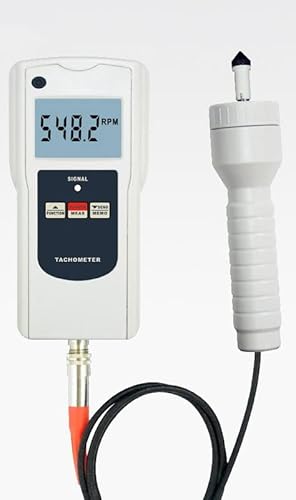
Contact and laser measurement modes make this handheld tachometer the broadest fit for routine motor-speed checks among these instruments. The maker says it measures rotational velocity, surface speed or frequency, and the laser detecting distance is 50–600 mm. Memory retains the last, maximum and minimum values, which helps when comparing changes across a run. Its ABS-plastic housing is described as lightweight and durable. The maker does not give an RPM range, so buyers who must cover a specific motor speed should confirm that range before ordering.
Bottom line: Pick this for mixed contact and laser checks when its verified range covers your motor.
Shimpo DT-2100 Tachometer

Onboard logging, graphical and statistical analysis, and USB output distinguish this tachometer for service work where results need to be reviewed or grouped. Its storage grouping capability is useful when measuring multiple machines because each machine’s readings can be kept apart. Shimpo identifies it as a contact/noncontact tachometer, giving the operator a choice of measurement approach.
Bottom line: Choose this when keeping organized onsite records matters more than a range.
Shimpo DT-207LR-S12 Tachometer
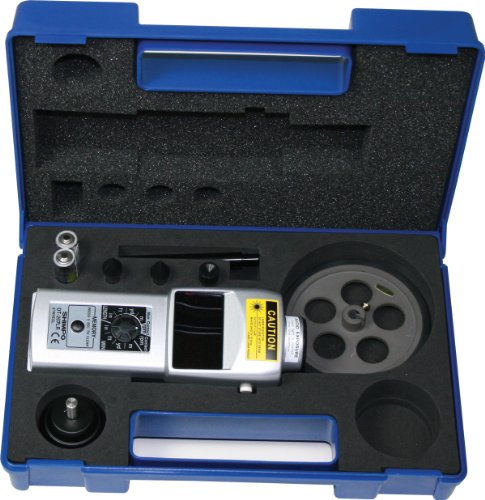
A 12-inch wheel and the ability to measure rotational speed, linear speed and total length set this model apart from instruments focused on RPM alone. Its rotational range is 6–99,999 rpm, and the five-digit LED screen displays results with the unit of measurement. For noncontact readings, the laser works from 1 inch to 20 feet, avoiding the need to touch a rotating part. The wheel makes it a better fit when belt travel or length is also part of the task; buyers needing a compact RPM-only tool may not need that added measurement mode.
Bottom line: Pick this for RPM work that also needs linear speed or total length.
AIOMEST Digital Tachometer

Noncontact laser measurement with a 2.5–99,999 rpm range gives this handheld meter a clear fit for touchless RPM checks. The maker says it resolves 0.1 rpm, samples once or twice per second, and detects from 50–500 mm; reflective tape is included for targeting the rotating surface. Its logger records maximum, minimum and last readings, while a built-in pointer helps aim at the measurement area. Since the meter depends on aiming at a rotating target and applying reflective tape, it may be less convenient where the surface is inaccessible.
Bottom line: Choose this for a broad touchless RPM range with stored peak and minimum readings.
How to choose a motor speed measuring device
Choose a tachometer by whether the rotating target can be touched safely and whether the job needs RPM alone. Contact tachometers use a probe or wheel against the moving part; noncontact models read a target optically, often using reflective tape. For exposed machinery turning too quickly or dangerously to touch, use a noncontact method and keep hands and clothing clear of rotating parts. If a job includes conveyor travel or material length, select an instrument that measures linear speed or total length rather than assuming an RPM reading will provide those values.
Range matters as much as measurement method: the instrument must cover the motor’s expected RPM, while its sensor distance must suit the available access. Compare the range and distance to the equipment before choosing; models without a range require confirmation for a specific motor.
Contact and noncontact tachometers compared
Contact and noncontact tachometers answer different setup needs, not simply different accuracy needs. A contact probe or wheel must be kept aligned with a suitable shaft or surface, while a laser tachometer reads a marked rotating target from a distance. Noncontact measurement avoids physical contact with fast rotation, but it still requires a clear aiming path and target.
| Method | Best fit | Key setup point |
|---|---|---|
| Contact | Accessible shaft or surface | Keep the probe or wheel aligned |
| Noncontact laser | Fast or inaccessible rotation | Aim at the target; reflective tape may be needed |
| Wheel plus laser | RPM, linear speed or length | Use the wheel when measuring travel |
Never bring a hand-held contact tool close to exposed rotation unless the equipment and procedure make that contact safe; an optical reading is the safer choice around hazardous moving parts.
Understanding RPM range and resolution
RPM is revolutions per minute, while resolution describes the smallest displayed increment and is not the same as accuracy. A display resolving 0.1 rpm can show finer steps than one resolving whole RPM, but the maker’s accuracy specification determines how close the reading is to the actual speed. A motor running near 1,800 rpm, for example, needs a tachometer whose range includes that value and whose accuracy suits the decision being made.
Check the target’s operating range and the instrument’s upper and lower limits before measuring. Sampling rate also affects how well a changing speed can be followed: a meter that samples once or twice a second may not capture very brief speed spikes. For changing loads, use a logger or max/min memory when available rather than relying only on a single display reading.
Using a laser tachometer safely
A laser tachometer requires a visible rotating target and an unobstructed line of sight. Many optical tachometers use reflective tape because a reflective mark creates a distinct return once per revolution; apply it only with the machine stopped, then restart it for measurement. Aim at the marked spot from the instrument’s specified distance, keeping clear of belts, fans and shafts while the equipment runs.
Do not apply tape or adjust a target near moving machinery. Follow workplace lockout procedures before setup, and never look directly into a laser beam. When the target cannot be marked safely or seen clearly, a contact method or another measurement approach may be more appropriate.
Interpreting tachometer records
Logged maximum, minimum and last readings describe different parts of a run: peak speed, lowest observed speed and the most recent sample. They do not automatically represent a calibrated average or prove that a motor stayed within its limits. For meaningful comparisons, repeat measurements at the same location and operating condition, and note the load and duration alongside the readings.
For several machines, grouped records reduce the chance of mixing observations. USB output and onboard analysis can make onsite review easier, but a stored value is only useful if the method and target setup were consistent. If a motor’s readings fluctuate sharply, inspect the measurement setup and equipment condition rather than treating one peak value as the whole operating picture.
Frequently Asked Questions
What does a motor tachometer measure?
A tachometer measures rotational speed, usually in revolutions per minute (RPM). Some models also measure linear speed, frequency or total length, so check the selected mode before recording a value.
How far away can a laser tachometer read?
The usable distance depends on the instrument; these examples give ranges of 50–500 mm, 50–600 mm and 1 inch to 20 feet. Stay within the specific meter’s distance and keep a clear line of sight to the target.
Does a laser tachometer need reflective tape?
Many optical tachometers use reflective tape to create a clear once-per-revolution target. Apply tape only while the machine is stopped, then aim the meter at the mark from a safe position.
What is the difference between RPM and linear speed?
RPM counts rotations per minute, while linear speed measures distance traveled per unit of time. A wheel-based tachometer can measure linear movement directly; RPM alone needs the rotating part’s dimensions and a conversion.
Can I measure a running motor with a contact tachometer?
A contact tachometer can measure an accessible rotating surface, but touching moving machinery creates an entanglement and impact hazard. Use noncontact measurement around exposed or high-speed parts, and set up any target only while the machine is stopped.