
MTB Tires Bicycle 26 175: Fit and Tread Compared

For a 26-inch bicycle with a 1.75-inch tire, choose a tire marked 26 × 1.75 or one whose fit range includes 1.75 inches; all four options use a 559 mm bead-seat diameter, but only ZUKKA 26 × 1.75 MTB Tire is sized 1.75 inches.
Choose a different option if your current tire is wider or your riding calls for a more aggressive tread, and confirm the rim diameter and frame clearance before ordering.
We earn a commission if you buy through links on this page. As an Amazon Associate I earn from qualifying purchases. Products are compared on manufacturer specifications, not hands-on testing.
- Best overall: ZUKKA 26 × 1.75 MTB Tire – Its 26 × 1.75-inch tire size matches the requested width directly.
- Best for tire-and-tube bundle: 26 × 1.95 Tire and Tube 2-Pack – Includes two 26 × 1.95-inch tires, two tubes, and two tire levers.
- Best for aggressive tread: Hycline 26 × 2.125 Tire Set – Its open, convex-knob tread is aimed at grip on varied surfaces.
| Product | Best for | Tire size | Pressure range | Shop |
|---|---|---|---|---|
| ZUKKA 26 × 1.75 MTB Tire | Direct width match | 26 × 1.75 in (47-559 mm) | 40 PSI | Check Price on Amazon |
| 26 × 1.95 Tire and Tube 2-Pack | Complete replacement set | 26 × 1.95 in (54-559 mm) | 30–80 PSI | Check Price on Amazon |
| Hycline 26 × 2.125 Tire Set | Knobby mixed-surface riding | 26 × 2.125 in (57-559 mm) | 45–60 PSI | Check Price on Amazon |
| 26 × 1.95 Folding MTB Tire | Single wider tire | 26 × 1.95 in (54-559 mm) | 30–80 PSI | Check Price on Amazon |
26-Inch MTB Tires for a 1.75-Inch Bicycle
Check the tire’s bead-seat diameter and width before choosing a replacement for a 26-inch wheel.
ZUKKA 26 × 1.75 MTB Tire

Unlike the wider 1.95- and 2.125-inch options, this tire is sized 26 × 1.75 inches, making it the direct width match for the search. The package name indicates two tires and two levers; the features also specify a 32 mm Schrader valve. Its fine, plain tread is intended for road and smoother-surface riding, so it suits commuters and hybrid or cruiser setups better than riders seeking prominent off-road knobs. The pressure target is 40 PSI. Choose another option if your riding calls for a wider fit range or a more aggressive tread pattern.
Bottom line: Pick this if your wheel needs a 26 × 1.75-inch tire and you mainly ride paved or smooth routes.
26 × 1.95 Tire and Tube 2-Pack

This set differs by pairing wider 26 × 1.95-inch tires with two tubes and two levers, rather than offering a 1.75-inch tire. Its fit range covers tire widths from 1.95 to 2.125 inches, so it is a match only if the bicycle is set up for that range. The tires have 30 TPI construction and a foldable design; the included butyl-rubber tubes fit 26 × 1.75/2.125-inch tires and use 32 mm Schrader valves. The wider tire size makes this a poor choice when the existing tire is truly 1.75 inches.
Bottom line: Choose this if your bicycle accepts 1.95-inch tires and you want a paired tire-and-tube kit.
Hycline 26 × 2.125 Tire Set

The Hycline set stands apart with a 2.125-inch tire and an open, convex-knob tread, so it is for a wider setup and more varied surfaces than a 1.75-inch bicycle tire. It includes two tires, two tubes, and two levers; the tubes are sized 26 × 1.75/2.125 inches and use 32 mm Schrader valves. The tires are 30 TPI and have a pressure range of 45–60 PSI. This width is outside the direct 1.75-inch match, so verify that both frame and fork have room before considering it.
Bottom line: Pick this for a compatible 2.125-inch setup that benefits from pronounced tread knobs.
26 × 1.95 Folding MTB Tire
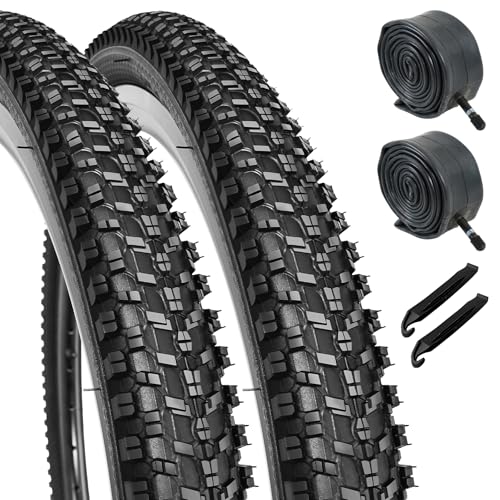
This option is a single 26 × 1.95-inch tire rather than the exact 1.75-inch size, and its width range is 1.95–2.125 inches. Its 30 TPI construction and densely raised block tread distinguish it from the smoother 1.75-inch ZUKKA tire; the tread is intended for varied surfaces including gravel and mountain roads. A 26 × 1.75/2.125-inch tube with a 32 mm Schrader valve is also described. Choose it only if the bicycle is approved for the wider tire: its range does not include 1.75 inches.
Bottom line: Choose this if you need one 1.95-inch tire and your frame and rim support that width.
How to match a 26-inch tire to a 1.75-inch wheel
Match the bead-seat diameter first: the 559 mm marking is the common diameter behind the 26-inch size in these options. Then compare the tire width printed on the sidewall with the replacement’s width or range; a tire that begins at 1.95 inches does not directly match a 1.75-inch tire. Check the bicycle frame and fork clearance as well as the rim’s permitted width range, since a tire can clear the rim but rub the frame. As a practical rule, if your current tire measures 1.75 inches and the replacement range starts at 1.95 inches, select the direct-width tire instead of assuming the range fits.
Most bicycle tire sizing combines a nominal inch size with an ETRTO marking: the second number in a marking such as 54-559 is bead-seat diameter in millimeters. The width number is approximate, so actual inflated width can vary with rim internal width and casing construction.
What tire tread suits pavement, gravel, and trails
For mostly pavement, a fine or low-profile tread typically rolls more smoothly than tall, widely spaced knobs; for loose dirt, gravel, or muddy trails, spaced knobs usually provide more bite and shed debris better. Surface and riding style matter more than the “mountain bike” label alone. These choices include a fine, plain pattern on the 1.75-inch option and block or convex-knob patterns on wider alternatives. Do not choose a wider tire just for tread if the frame lacks clearance; a useful decision rule is to preserve at least a few millimeters of clearance around the inflated tire, especially at the fork crown and chainstays. Wet pavement also calls for conservative cornering and braking regardless of tread.
| Typical riding | Tread direction | Width check |
|---|---|---|
| Paved streets | Fine or low profile | Use the current tire width |
| Mixed hardpack and gravel | Moderate blocks | Confirm frame and rim fit |
| Loose trail surfaces | More prominent knobs | Confirm added width clearance |
How tire pressure affects a 26-inch MTB ride
Use the pressure range printed for the specific tire as the boundary, not a universal number: the options here span 30–80 PSI, 45–60 PSI, and a 40 PSI target. Heavier riders, loaded bikes, narrower tires, and rough impacts generally require more pressure than lighter loads on smooth roads, but exceeding the tire or rim limit risks damage. A practical starting point is to inflate within the tire’s permitted range, then adjust in small increments while checking for rim strikes, squirm, and harshness. Do not transfer one model’s pressure range to another. Check pressure before rides; small-volume tires lose usable pressure faster in practice than a visual casing check can reveal.
When a replacement tube needs a new valve
Schrader valves are wider and resemble car-tire valves; Presta valves are narrower and have a small locking nut at the tip. A tube must match the rim’s valve hole, and its length must extend far enough through a deep rim to attach a pump. All tube descriptions here specify a 32 mm Schrader valve, so they will not suit a rim drilled only for Presta valves. Tubes also need a size range that includes the tire width: a 26 × 1.75/2.125 tube is a broader fit range than a tube marked 26 × 1.75 alone. Avoid pinching the tube under the tire bead during installation; inflate slightly before fitting to help it sit without folds.
Frequently Asked Questions
Does a 26 × 1.75 tube fit a 26 × 1.95 tire?
It may fit only if the tube’s printed width range includes 1.95 inches. The 26-inch designation refers to the wheel size, while the width range determines how far the tube can expand.
How much clearance should a mountain bike tire have?
Aim for at least 3–4 mm of clearance between the inflated tire and the frame or fork, with more room useful for mud and debris. Check around the chainstays, seatstays, and fork crown because those tight spots can differ.
Can I put a Schrader tube in a Presta rim?
Not directly in a rim drilled only for a Presta valve, because the Schrader stem is wider. Match the tube valve to the rim hole, or use a suitable rim adapter only when the rim maker allows it.
What pressure should a 26-inch mountain bike tire use?
Use the pressure range printed on that tire, since the four options span different limits and targets. Start within the allowed range and adjust for rider load and surface without exceeding the tire or rim maximum.
How do I read 54-559 on a bicycle tire?
The 559 is the bead-seat diameter in millimeters, and 54 is the nominal tire width in millimeters. Match the 559 diameter first, then confirm the tire width fits the rim and frame.