
NGK V-Power Spark Plugs: Fit and Type Compared

For a general-purpose set, NGK V-Power UR5 Stock 2771 is an 8-plug NGK V-Power UR5 set with a 0.040-inch gap; verify that UR5 matches your engine before choosing it. Buyers with a Jeep TJ 4.0L L6 or a Honda Civic 1.5L or 1.6L L4 should compare the vehicle-specific sets instead.
We earn a commission if you buy through links on this page. As an Amazon Associate I earn from qualifying purchases. Products are compared on manufacturer specifications, not hands-on testing.
- Best overall: NGK V-Power UR5 Stock 2771 – An eight-piece UR5 set with a 0.040-inch gap, provided that plug number matches the engine.
- Best for Jeep TJ: NGK V-Power Jeep TJ 4.0L L6 Set – A six-plug set matched to Jeep TJ 4.0L L6 models from 1997 through 2006.
- Best for Honda Civic: NGK V-Power Honda Civic 1.5L/1.6L Set – A four-plug set matched to Civic 1.5L and 1.6L L4 models from 1992 through 2000.
| Product | Best for | Plug number | Pack count | Shop |
|---|---|---|---|---|
| NGK V-Power UR5 Stock 2771 | UR5 replacement set | UR5 / 2771 | 8 plugs | Check Price on Amazon |
| NGK V-Power Jeep TJ 4.0L L6 Set | Jeep TJ fit | — | 6 plugs | Check Price on Amazon |
| NGK 6630 UR4 V-Power | UR4 replacement | UR4 / 6630 | 8 plugs | Check Price on Amazon |
| NGK 4177 TR6 V-Power | TR6 replacement | TR6 / 4177 | 8 plugs | Check Price on Amazon |
| NGK V-Power Honda Civic 1.5L/1.6L Set | Honda Civic fit | — | 4 plugs | Check Price on Amazon |
NGK V-Power Spark Plugs Compared
Match the plug number and engine fit first, then use pack count to determine how many plugs are included.
NGK V-Power UR5 Stock 2771

NGK V-Power UR5 Stock 2771 is the only option here with a 0.040-inch gap and UR5/2771 identification, making it the clearest choice when those specifications match the engine. The set contains eight plugs and is described as a genuine NGK replacement part. Its broad replacement framing does not establish fit for a particular vehicle, so buyers should confirm the required plug number and gap against the vehicle specification before installation. A set of eight may not suit engines that use fewer plugs or require a different plug type.
Bottom line: Choose it when the engine calls for UR5/2771 plugs with a 0.040-inch gap.
NGK V-Power Jeep TJ 4.0L L6 Set

NGK V-Power Jeep TJ 4.0L L6 Set is tailored to Jeep TJ 4.0L L6 applications from 1997 through 2006, unlike the broadly identified UR5 set. The six-plug pack matches the cylinder count of that inline-six engine. Its V-groove center electrode and copper-core nickel center are specified, along with a nickel ground electrode and trivalent-plated shell. The maker says the V-groove focuses the spark and gives a typical life of up to 30,000 miles. This fit does not cover other TJ engines or model years, so confirm engine and year before ordering.
Bottom line: Pick it for a 1997–2006 Jeep TJ with the 4.0L L6.
NGK 6630 UR4 V-Power
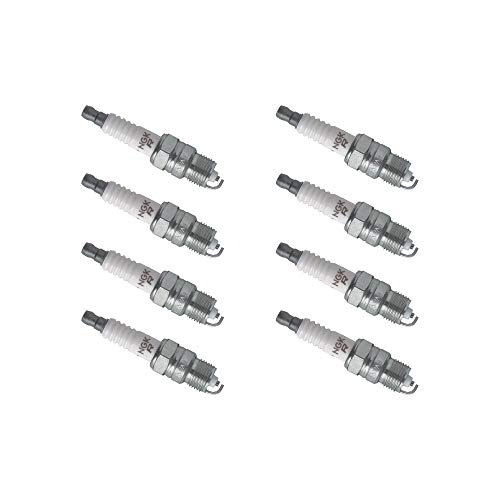
NGK 6630 UR4 V-Power uses the UR4/6630 designation, distinguishing it from the UR5 and TR6 options. It is an eight-plug set and names a long list of replacement plug codes, including R44TS, R45TS, R46TS, SP410 and SP425. The V-groove center electrode, copper-core nickel center, nickel ground electrode and trivalent-plated shell are specified. Because a replacement-code list does not establish compatibility with every engine that used one of those plugs, match the UR4 number and the vehicle maker’s requirements before installation. Its eight-plug count also may exceed what some engines need.
Bottom line: Choose it when the engine calls for UR4/6630 or a verified replacement code.
NGK 4177 TR6 V-Power

NGK 4177 TR6 V-Power is the TR6/4177 option, a different plug designation from the UR4 and UR5 sets. It is sold as a set of eight and identified as V-Power Premium Copper. The maker does not connect TR6 to a particular vehicle or give a gap, so select it only when TR6/4177 is the correct engine specification. A plug’s reach, seat style, heat range and terminal also need to match; a familiar V-Power name alone is not enough to establish fit. The eight-plug quantity may not suit applications requiring another count.
Bottom line: Pick it only when TR6/4177 matches the engine specification.
NGK V-Power Honda Civic 1.5L/1.6L Set

NGK V-Power Honda Civic 1.5L/1.6L Set is the four-plug choice for Honda Civic 1.5L and 1.6L L4 models from 1992 through 2000, so its application is narrower than the UR4, UR5 and TR6 sets. Its V-groove center electrode, copper-core nickel center, nickel ground electrode and trivalent-plated shell are specified. The maker says the groove concentrates the spark and gives a typical life of up to 30,000 miles. The fit does not cover other Civic engines or years; confirm that the exact engine and plug number match before installing.
Bottom line: Choose it for a covered 1992–2000 Civic with a 1.5L or 1.6L L4.
How to choose NGK V-Power spark plugs
Start with the engine’s required plug number, not the V-Power name or pack size. Spark plugs must match thread diameter and reach, seat type, heat range, resistor design and electrode gap; a mismatch can cause poor seating, misfire or engine damage. The UR4, UR5 and TR6 designations in these options are not interchangeable based on the shared product family. If the engine specification calls for UR5/2771, choose that number; if it calls for UR4/6630 or TR6/4177, select accordingly. For vehicle-specific packs, confirm the exact engine and model year: a model range alone may include more than one engine. A measurable decision rule is to reject any option whose plug number differs from the engine’s specified number, unless a verified cross-reference confirms a replacement.
Why plug gap and fit matter
Use the engine maker’s specified gap rather than assuming every V-Power plug has the same setting. The UR5 set here gives a 0.040-inch gap, but that figure cannot be applied to the UR4, TR6 or vehicle-specific packs. Gap affects the voltage needed to form a spark, and an incorrect gap can impair ignition. Thread reach and seat style matter just as much: a plug that is too long can contact internal engine parts, while the wrong seat may not seal properly. Many plugs arrive pre-gapped, but handling can alter the gap; check it against the vehicle specification with a wire-style gauge and adjust only if the plug maker permits. Never force a plug into a cylinder head.
NGK V-Power options by plug number and fit
These NGK V-Power choices differ most clearly by plug designation and stated vehicle application. Use the table to narrow the option, then confirm the engine’s exact plug number and required quantity before selecting a set.
| Choice | Stated fit or number | Pack |
|---|---|---|
| NGK V-Power UR5 Stock 2771 | UR5 / 2771 | 8 |
| NGK V-Power Jeep TJ 4.0L L6 Set | Jeep TJ 4.0L L6, 1997–2006 | 6 |
| NGK 6630 UR4 V-Power | UR4 / 6630 | 8 |
| NGK 4177 TR6 V-Power | TR6 / 4177 | 8 |
| NGK V-Power Honda Civic 1.5L/1.6L Set | Civic 1.5L / 1.6L L4, 1992–2000 | 4 |
Replacing spark plugs safely
Install plugs only with the engine cool; aluminum cylinder-head threads can be damaged when plugs are removed hot. Disconnecting the battery and disabling ignition or fuel delivery helps prevent accidental starting, and ignition systems can generate high voltage. Work carefully to keep dirt out of open plug wells, start each plug by hand to avoid cross-threading, and use a torque wrench with the engine maker’s torque specification. Torque depends on thread size, seat type and head material, so one universal torque figure is not suitable. Replace plugs according to the vehicle’s maintenance schedule, and inspect wires or coil boots while accessible. If a plug binds during hand installation, stop rather than forcing it.
Frequently Asked Questions
How often should spark plugs be replaced?
Replacement intervals depend on plug material and the engine’s maintenance schedule; conventional copper-core plugs commonly have intervals around 20,000 to 30,000 miles. Severe driving, oil fouling or misfires can require earlier service, so use the vehicle maker’s interval for the specific engine.
Can I use the same spark plug gap for every engine?
No, the required gap is engine-specific; the UR5/2771 set here has a 0.040-inch gap, but that does not establish the right gap for UR4 or TR6 plugs. Check the vehicle specification and measure with a wire gap gauge before installation.
Should spark plugs be installed in a hot engine?
No, let the engine cool before removing or installing plugs because hot aluminum head threads are more vulnerable to damage. Start each plug by hand and use the vehicle’s specified torque rather than guessing.
What happens if a spark plug has the wrong reach?
A plug with excessive reach can project too far into the combustion chamber and risk contact with engine parts; too little reach can leave threads exposed to deposits. Match reach, seat type and thread size to the engine specification before installation.
Do I need to replace all spark plugs at once?
For a conventional multi-cylinder engine, replacing the full set together keeps the plugs at a similar service age and avoids repeating the same labor soon. Use the cylinder count and maintenance schedule for the specific engine to determine the required quantity.