
NIDA Ultimate Moisturizing Cream: 4 Options Compared

NIDA Youthful Formula Ultimate Moisturizing Cream is the direct choice for a face moisturizer, with centella, niacinamide, hyaluronic acid and collagen in a 3.38 fl oz container. Choose a bundle if you want additional skincare steps, or a different cream if barrier-support ingredients are your priority.
We earn a commission if you buy through links on this page. As an Amazon Associate I earn from qualifying purchases. Products are compared on manufacturer specifications, not hands-on testing.
- Best overall: NIDA Youthful Formula Ultimate Moisturizing Cream – The standalone 3.38 fl oz face cream directly matches the search and combines several named moisturizing ingredients.
- Best for eye-area care: NIDA YouthfulFormula Cream and Revive Eye Cream Bundle – It pairs the face cream with a separate eye cream intended for the eye and neck area.
- Best for a multi-step routine: NIDA Youthful Glass Skin Bundle – The glass skin set pairs the moisturizer with hydrating and renewal serums.
| Product | Best for | Format | Volume | Named ingredients | Shop |
|---|---|---|---|---|---|
| NIDA Youthful Formula Ultimate Moisturizing Cream | Daily face moisture | Face moisturizer | 3.38 fl oz | Centella, niacinamide, hyaluronic acid | Check Price on Amazon |
| NIDA YouthfulFormula Cream and Revive Eye Cream Bundle | Face and eye care | Two-step set | — | Hyaluronic acid, collagen, niacinamide | Check Price on Amazon |
| NIDA Youthful Glass Skin Bundle | Serum-inclusive routine | Cream and serums set | — | Hyaluronic acid, collagen | Check Price on Amazon |
| Dr.Althea 147 Barrier Cream | Barrier-focused alternative | Face moisturizer | 1.69 fl oz | Ectoin, ceramide NP, hyaluronic acid | Check Price on Amazon |
NIDA Ultimate Moisturizing Cream Options
Compare the standalone cream with related NIDA bundles and another barrier-focused face cream before choosing a routine.
NIDA Youthful Formula Ultimate Moisturizing Cream
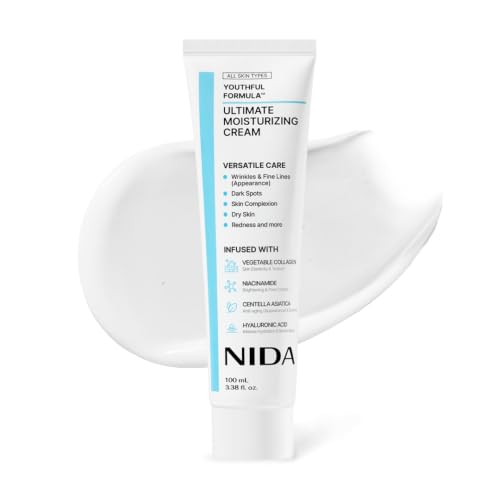
The standalone NIDA cream is the direct match for a face moisturizer, rather than a set with additional products. Its formula features centella asiatica extract, niacinamide, hyaluronic acid and collagen; the brand says it helps support the moisture barrier and improve the appearance of skin texture. The 3.38 fl oz container suits shoppers who want one face-care step rather than a bundled routine. The formula’s claims focus on appearance and hydration, so buyers seeking a particular texture or fragrance should confirm those preferences before choosing.
Bottom line: Choose this if you want the NIDA face cream without adding a bundle.
NIDA YouthfulFormula Cream and Revive Eye Cream Bundle

The NIDA two-step bundle differs from the standalone cream by adding a separate eye cream for the eye and neck area. The brand describes the face moisturizer as lightweight and quick-absorbing, and names hyaluronic acid, hydrolyzed collagen, niacinamide, peptides and centella among the ingredients across the routine. That makes this set relevant if you want both general facial moisture and a targeted eye-area step. Its limitation is that it includes two products, so it is less direct for someone who only wants the face cream.
Bottom line: Pick this when you want a face moisturizer plus a distinct eye-care step.
NIDA Youthful Glass Skin Bundle
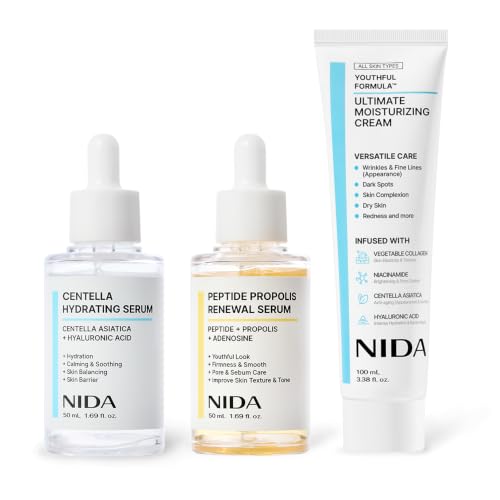
The Youthful Glass Skin Bundle expands the NIDA cream into a set with hydrating and renewal serums, unlike the single-cream option. The formula features include collagen and hyaluronic acid, and the brand says the cream supports the appearance of skin texture, elasticity and firmness. This format suits shoppers who want several steps in one NIDA routine rather than selecting a moisturizer alone. The tradeoff is that the set adds serums, so it is not the simplest choice for a buyer seeking only a face cream.
Bottom line: Choose this if you want the moisturizer alongside hydrating and renewal serums.
Dr.Althea 147 Barrier Cream

Dr.Althea 147 Barrier Cream is a different brand’s face moisturizer, distinguished by its named ectoin and ceramide NP alongside seven types of hyaluronic acid. The brand says the formula supports the moisture barrier and helps reduce moisture loss, making it a relevant alternative for shoppers comparing barrier-focused formulas. Its 1.69 fl oz size is half the NIDA cream’s volume, so container size is a clear practical difference. It is not the requested NIDA product, and its ingredient profile—not the NIDA ingredient combination—is the reason to consider it.
Bottom line: Consider this if you want a barrier-oriented alternative with ceramide NP and ectoin.
How to Choose a Face Moisturizer
A moisturizer is most useful when its texture and ingredients suit your skin and the rest of your routine. Humectants such as hyaluronic acid attract water, while occlusive ingredients reduce water loss by forming a surface layer; many creams combine ingredient types. A product’s name alone does not tell you how rich it will feel, so consider whether you prefer a lighter lotion or a thicker cream. If you already use several leave-on products, start with one new formula at a time so you can identify irritation. For dry or sensitive-feeling skin, a simple routine with moisturizer and daytime sunscreen is often easier to evaluate than adding multiple new steps together.
How Much Moisturizer to Apply
Apply enough face moisturizer to leave a thin, even layer over the face and neck, then adjust based on how the skin feels. A pea-sized amount is a common starting point for the face, but coverage needs vary with product texture and face size; use a little more if the layer does not spread comfortably. Moisturizer generally goes after water-based serums and before sunscreen in a daytime routine. Give each layer a moment to settle if products pill when layered. Avoid getting face creams into the eyes unless the product is specifically intended for that area; eye-area skin can be more sensitive than the cheeks.
What Ingredient Names Can Tell You
Ingredient families point to different roles, but they do not guarantee that a formula will feel or perform the same for every person. Hyaluronic acid is a humectant, whereas ceramides are lipids that help support the skin barrier; niacinamide is a form of vitamin B3 commonly used in skincare. Centella asiatica is a botanical ingredient, and collagen in a topical formula does not establish that the product changes the body’s collagen. The NIDA standalone cream names several of these ingredients, while the Dr.Althea alternative names ectoin and ceramide NP. Compare the ingredient lists and your preferred texture rather than treating a bundle’s step count as proof of better results.
How to Introduce a New Face Cream
Test a new face cream on a small area before applying it broadly, especially if your skin is reactive or you are introducing other active products. Try the small-area test for several days and stop using the cream if burning, swelling or a persistent rash develops; seek medical advice for a severe reaction. Add one new leave-on product at a time and avoid starting multiple unfamiliar formulas in the same week, which makes irritation harder to trace. Daily broad-spectrum sunscreen with SPF 30 or higher is recommended for exposed skin, especially when a routine includes products marketed around visible signs of aging.
Frequently Asked Questions
Can I use a face moisturizer every day?
Many face moisturizers are designed for regular use, but begin with a small amount once daily if a formula is new to you. Stop if persistent irritation develops, and consider a clinician’s advice for recurring skin reactions.
Should moisturizer go before or after serum?
Apply a water-based serum before moisturizer, then use sunscreen as the final daytime skincare layer. If the products pill, allow each layer to settle and use a thinner amount.
What is the difference between a humectant and a ceramide?
A humectant such as hyaluronic acid attracts water, while ceramides are lipids that help support the skin barrier. Cream formulas may combine both roles, but ingredient presence alone does not predict personal results.
Do I need a separate cream around my eyes?
A separate eye cream is optional for many routines; a face moisturizer may be enough if it is comfortable around your eyes. Avoid applying a product into the eyes unless it is specifically intended for that area.
How should I test a new face cream?
Try a small amount on a limited skin area for several days before using it across the face. Introduce only one new product at a time and stop if a persistent rash or burning occurs.