
Nitric Oxide Test Strips: 4 Saliva Kits Compared

For a general-purpose saliva nitrite check, Humann Nitric Oxide Indicator Strips is a straightforward starting point because it comes with 25 strips; choose Berkeley Life Test Strips, 10 Count instead if individually sealed strips and a 10-second result matter more. These strips measure salivary nitrite as an indicator, not nitric oxide directly, so they are for personal tracking rather than diagnosing a health condition.
Choose a different product if you need a clinical measurement or a test of nitric oxide in blood or tissue; these are saliva-based indicators.
We earn a commission if you buy through links on this page. As an Amazon Associate I earn from qualifying purchases. Products are compared on manufacturer specifications, not hands-on testing.
- Best overall: Humann Nitric Oxide Indicator Strips – The 25-strip tube is intended to indicate salivary nitrite levels.
- Best for sealed strips: Berkeley Life Test Strips, 10 Count – Its 10 strips are individually sealed, and the maker gives a 10-second result time.
- Best for larger supply: HealCare Saliva Nitric Oxide Test Strips – The product is presented as a 25-strip option for repeated self-testing.
| Product | Best for | Strip count | Result time | Shop |
|---|---|---|---|---|
| Humann Nitric Oxide Indicator Strips | Routine tracking | 25 | Instant (maker claim) | Check Price on Amazon |
| Berkeley Life Test Strips, 10 Count | Sealed portability | 10 | 10 seconds (maker claim) | Check Price on Amazon |
| Sooenben Nitric Oxide Test Strips | Supplement tracking | — | Fast (maker claim) | Check Price on Amazon |
| HealCare Saliva Nitric Oxide Test Strips | Frequent self-checks | 25 | A few seconds (maker claim) | Check Price on Amazon |
Nitric oxide test strips
Compare these saliva-based strips by their sample, packaging and result time.
Humann Nitric Oxide Indicator Strips

For a basic salivary nitrite check, this tube provides 25 strips. Humann says the color result is instant and easy to read, and recommends using the strips within six months after opening. That makes this option suitable for someone who expects to open and use a tube over a regular tracking routine. The result is an indicator of salivary nitrite, not a direct measurement of nitric oxide or a diagnosis. Its tube packaging is less suited to buyers who specifically want each strip individually sealed.
Bottom line: Choose this if you want a 25-strip tube for recurring saliva checks.
Berkeley Life Test Strips, 10 Count

Individually sealed strips distinguish this 10-count kit from the tube-style options. Berkeley Life says the saliva result appears in 10 seconds and frames the strips for setting a baseline or tracking changes around training, foods, and supplements. The sealed format suits someone who wants to keep unused strips separate between checks. Berkeley Life also says the strips were used to track NO activity in a clinical trial; that does not make an at-home result a clinical diagnosis. Ten strips offer fewer checks than a 25-count choice.
Bottom line: Pick this if individual seals and a 10-second result are priorities.
Sooenben Nitric Oxide Test Strips

This option is positioned for monitoring salivary nitrite and the effect of nitric oxide supplements. Sooenben describes a color-based readout and fast results, which may suit someone who wants to compare readings as part of a personal routine. Because the available claims do not give a strip count or a precise timing, it is harder to compare the amount of use or result speed with the other kits. As with any saliva indicator, a color result should not be treated as a medical diagnosis or proof of a specific health effect.
Bottom line: Consider it if supplement-related personal tracking is your main use.
HealCare Saliva Nitric Oxide Test Strips
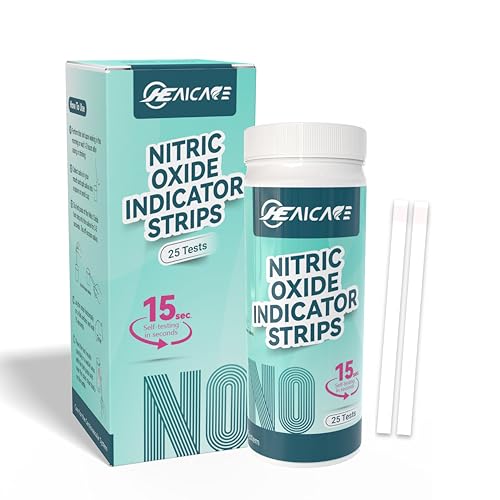
HealCare describes this as a quick saliva self-test, with sampling and testing taking a few seconds according to the maker. The product is presented as a 25-strip option, making it relevant to buyers planning repeated checks rather than a small number of baseline readings. Its claims about circulation and health should not be read as evidence that the strip diagnoses or prevents a condition; the purpose here is self-monitoring. The packaging details include a pack-of-five designation, so confirm the strip quantity and package configuration before ordering.
Bottom line: Choose it for repeated self-checks, after confirming the package quantity.
How saliva nitric oxide strips work
Saliva strips use nitrite as an indirect indicator; they do not measure nitric oxide gas directly. Oral bacteria convert some dietary nitrate into nitrite, which can appear in saliva and produce a color response on a strip. That makes the reading a snapshot of one part of the nitrate–nitrite pathway, not a complete measure of circulation or cardiovascular health. Food intake, timing, hydration, and oral conditions can affect comparisons, so use a consistent routine if you are tracking changes. A useful decision rule is to treat differences from one reading as tentative and look for a repeatable pattern under similar conditions before changing a routine. Do not use a home strip result to diagnose or manage a medical condition.
What to compare when choosing test strips
Strip count and packaging are the clearest practical differences among these kits: a 10-count sealed option limits the number of checks but separates each unused strip, while a 25-strip tube offers more tests in one container. Result timing also matters if you want a quick read, but compare only timings the maker actually gives. The table is a quick guide to the distinctions that affect a home tracking routine.
| Need | What to prioritize |
|---|---|
| Separate unused tests | Individually sealed strips |
| Repeated checks | Higher stated strip count |
| Fast readout | A result time |
Do not select a kit because its marketing language promises a health outcome; these strips are indicators, not diagnostic tests.
How to make readings more comparable
Consistency matters more than a single color result when using a saliva indicator for personal tracking. Take readings at a similar time and under similar eating and oral-care conditions, and record the date and relevant routine changes alongside the color result. Dietary nitrate from foods such as leafy greens and beets enters a pathway that involves oral bacteria, so changing diet or oral conditions can change the signal without proving a change in nitric oxide itself. Avoid treating a before-and-after reading as proof that a supplement caused a difference. If readings concern you or you have symptoms, seek clinical advice rather than relying on a home strip. Follow the product’s handling directions, including Humann’s six-month recommendation after opening.
Frequently Asked Questions
Do nitric oxide test strips measure nitric oxide directly?
No, saliva strips indicate nitrite, which is related to the body’s nitrate–nitrite pathway. A saliva color result is not a direct blood or tissue nitric oxide measurement.
Can I use saliva strips to diagnose a health problem?
No, an at-home color result is not a diagnosis. If a reading raises concern or you have symptoms, discuss them with a healthcare professional rather than making medical decisions from the strip.
Why can readings change from day to day?
Dietary nitrate, timing, hydration and oral conditions can affect salivary nitrite. For more useful comparisons, take readings at a similar time and under similar eating and oral-care conditions.
How many strips should I choose for routine tracking?
A 25-strip option provides more checks than a 10-strip kit. Estimate how often you plan to test, and consider whether individually sealed strips or a tube better suits how you will store and use them.
Does mouthwash affect saliva nitrite readings?
Antibacterial mouthwash can alter oral bacteria involved in converting dietary nitrate to nitrite, so readings may not be comparable around its use. Keep oral-care conditions consistent when tracking.